
PAC-3 Patriot and Four Areas Reveal the Deadlock of Russian Strategy 2026
 Dmitri Volkov
PAC-3 Patriot and Four Areas Reveal the Deadlock of Russian Strategy 2026
The most important news on July 10 is not that Sergey Lavrov once again uttered the familiar formula about Russian goals. Moscow has been repeating formulas for decades. What matters is something else: this formula was announced almost simultaneously with Ukraine's statement about a political agreement with the U.S. regarding licenses for the production of PAC-3 Patriot interceptors and with Ukrainian military statistics indicating that the pace of Russian advancement in the first half of 2026 has decreased by more than half. This results in unpleasant arithmetic for the Kremlin. The diplomatic demand remains maximal, while the material means to fulfill it are becoming increasingly limited.
Lavrov Returns Negotiations to June 2024
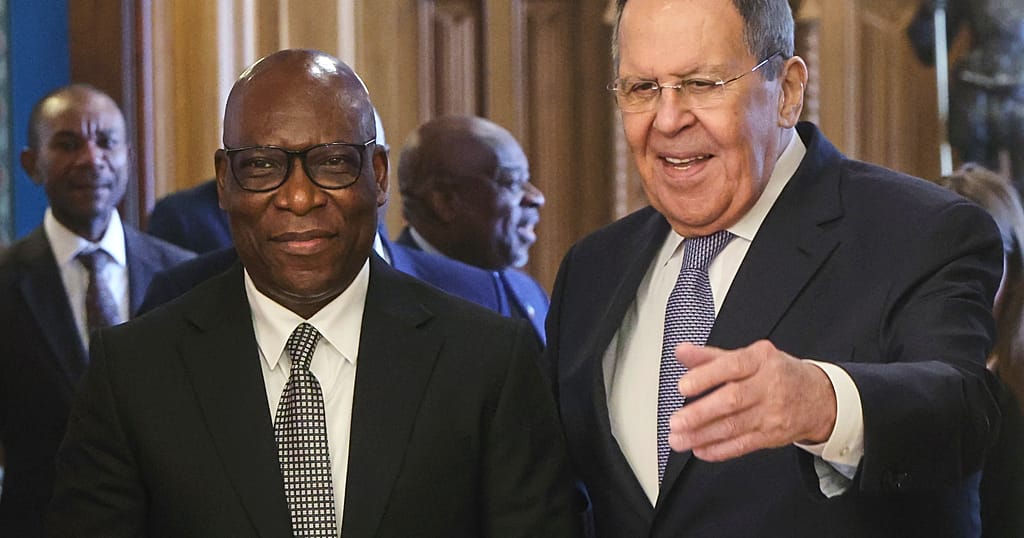
According to Kyiv Independent on July 10, Lavrov stated that Russia will pursue the goals outlined by Vladimir Putin in June 2024. These goals are well known: the complete withdrawal of Ukrainian troops from Donetsk, Luhansk, Kherson, and Zaporizhzhia regions, as well as Ukraine's renunciation of NATO membership. In political language, this is called a negotiating position. In military logic, it is called a demand for the enemy to voluntarily cede territory that the Russian army has not been able to fully occupy in over four years of war.
There is no contradiction here at first glance. Russian diplomacy since 2022 has acted as a continuation of operational planning: if the front does not yield the desired result, the demand is transferred to the negotiating room as an already established fact. In the Soviet military school, this would be called not so much diplomacy as an attempt to create a favorable balance of power in the moral-political direction. The problem is that such a balance must be supported by something. In 1944, it was supported by tank armies and the industry of the evacuated Ural. In 2026, it is being attempted to be supported by a mix of slow infantry pressure, missile strikes, and informational suggestion of inevitability.
Frontline Statistics Work Against Rhetoric
Ukrainian Commander-in-Chief Oleksandr Syrskyi stated on the same day that Ukraine's active defense has reduced the pace of Russian territorial advancement by more than half in the first six months of 2026. According to him, Russia attempted to conduct a major offensive with nearly double the advantage in personnel and equipment but did not achieve its goals; the number of directions of active Russian offensive actions has decreased from thirteen to six or seven. Even if one approaches Ukrainian data with the usual caution, they align well with the picture that independent maps and daily assessments from ISW have been recording for several months: there is advancement, but it does not resemble an operational breakthrough.
Particularly important is the figure of Russian losses, which Syrskyi estimated at about 32,000 killed and wounded per month. This is not neutral statistics; it is a Ukrainian estimate, but it describes the scale of the problem. To maintain the offensive initiative with such a human cost, the army must have either an extremely effective replenishment system or the ability to sharply reduce losses through fire, communication, and maneuver. The Russian army is currently demonstrating the opposite: it is buying meters and kilometers mainly through mass, short-range drones, and guided bombs, rather than through quality maneuvering of units.
In this sense, Lavrov's statement about the four regions sounds not like confidence but like bureaucratic inertia. The demand remains the same because its reduction would mean acknowledging the discrepancy between the political goal and the military cost. In the Russian system, such acknowledgment is dangerous not only for the negotiating position but also for the internal vertical. Once declaring a goal historical, the Kremlin turns it into a trap for itself.
PAC-3 Patriot Changes the Cost of the Russian Missile Campaign
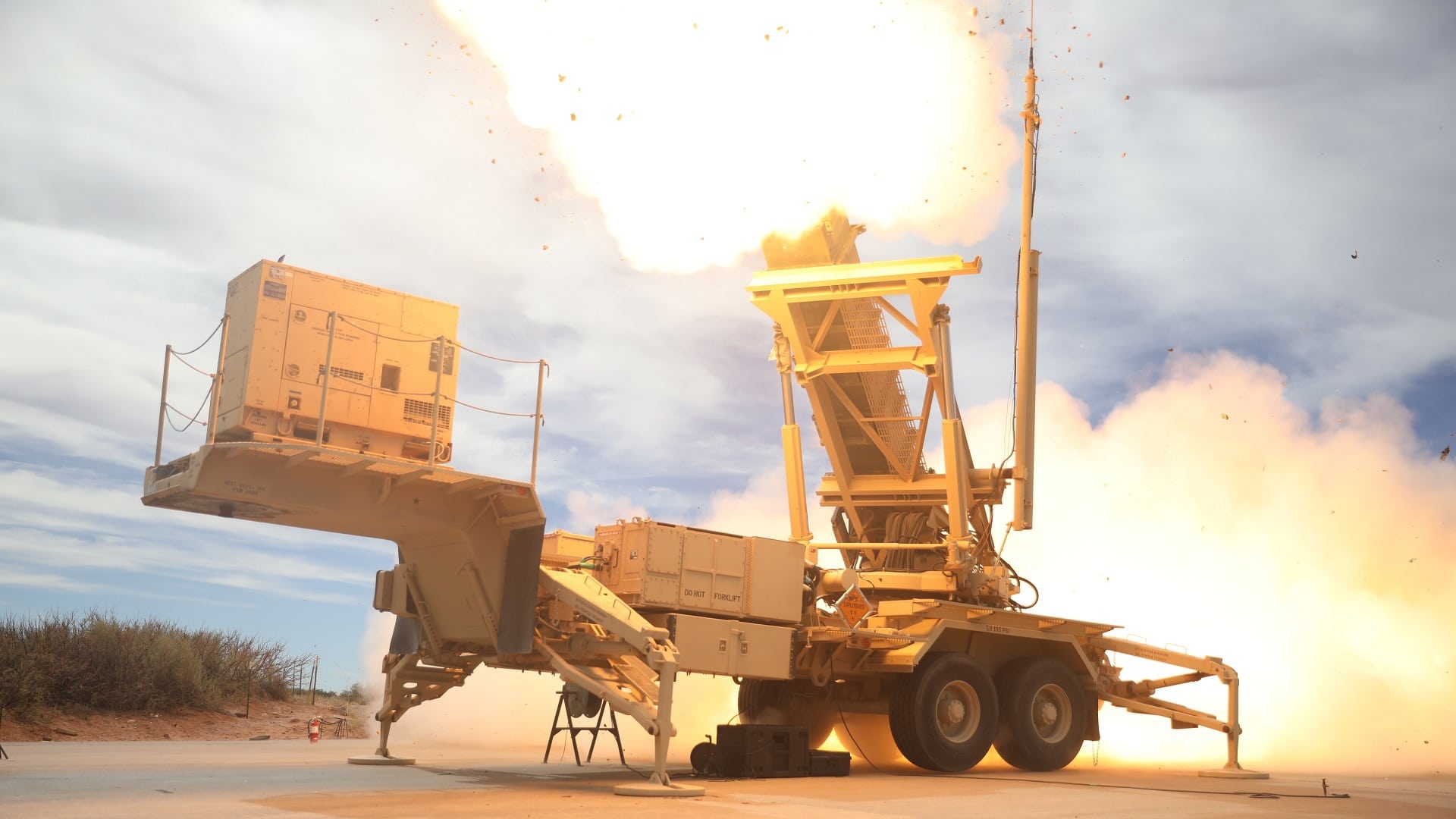
On July 10, the Guardian reported that Kyiv and Washington reached a political agreement on licenses for the production of PAC-3 Patriot interceptors, with the first key deliveries expected in the coming days. The PAC-3 is important not just as another symbol of Western aid. It is one of the few Western interceptors capable of reliably working against ballistic targets, including Iskander-M type missiles. If licensing shifts from a political formula to a production program, Russia's bet on ballistic pressure against cities and critical infrastructure will become more expensive and less predictable.
Of course, one should not fall into Ukrainian optimism here. The Guardian rightly notes the warning from Ukrainian officials: the production of interceptors may take a year or more. The PAC-3 does not appear out of thin air, and its technological chain is more complex than that of an artillery shell. But for Moscow, not only the current stockpile matters. The horizon is important. The Russian missile campaign is built on the assumption that Western missile defense for Ukraine remains scarce and politically vulnerable. A production license, even a slow one, strikes at this very assumption.
The Kremlin's response to this news is telling. According to ISW data from July 9, Dmitry Peskov attempted to present the U.S. decision as something routine and not an escalation, while simultaneously keeping the possibility of talking to Donald Trump open. This is a typical dual construction of Russian diplomacy: publicly downplay the significance of an unfavorable fact but not close the channel through which concessions can still be sought. In Soviet memoirs, such maneuvers were often described as restraint. In today's Moscow, it more often resembles a lack of good choices.
Strikes and Threats to Expand the War Zone
Against this backdrop, Peskov also stated that Russia would expand the zone of military operations in response to Ukrainian strikes on Russian infrastructure. The formula sounds threatening, but in operational terms, it is vague. Russian troops are already striking throughout the depth of Ukraine, including the Kyiv region; ISW recorded that on the night of July 9, Russia launched two Iskander-M ballistic missiles and 94 drones. What exactly can be expanded, aside from the political justification for an already existing practice?
The real answer likely lies not in geography but in intensity. Moscow will try to increase pressure with missiles, drones, and glide bombs as long as it believes that Ukrainian air defense, energy, and public resilience have limited reserves. But this strategy increasingly resembles an economic task with deteriorating margins. Each new cycle of strikes requires ammunition, intelligence, launch platforms, repairs, logistics, and protection of its own airfields and oil depots. According to Syrskyi, Ukraine struck 697 targets in the first half of the year as part of Deep Strike and 7,028 targets as part of Middle Strike. Even if some of these figures are inflated, the direction is clear: Russian depth is no longer a safe accounting of war.
Why Maximalism Persists
The Russian negotiating position remains maximalist not because the General Staff is confident in a near military solution. Quite the opposite. The slower the front, the more important it is for the Kremlin to maintain the appearance of an unchanging goal. Lowering demands to the line of actual contact would seem rational in terms of a ceasefire but irrational from the perspective of a regime that explained the war as a historical return of lands and protection of Russia from NATO.
Therefore, Lavrov speaks of four regions, Peskov talks about expanding the war zone, and Russian missiles continue to fly over Ukrainian cities. These are not three different lines but one system. Diplomacy demands capitulation, the information machine explains the inevitability of victory, and the army tries to create at least some material confirmation of this inevitability. The fewer confirmations there are on the front, the louder the formula sounds.
The paradox of 2026 is simple: Moscow demands a political result at the level of victory but increasingly acts with military means at the level of coercion to a protracted stalemate.
In the coming months, Russia is unlikely to abandon the demands of June 2024. It will test whether it can combine limited ground advancement, strikes on cities, and expectations of Western fatigue into a unified pressure strategy. But if the PAC-3 license truly begins to turn into production, and the pace of Russian advancement remains below the political expectations of the Kremlin, this strategy will survive only as a way to continue the war, not as a way to win it. The difference between these two things is still considered an inconvenient detail in Moscow. In war, such details usually become the bill.
Russia is struggling to achieve its military objectives in Donetsk, Luhansk, Kherson, and Zaporizhzhia Oblasts, with Ukrainian defenses significantly slowing Russian advances. The Ukrainian military reported 32,000 Russian casualties per month, while Ukraine has successfully targeted numerous Russian positions. Diplomatic efforts continue, but Russia's demands remain high despite operational challenges.
- Russia's territorial advances have slowed significantly, with a reduction in active offensive directions from thirteen to six or seven.
- Ukrainian casualties are estimated at 32,000 per month, indicating high operational costs for Russia.
- Ukraine has successfully targeted 697 deep strike and 7,028 middle strike objectives in the first half of 2026.
- Political negotiations are ongoing, with Russia maintaining maximalist demands for territorial control.