
"Parcel Bombs and Ballistics Against Odessa — Russia Systematically Strikes Ukraine's Grain Corridor"
 Dmitri Volkov
“Bandarols” and Ballistics Against Odesa — Russia Systematically Strikes at Ukraine's Grain Corridor
Eleven ballistic missiles targeted Odesa in one night. One was intercepted. The other ten either exploded over residential areas, landed in the port, or simply did not reach their target — the Ukrainian Air Force, as usual, does not provide specifics. This arithmetic is indicative in itself, but the main point lies elsewhere: the night of August 8 to 9, 2026, became not just an episode but another step in the systematic campaign that Moscow has been waging against Odesa since the beginning of summer. A campaign that has a name, a budget, and a clear logic.
Let me start with what is known from the Ukrainian side (Kyiv Independent, Al Jazeera, August 9). The attack involved ballistic, anti-ship, and anti-radiation missiles, as well as over 200 strike drones of the “Shahed” type. Air raid sirens sounded around 3:30 AM, strikes were recorded at 22 points, and debris from intercepted missiles was found at six more. According to the Air Force, 11 missiles were launched at Odesa on a ballistic trajectory, along with about a hundred drones; 72% of the drones were intercepted, and one of the 11 ballistic missiles was shot down. At least 14 people were injured, 11 were hospitalized, and one is in serious condition. Residential buildings in two districts were damaged, and cars were burned. DTEK reported a strike on energy infrastructure: 300,000 families were left without electricity, and water was cut off along with electricity. By evening, according to Zelensky, power was restored to a third of the subscribers.
The port of Odesa was also damaged — and this, in my opinion, is key, although it is the least verifiable circumstance. TASS, citing “reports,” mentions strikes on fuel, lubricants, and military property warehouses in the port. I note that this is exactly how Russian propaganda has described strikes on grain infrastructure for the fourth year: “military objects” turn out to be fuel warehouses, and grain terminals are labeled as “Ukrainian Armed Forces logistics.” It is impossible to verify, but the picture of damage to residential areas and the energy network speaks for itself.
“Bandarol” — A Cheap Response to Expensive Defense
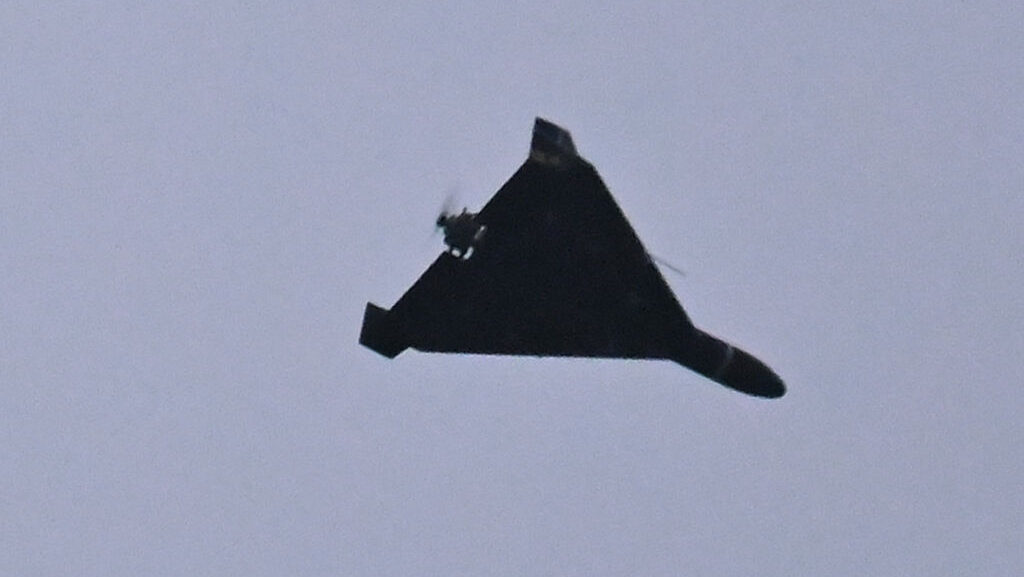
The most interesting aspect of this campaign is not the ballistics but a new participant: the “Bandarol” missile. The name, which makes any Russian speaker's eye twitch, is a pun that the General Staff of the Russian Armed Forces apparently deemed successful: “bandarol” as a postal package and “banderovets” as a propaganda stamp. The weapon is notable not for its ideology but for its economy. According to Western analysts (EUobserver, August 3; Hindustan Times), the cost of a “Bandarol” is about $150,000. This is several times cheaper than Kalibr-class cruise missiles and orders of magnitude cheaper than what it destroys: a grain terminal, a cargo ship, a port crane, a transformer substation.
Here we come to the crux of the matter. A Patriot interceptor costs millions. A “Bandarol” costs $150,000. Even if Ukrainian air defense shoots down half of such missiles, the economics of exchange favors the attacker. This is the classic logic of asymmetry that the Russian defense industry has mastered over four years of war: not trying to surpass the enemy in accuracy but overwhelming them with cheap carriers of damage. In previous columns, I wrote about the transformation of “Shaheds” into carriers of air-to-air missiles R-60 — the “Bandarol” is a logical continuation of the same line. It is telling that on the night of August 9, Ukrainian forces shot down 174 “Shaheds” and five “Bandarols” — meaning the new munition is already being produced in serial batches.
The War Against Grain as a Strategy
Why Odesa specifically? The answer lies not in tactics but in economics. The ports of Odesa are the main gateways for Ukrainian grain exports, and grain is one of the few sources of income that Ukraine has maintained during the war. A strike on the port is a strike against Kyiv's foreign currency earnings, against the budget, against the country's ability to purchase weapons. But there is a second recipient — the global South. Zelensky articulated this directly: “Thus, Russia systematically conducts war against global food security.” This is not rhetoric. According to the head of the Odesa Regional State Administration, Kiper, strikes on the port killed 28 people in the first three weeks of July alone. And UN OCHA confirmed at the end of July: July became the deadliest month for Ukrainian civilians since April 2022 — with 1,396 fatalities.
The historical parallel is self-evident: 2022, the grain deal, from which Moscow first made an instrument, then withdrew, and then switched to “blockade by missiles” — a cheap alternative to a naval blockade that does not require a fleet. Russia has a fleet in the Black Sea, but it is confined to Novorossiysk; however, missiles from the shore and Crimea can reach any terminal. This is a rational, cynical, and very Russian choice: not to spend on a fleet but to expend cheap munitions against someone else's economy. I remind you that on the same night, strikes also targeted the energy sector of the Sumy region and a residential high-rise in Kharkiv (two dead, 21 injured) — the summer campaign strikes across the country, but Odesa has been assigned a special role.
Limits of the Campaign
My forecast will be cautious. On one hand, the “Bandarol” and ballistics have natural limits: the production of cheap missiles is constrained by microelectronics, and the Graham sanction law, passed by the Senate last week, hits the very suppliers of components for the first time. On the other hand, until autumn — the harvest and export season — Moscow has maximum incentive to pressure the grain corridor. I expect that strikes on the ports of Odesa will continue with increasing intensity at least until the end of September, and Ukrainian air defense will be forced to choose between the city and the port.
The war for grain is a war of attrition against foreign budgets with cheap munitions. Russia can afford this as long as the price of the question is $150,000 per shot. As long as the West responds with million-dollar interceptors, the arithmetic remains on Moscow's side. It will only change when it becomes cheaper to shoot down than to buy.
It remains to add a detail that speaks volumes about the nature of this war. On the same night, Ukrainian drones killed six people in Belgorod, and in the morning, Kyiv struck Russian oil refineries. Both sides call it “retribution.” I would call it something else — a mirror degradation: when the war is waged against civilian infrastructure, civilian losses cease to be an accident and become currency. Odesa, like Belgorod, pays the bills presented not by the military but by those who believe that $150,000 is an acceptable price for someone else's port.
Russia launched 11 ballistic missiles and over 200 drones at Odessa on the night of August 8-9, 2026, resulting in significant damage to residential areas and energy infrastructure. At least 14 individuals were injured, and the strikes are part of a systematic campaign against Ukraine's grain corridor. The Ukrainian Air Force reported that 72% of the drones were intercepted, but the attacks continue to threaten Ukraine's economic stability.
- 11 ballistic missiles were launched at Odessa, with 1 intercepted and 10 causing damage.
- At least 14 people were injured, with 11 hospitalized and 1 in serious condition.
- The strikes damaged residential buildings and energy infrastructure, leaving 300,000 families without power.