
Patria and General Cherry Turn Finland Into Europe's Drone Testbed
 Alexandra Reeves
Patria and General Cherry Turn Finland Into Europe's Drone Testbed
Europe has spent two years talking about learning from Ukraine and mostly buying time instead. Patria's 23 August letter of intent with Ukraine's General Cherry matters because it does something rarer: it moves battlefield know-how into a Western European production line. That is not just another industrial announcement. It is an admission that Europe's drone problem is no longer about prototypes. It is about speed, scale and whether NATO industry can absorb lessons written under fire before the next war starts.
What the Deal Actually Says
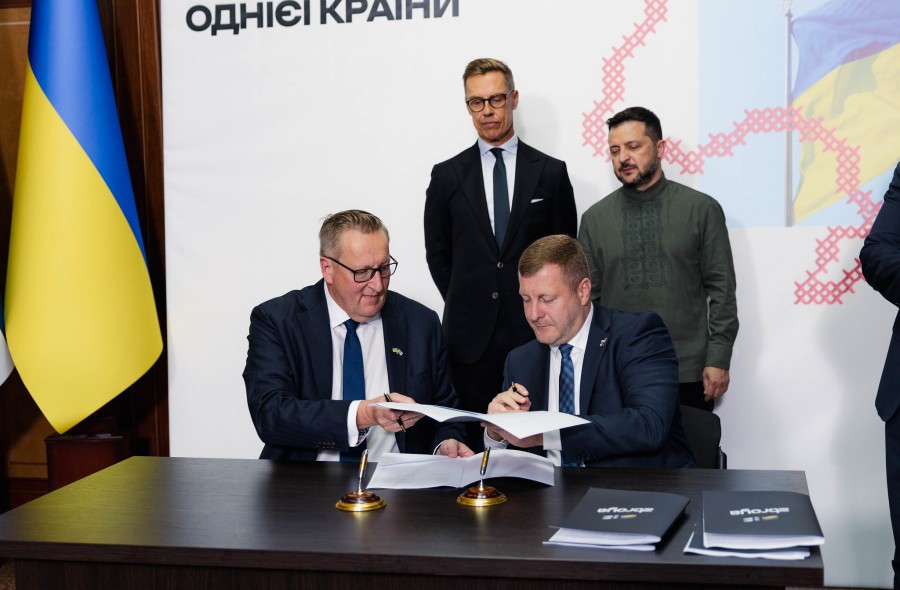
According to Patria's statement, the Finnish company plans to start drone production in Finland with General Cherry, a Ukrainian manufacturer that specialises in strike FPV drones, fibre-optic drones, interceptor drones and fixed-wing UAVs. The two companies signed the letter of intent on 23 August with Western European defence needs explicitly in mind. Defense News framed it the same way on 24 August: not as a symbolic technology exchange, but as a manufacturing partnership aimed at turning a Ukrainian wartime niche into something a European defence market can buy at volume.
- Patria says the project is meant to support Europe's defence capabilities through production in Finland.
- General Cherry brings frontline design experience from strike FPV, fibre-optic and aerial-target interceptor drones.
- Patria brings certification, industrial process, exportability and access to European customers.
Why Finland Matters More Than the Drone Brand
The easy reading is to focus on the platform. General Cherry's own website promotes the battlefield-proven Bullet interceptor, with a quoted top speed of 310 km/h, endurance up to 25 minutes and an operating range or altitude figure of 6 km. Those numbers are useful, but they are not the main story. The main story is geography and industrial politics. Finland is one of the few European states that takes homeland defence seriously, borders Russia directly, and already sits inside a Nordic defence cluster tied to Kongsberg and Nammo through Patria's ownership structure. If you wanted to pull Ukrainian drone lessons into a serious, sanctions-compliant, NATO-adjacent production ecosystem, Finland is almost the textbook location.
That matters because Europe has had a bad habit since 2022: praise Ukrainian innovation, then route procurement through slow, fragmented national processes that treat drones as accessories rather than consumables. Ukraine does not fight that way. It iterates fast, accepts short product cycles and designs for electronic warfare from the start. A Finnish production line linked to a Ukrainian developer is one of the first signs that at least part of Europe now understands the lesson.
Europe Is Finally Buying Feedback Loops, Not Just Airframes
Patria's press release is revealing in what it emphasises. It does not talk only about drones. It talks about sensors, communications, data, artificial intelligence and operating in contested environments. That is exactly the right frame. A drone factory without a feedback loop from real combat is just another electronics workshop. Ukraine's value to Europe is not cheap labour or a dramatic backstory. Its value is that Ukrainian companies have been forced to solve guidance, resilience and cost problems against a live Russian threat set.
General Cherry makes that point, even if in self-promotional language. Its website claims the company is ranked number one in DELTA for FPV strikes and says its interceptors down one out of every two Molniya UAVs, while serving more than 200 units and brigades. Those claims are company-supplied and should be treated cautiously. But even discounted, they point to something European defence ministries have often lacked: designers who are learning weekly from actual attrition.
This Is Also a Quiet Vote Against Europe's Old Procurement Culture
Here is the uncomfortable part. If this partnership succeeds, it will be because Europe trusted a wartime Ukrainian manufacturer to shape requirements faster than many established Western primes can. That is a political statement whether Brussels wants to say so or not.
For years, European defence procurement rewarded paperwork, not adaptation. Big primes could promise exquisite capability on generous timelines, and governments accepted it because the peace dividend had hollowed out urgency. Ukraine changed the economics. A drone that is good enough today is often more useful than a perfect drone in eighteen months. The Patria-General Cherry model accepts that reality. It tries to marry Ukrainian iteration speed with Finnish production discipline. Europe needs more of that and less PowerPoint patriotism.
What to Watch Next
The obvious question is whether this becomes real volume or just another memorandum. Three indicators matter.
- Whether Patria identifies a concrete production schedule, not just a political partnership.
- Whether the first products are interceptors and fibre-optic systems, where Ukrainian combat experience is hardest to fake and most immediately relevant to European air defence.
- Whether Western European customers are willing to buy rapidly updated systems instead of freezing requirements too early.
If those pieces move, this deal will matter far beyond Finland. It will show that Europe's most serious military adaptation is no longer coming from legacy doctrine centres alone. It is coming from companies willing to import Ukrainian battlefield logic into NATO industry.
The Real Meaning of the Deal
Patria's move is not proof that Europe has fixed its drone problem. It is proof that some Europeans have finally admitted where the answers are coming from. The continent does not just need more drones. It needs a defence industry that can learn at wartime speed from people who are already fighting a wartime enemy. If that sounds obvious, it is only because Europe waited far too long to say it out loud.
Patria and General Cherry signed a letter of intent on 23 August to initiate drone production in Finland, aiming to leverage Ukrainian battlefield experience for European defense needs. This partnership focuses on producing various types of drones, including FPV and interceptor models, to enhance Europe's military capabilities. Finland's strategic position and commitment to defense make it an ideal location for this initiative, which seeks to address Europe's drone production challenges.
- Patria signed a letter of intent with General Cherry on 23 August to produce drones in Finland.
- The partnership aims to integrate Ukrainian battlefield experience into European defense manufacturing.
- General Cherry specializes in various types of drones, including FPV and interceptor drones.
- Finland's geographical and political context makes it a strategic location for this production.
- The project is intended to enhance Europe's defense capabilities through rapid production.