
Patriot and NATO 2026 — Europe's five defense ministers promise leadership without industrial sovereignty
 Dr. Klaus Weber
Patriot and NATO 2026 — Europe's five defense ministers promise leadership without industrial sovereignty
Berlin/Brussels, October 29, 2026. Five European defense ministers declared on October 26 that Europe must take on more responsibility within NATO. Two days later, NATO Secretary General Mark Rutte and EU Defense Commissioner Andrius Kubilius reaffirmed the same message. Political consensus is growing. The military substance lags behind. This is the actual finding of the current European defense debate.
A promise with clear institutional limits
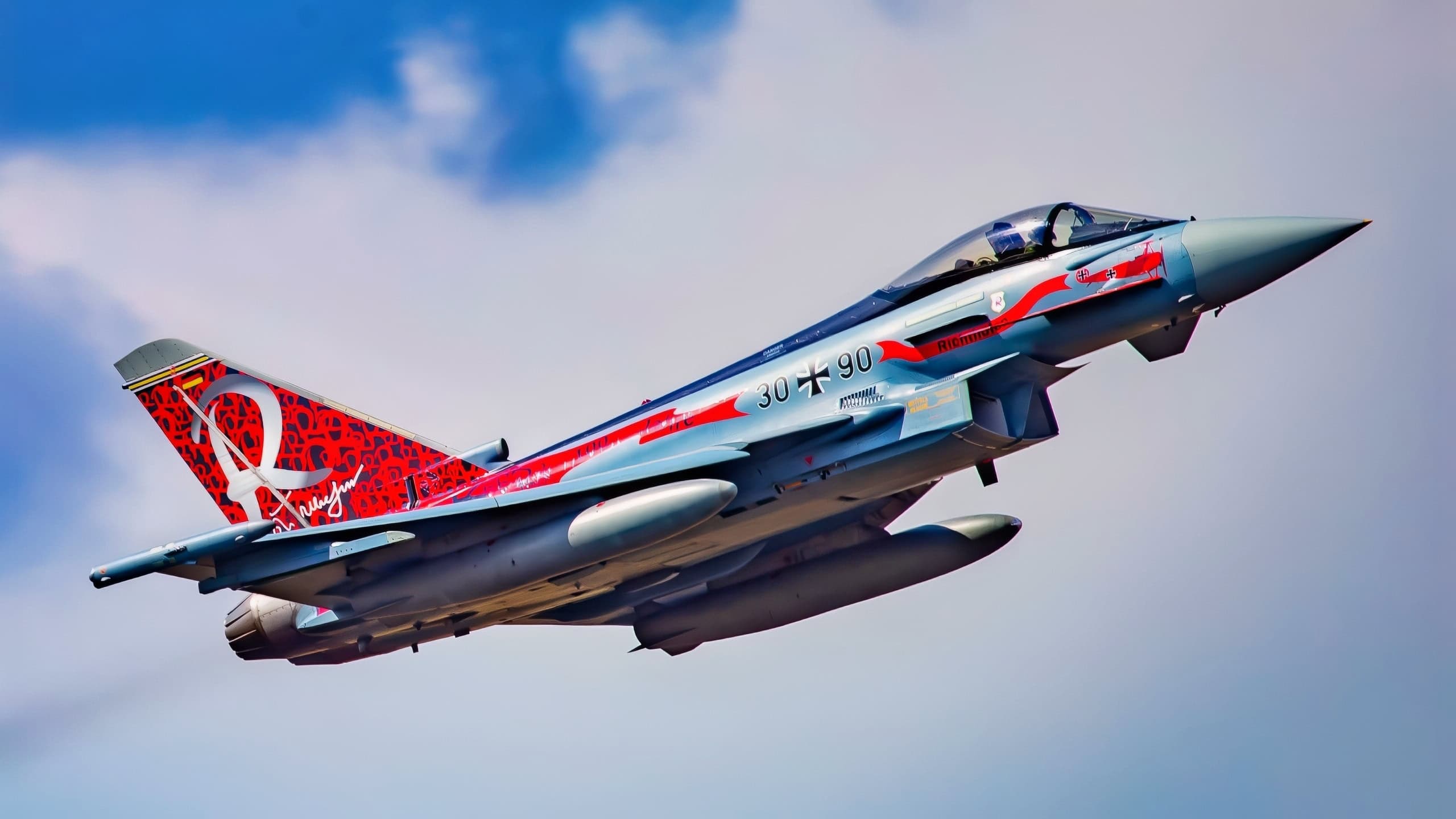
The defense ministers of France, Germany, Italy, Poland, and the United Kingdom speak in their statement of greater political and military leadership for Europe. At the same time, they emphasize that the United States remains an "indispensable Ally." This formulation is not a diplomatic triviality but the institutional framework of the entire project. Europe is to become stronger within NATO, not alongside it.
This is reasonable. The statement mentions common standards, industrial cooperation, higher readiness, and a closer connection between NATO and the EU. However, it avoids the crucial question: Who will provide the scarce capabilities when political responsibility actually shifts from Washington to Europe? Leadership is a function. Air defense, satellite reconnaissance, strategic airlift, and long-range precision weapons are capabilities.
Patriot shows the difference between procurement and sovereignty
European air defense is the toughest test for this distinction. The NATO program PURL continues to deliver urgently needed systems to Ukraine, including air defense. NATO Secretary General Rutte explicitly welcomed on October 28 that the EU-Ukraine Support Credit can be used through PURL for such deliveries. This creates a politically convenient model: Europe finances, NATO prioritizes, the United States delivers.
This makes sense for the short-term support of Ukraine. As a model of European strategic autonomy, it is inadequate. A Patriot system is not just a launch device. It includes radar, command and control, interceptor missiles, spare parts, software, training, and an industrial supply chain. Whoever cannot produce or at least permanently control these elements does not possess an autonomous capability but rather access to an allied capability.
This is precisely where Europe's structural problem lies. The E5 statement rightly speaks of standardized requirements. But standardization without joint procurement remains a declaration of intent. Joint procurement without secured production capacity remains a contract. And a contract without its own supply chain is only as resilient in a crisis as the priorities of the exporting partner.
The EU can provide rules and money, but no shortcuts
NATO-EU cooperation currently focuses on military mobility, defense production, and support for Ukraine. Kubilius referred in Brussels to progress in transporting equipment and personnel across Europe. This is necessary because a brigade that does not arrive at a border is militarily just a budget line. Yet here too, the difference between administrative improvement and military effect becomes evident.
The EU possesses regulatory and financial instruments. It can simplify approval processes, structure loans, and prioritize infrastructure. However, it cannot create an ammunition factory, an air defense radar, or a qualified workforce in just a few months by decree. Europe's defense industry suffers less from a lack of strategic papers than from fragmented demand, long development cycles, and national protectionist interests.
This also explains why the new European rhetoric sounds so smooth. Every actor can agree with it. France hears the call for European responsibility, Germany for NATO compatibility, Poland for deterrence on the eastern flank, Italy for industrial participation, and London for a lasting transatlantic framework. The political coalition is broad, precisely because the distribution of costs and production risks has not yet been decided.
Ukraine is not just a recipient but a capability partner
The E5 statement places Ukrainian defense capability at the center of European security. This is strategically correct but must not remain stuck in the old donor logic. Ukraine has operational experience with drones, electronic warfare, reconnaissance, and the rapid adaptation of systems. Europe should integrate this competence into its procurement and development structures instead of merely delivering finished products.
This would concretize the debate on European sovereignty. Joint development with Ukrainian companies, standardized NATO interfaces, and long-term procurement contracts could have a quicker impact than another political commitment to "strategic autonomy." However, this would require national industries to relinquish part of their exclusive control. This is precisely where European projects regularly fail.
More leadership requires more than five signatures
The five ministers have taken an important political step. They have explicitly linked Europe's greater responsibility within NATO to American presence, thereby easing the old dichotomy between "autonomy" and "Atlanticism." This is the good news.
The bad news is that the statement still lacks a priority list with production numbers, delivery timelines, and responsibilities. How many Patriot interceptors will be available from European production in 2027? Which states will finance the stockpiles? Who will bear the costs for replacements and upgrades in a crisis? As long as these questions remain unanswered, "more European leadership" remains a political intention, not a military capability.
Therefore, Europe does not need another debate about whether it wants to be sovereign. It must decide which capabilities it can actually reduce dependence on and which it consciously accepts. More money is necessary for this, but not sufficient. The paradoxical truth is: Europe can only lead more within NATO if it is willing to pursue less national industrial policy. Patriot may be a beginning of cooperation. As a substitute for its own production power, it is inadequate.
Sources
- E5 Defence Ministers’ Statement, British Government, October 26, 2026
- NATO, Secretary General highlights strong NATO-EU cooperation, October 28, 2026
- Reuters, “Errant Ukrainian drones fuel tensions on NATO’s eastern flank,” October 24, 2026
Five European Defense Ministers pledged on October 26, 2026, to enhance Europe's political and military leadership within NATO, emphasizing the need for greater responsibility and cooperation. They acknowledged the U.S. as an essential ally while calling for improved European defense capabilities, particularly in air defense and strategic autonomy. However, the statement lacked specific details on production and responsibilities regarding military equipment.
- Five European Defense Ministers called for greater responsibility within NATO.
- The U.S. remains an 'indispensable ally' according to the ministers.
- The report highlights the need for European strategic autonomy in defense capabilities.
- The EU is integrating Ukraine's defense capabilities into European security.
- The ministers' statement lacks specific production and responsibility details.