
Ukraine's 1,543 Drones Expose NATO's 2026 Air Defence Problem
 Alexandra Reeves
Ukraine's 1,543 Drones Expose NATO's 2026 Air Defence Problem
The number that should worry Brussels
Ukraine's latest battlefield tally is not just another attrition statistic. It is a warning about the kind of air war NATO may have to fight next.
According to Ukraine's Ministry of Defence, Russian forces lost an estimated 1,543 operational-tactical unmanned aerial vehicles on October 27, 2026. The same daily update recorded 21 artillery systems, 266 vehicles and fuel tanks, and two cruise missiles destroyed or otherwise lost. Kyiv's numbers are wartime estimates, not an independently audited balance sheet. But even with that caveat, the scale is hard to dismiss: one day of reported Russian drone losses is larger than the entire inventory of many European air forces' most sophisticated interceptors.
The important point is not whether every figure is exact. It is what the figure reveals about the battlefield's economics. Russia can put large numbers of relatively cheap aircraft into the air; Ukraine must detect, classify and defeat them with a mixture of electronic warfare, guns, mobile air-defence systems and expensive missiles. That is an unpleasant equation for any alliance built around a limited number of high-end batteries.
Ukraine is fighting an industrial problem, not a gadget problem
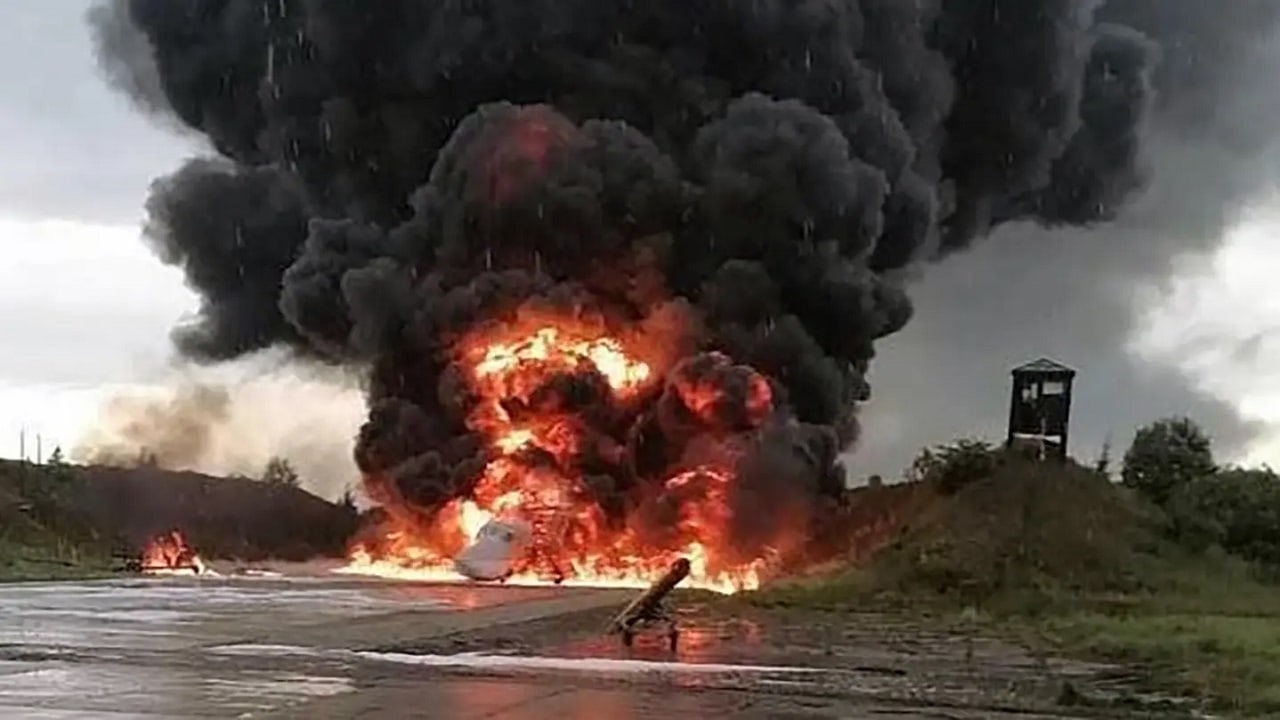
Drone warfare is often described as a technology race. That description is too comfortable. The decisive contest is increasingly industrial: who can manufacture, launch, replace and adapt unmanned systems faster than the other side can intercept them?
Operational-tactical drones are not all the same. Some provide reconnaissance and artillery correction. Others are one-way attack systems. Their value comes from the network around them: operators, software, communications links, target libraries and the artillery or missiles waiting to exploit the data. A drone that never reaches its target may still force an air-defence unit to reveal its radar, expend a missile or abandon a firing position.
That is why the Ukrainian Ministry of Defence's separate figures for UAVs, artillery and cruise missiles matter. They describe a layered contest, not a single weapons category. Russia is losing aircraft, but Ukraine is also being forced to spend time and munitions managing the stream. The exchange rate matters more than the headline kill count.
NATO has finally seen the lesson up close
NATO's own behaviour shows that the alliance understands the problem. During a visit to Kyiv on October 6, the NATO Military Committee said its representatives examined Ukrainian air-defence, drone-warfare and unmanned-ground-system operations. Admiral Giuseppe Cavo Dragone described the purpose as learning from Ukraine's “new types of warfare” and improving Allied preparedness.
That is the right instinct. It is also not enough.
NATO's air-defence architecture remains uneven across Europe. Patriot and comparable systems are valuable, but they are scarce, expensive and designed primarily around high-end threats. Short-range systems, guns, electronic warfare and passive sensors are less glamorous, yet they are the tools needed to handle a mass raid without burning through strategic interceptors. The alliance needs a force structure in which a radar-guided missile is not the default answer to a drone that costs a fraction of the interceptor.
The bigger weakness is command and control. A drone defence network must share tracks quickly across national boundaries, combine military and civilian sensors, and decide when a target deserves a missile, a gun, a jammer or no engagement at all. Europe has made progress on integrated air and missile defence, but the political reality is still a patchwork of national systems, different rules of engagement and competing procurement priorities.
The Russia problem is also a NATO budget problem
There is a temptation in Brussels to treat Ukraine's experience as a special case: a brutal war on Europe's eastern edge that can be studied, funded and then kept at arm's length. That assumption is wrong. Russia's drone campaign is a practical demonstration of how an adversary can impose costs on a richer force without matching it platform for platform.
For NATO, the response cannot be a shopping list of premium interceptors. It needs depth. That means more low-cost interceptors, mobile guns, electronic-warfare teams, counter-drone aircraft, decoys, hardened logistics and the industrial capacity to replace them. It also means exercises that measure how long an air-defence network can keep functioning after its radars are jammed, its ammunition trucks are targeted and its data links are disrupted.
Europe's defence debate still rewards visible platforms. Fighters and missile batteries are politically easier to display than software, spare parts and ammunition production. But the war in Ukraine keeps making the same argument: a force that cannot sustain a month of high-volume attacks is not resilient because its brochure is impressive.
What to watch next
The next useful indicators are not simply daily Russian or Ukrainian loss totals. Watch whether NATO members expand layered counter-UAS procurement, whether national air-defence networks begin sharing data in real time, and whether European industry can deliver inexpensive interceptors at scale. Also watch the ratio between drones launched and high-end missiles expended. That ratio will say more about battlefield sustainability than a single dramatic strike.
Ukraine's reported 1,543 Russian UAV losses on October 27 may eventually be revised. The strategic lesson will not be. NATO has spent years preparing to stop the most dangerous missile in the sky. The harder question is whether it can afford to stop the thousandth cheap drone as well.
Sources
- Ukraine Ministry of Defence, “Russian losses in Ukraine as of October 28, 2026” — official battlefield-loss estimate.
- NATO, “NATO Military Committee visits Kyiv,” October 7, 2026 — official account of the visit and focus on air defence and drone warfare.
Ukraine reported the loss of 1,543 Russian operational-tactical drones on October 27, 2026, highlighting significant challenges for NATO's air defense. The Ukrainian Ministry of Defence noted additional losses of artillery systems, vehicles, and cruise missiles. NATO is actively assessing these developments to improve its preparedness against similar threats in the future.
- Ukraine reported 1,543 Russian drones lost on October 27, 2026.
- NATO is assessing Ukraine's air defense and drone warfare capabilities.
- The report highlights the industrial nature of drone warfare.
- NATO's air defense architecture is uneven across Europe.
- The report emphasizes the need for low-cost interceptors and improved command and control.