
Patriot PAC-2 in Spain and Greece — Europe's Air Defense Fails Due to National Reserves
 Dr. Klaus Weber
Patriot PAC-2 in Spain and Greece — Europe's Air Defense Fails Due to National Reserves
Berlin, October 10, 2026. Hundreds of Patriot missiles in Spain and Greece are reportedly nearing the end of their intended storage or operational life. Nevertheless, both countries, according to consistent media reports, refuse to transfer them to Ukraine. NATO and the EU are pushing for a handover. The situation is less a dispute over goodwill than a precise test of Europe's defense architecture: a missile that is considered a national reserve is politically not yet a European resource.
The Problem is Not Existence, but Availability
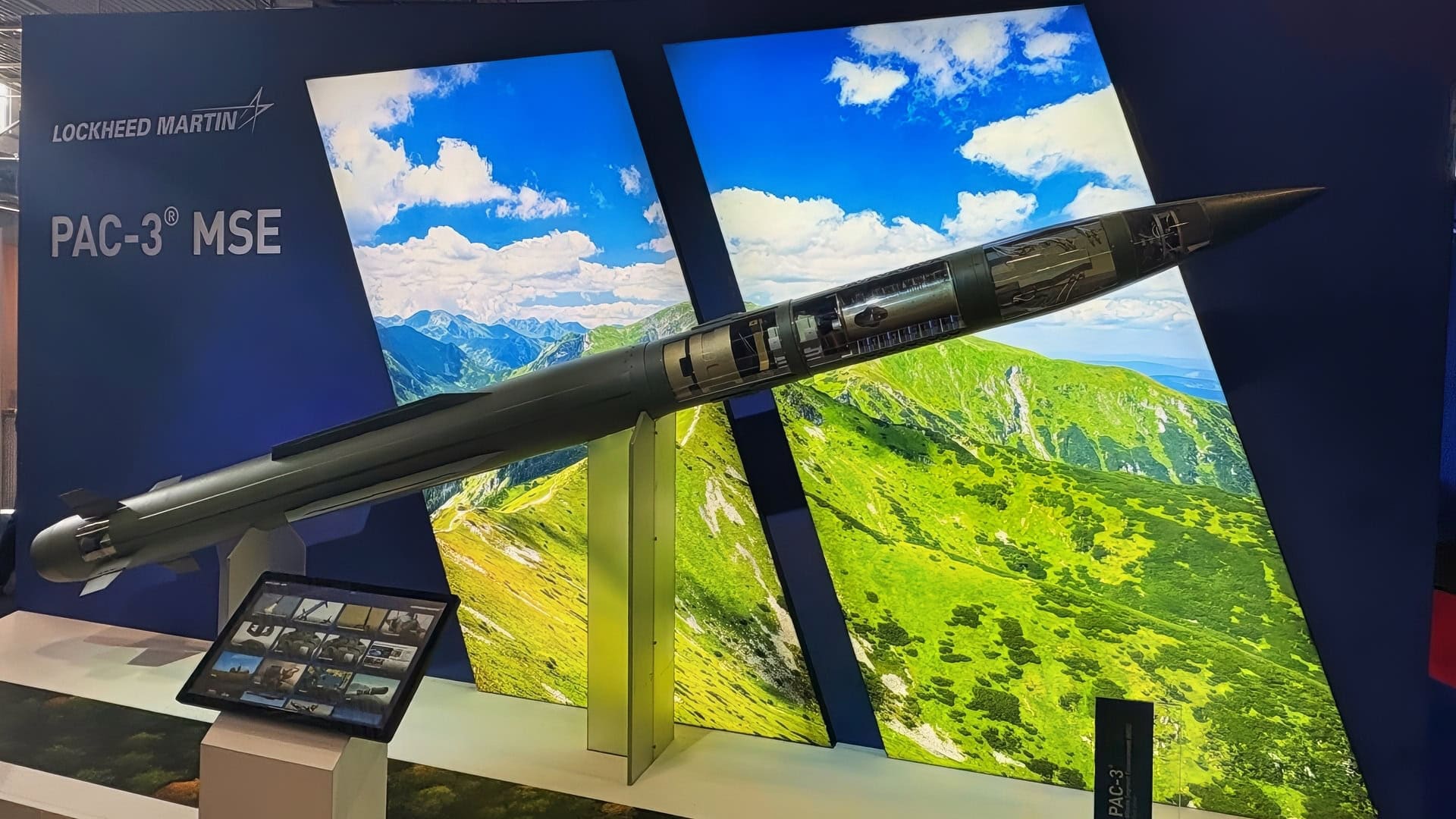
Reports from The Telegraph, Kyiv Post, and Ukrainian specialized media speak of Patriot missiles whose durability is expiring. According to previous reporting, this primarily concerns older PAC-2 stocks. There is no reliable public figure for individual missiles; the phrasing "hundreds" should therefore be understood as a media estimate and not as an official inventory list. This limitation is important. In a war where Russian missile and drone attacks hit Ukrainian cities and energy facilities, what matters is not the accounting stock but the number of operational interceptors that can actually reach a battery in a few weeks.
Moreover, Patriot is not an ordinary spare part. The system integrates radar, fire control center, launch device, data connections, and various missile families. A state can transfer munitions without delivering a complete battery; however, it loses part of its own sustainability. For Athens and Madrid, the political calculation is therefore not irrational. Both countries protect their own territories, critical infrastructure, and alliance commitments with relatively limited air defense reserves. An expiration date makes the decision uncomfortable, but it does not automatically render the munitions dispensable.
The European Mechanism Has a Dangerous Gap
The pressure from NATO and the EU follows a comprehensible logic. If a missile becomes unusable in a few years, its transfer to Ukraine may be militarily more sensible than its later scrapping. For Kyiv, the munitions have immediate value today; for the transferring state, a claim for replacement, financing, or a political security guarantee arises simultaneously. It is precisely at this point that Europe's current coordination capability ends.
The EU can organize loans, joint procurement, and industrial programs. However, it cannot easily force national defense ministries to treat a stock as a "European reserve." NATO can identify a capability gap, but it does not have the political authority to take Spain or Greece's own risk assessment away. The result is a classic institutional gap: the threat is collective, the munitions remain national, and the costs of a transfer are also accounted for nationally.
This is the flip side of European defense integration. For years, there has been talk of joint procurements and strategic autonomy. In a serious situation, however, it becomes clear that even existing systems cannot be redistributed without complicated negotiations. A European market for armaments is not yet a European reserve holding. Joint financing is not yet joint readiness.
Why the Patriot Question Extends Beyond Ukraine
The debate touches on the central weakness of European air defense: too few systems, too little ammunition stockpiles, and long industrial lead times. Patriot missiles cannot be replaced in the short term by political declarations. Even if Washington allows additional deliveries, production remains a bottleneck. Europe can provide money, but it cannot overnight reproduce PAC-2 stocks.
This development is particularly relevant for Germany. Berlin has experienced in recent years how quickly Patriot stocks come under pressure due to support for Ukraine and its own needs. Therefore, the German debate on air defense must not stop at the number of ordered systems. What matters are interception rates, replenishment stocks, spare parts, training, and the ability to protect multiple locations over extended periods. A brochure counts platforms; a war counts ammunition reserves.
The political consequences are uncomfortable. First, the EU would need to create a financially and legally binding mechanism that compensates for the transfer of expiring munitions and prioritizes replacement. Second, NATO states would need to plan their air defense reserves more transparently without disclosing operational details. Third, the European industry would need to scale up interceptor production more quickly. Otherwise, Europe's "strategic autonomy" remains a procurement formula while critical technology and a large part of the supply chain lie outside Europe.
The Paradox of Expiring Munitions
Spain and Greece face a real dilemma: if they keep the Patriot missiles, they protect their own preparedness but risk that part of the stock will expire unused. If they transfer them, they help Ukraine immediately but weaken their national reserve and must hope for a replacement delivery. NATO and the EU can politically influence this decision, but they cannot simply smooth it over.
This case therefore does not simply show a lack of solidarity. It shows that Europe continues to organize its defense as a sum of national insurances, even though it speaks of a common threat. As long as there is no common stock, no common replacement financing, and no sufficient European production, the demand for redistribution remains an appeal. Europe's problem is not that it does not possess Patriot missiles. Europe's problem is that no one is clearly responsible for their common availability.
Sources
- Kyiv Post, “NATO, EU Urge Greece and Spain to Send Expiring Patriot Munitions”, October 10, 2026.
- The Telegraph, “Spain and Greece refuse to give up Patriots that could save Ukraine”, October 9, 2026.
- The New Voice of Ukraine, “Spain, Greece have hundreds of Patriot missiles nearing expiration”, October 10, 2026.
Spain and Greece refuse to transfer hundreds of expiring Patriot PAC-2 missiles to Ukraine, despite pressure from NATO and the EU. This decision reflects the countries' concerns over their own air defense capabilities and the political implications of sharing military resources. The situation underscores the challenges within Europe's defense coordination and the need for a more unified approach to military resources.
- Spain and Greece have hundreds of Patriot missiles nearing expiration.
- Both countries refuse to transfer these missiles to Ukraine despite NATO and EU pressure.
- The situation highlights the limitations of Europe's defense architecture and national reserves.