
Pentagon: laser defense needs hardware, not more demos

Assistant Secretary of War for Critical Technologies Michael Dodd said the Department of War needs to move directed energy weapons out of testing and into the field, arguing in a Sept. 22 post on X that high-energy laser programs have proven the technology works and now need ruggedized, deployable systems for air and missile defense.
Dodd did not announce a new program or contract in the post. His comments add to a public campaign he has run for months, pushing the military services to commit money and timelines to fielding lasers and high-power microwave weapons rather than running further demonstrations.
The Army has already made that commitment. It awarded AeroVironment a $464.8 million contract this year for the Enduring-High Energy Laser program, a 30-kilowatt system the company has called the first production contract for a directed energy weapon in U.S. history. The Army has also agreed to transition its Joint Laser Weapon System into a formal program of record. Dodd has said his office funds prototypes and early, small-scale deployments, but expects the individual services to buy directed energy systems by the dozens or hundreds once a design proves itself.
The Navy and Air Force have not made comparable commitments. Dodd said in August he is pressing both services to follow the Army’s lead, with the Navy interested in much higher-powered systems, in the hundreds of kilowatts to a megawatt range, to defend ships against cruise missiles, a heavier requirement than the counter-drone systems the Army is pursuing.
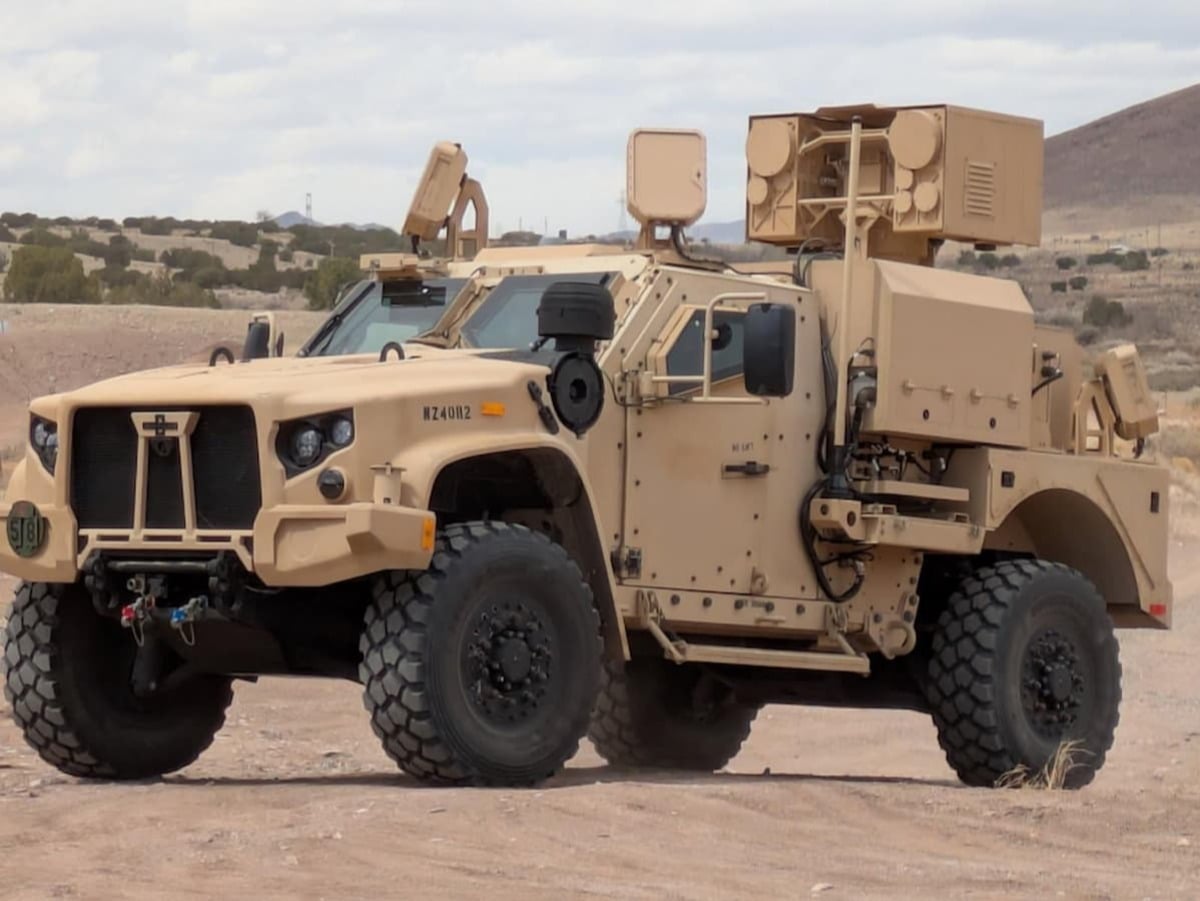
Cost is central to the Pentagon’s argument for lasers. Officials have said a single laser shot can cost around $3.50, compared to millions of dollars for a Patriot interceptor missile, against drones that can cost tens of thousands of dollars apiece. Dodd has pointed to that mismatch as the reason directed energy needs to scale quickly, saying in March that the department aims to field directed energy weapons broadly within 36 months.
The technology still faces real constraints. Laser and microwave systems draw on rare earth elements and other critical minerals largely processed in China, and Dodd has acknowledged that per-system costs remain high because production has not scaled up. He has also pushed industry to shrink the size, weight and power demands of these weapons so they can fly on aircraft, telling contractors in August to bring “hardware we can put on a range and stress” rather than further concept presentations.
The Air Force has tested high-power microwave systems for counter-drone use, including the trailer-mounted THOR system, though its most recent publicly disclosed test dates to 2023. The Air Force Research Laboratory has said it is developing a follow-on system.
Content preview only. Full article available at source. View Full Article
Assistant Secretary of War Michael Dodd emphasized the need for the Department of War to transition directed energy weapons from testing to deployment, advocating for high-energy lasers for air and missile defense. The Army has committed to this initiative, awarding a $464.8 million contract for a 30-kilowatt laser system. Dodd is urging the Navy and Air Force to follow suit, citing the cost-effectiveness of laser technology compared to traditional missile systems.
- The Department of War is advocating for the deployment of directed energy weapons.
- The Army awarded a $464.8 million contract for a 30-kilowatt laser system.
- The Navy is interested in higher-powered systems for ship defense.
- Cost efficiency of laser systems compared to traditional missiles is highlighted.
- Dodd expects individual services to purchase directed energy systems in large quantities.