
Pentagon plans to destroy hundreds of Minuteman II missile motors
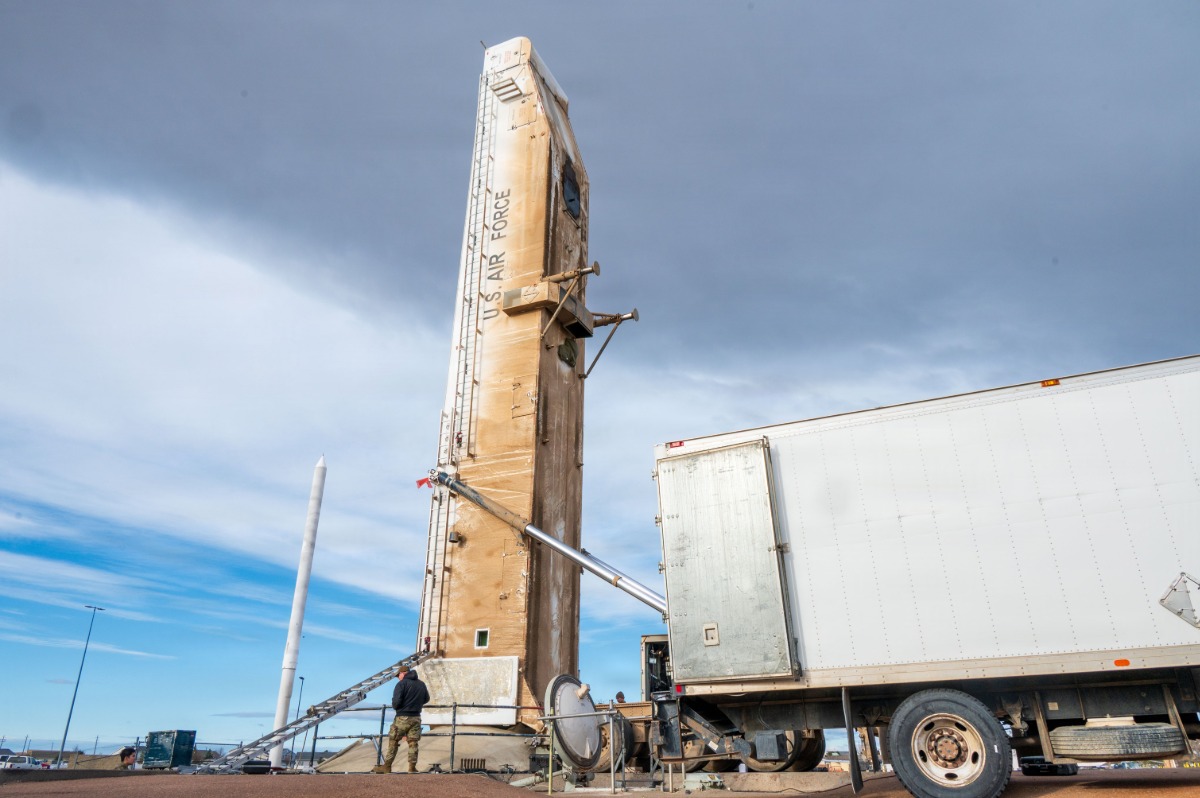
The U.S. Space Force is looking for a contractor to dismantle and destroy the rocket motors from decommissioned Minuteman II intercontinental ballistic missiles.
Space Systems Command’s Assured Access to Space directorate published a Request for Information on April 30, 2026, seeking industry capabilities for the demilitarization of Minuteman II ICBM SR-19 and M55 solid rocket motors. The notice — designated RSLP-Demil2026 and managed by the Rocket Systems Launch Program — is a follow-up to a similar sources sought notice published in May 2025, indicating the program has been working to define its requirements and industry landscape for over a year. Responses are due by May 15, 2026.
The numbers involved are substantial. The government has identified a minimum of 91 SR-19 motors and 87 M55 motors that will require demilitarization — 178 motors at minimum — with the possibility of an additional 41 SR-19 and 63 M55 motors bringing the potential total to 282. The contract is expected to run for five years with an option to extend for an additional five years, for a maximum performance period of ten years. The government estimates a minimum of 12 motors will require demilitarization annually, with a maximum of 48 per year — a range that reflects uncertainty about processing rates, contractor capacity, and the pace at which motors can be removed and transported from storage.
The Minuteman II was the second generation of the U.S. land-based ICBM force, deployed in underground silos across the American heartland from the early 1960s through its retirement under the START I treaty, which the United States and Soviet Union signed in 1991. The missile used a two-stage solid propellant design: the M55 served as the first-stage motor, a massive 54,000-pound, 25-foot-long steel-cased propulsion unit that provided the initial boost; the SR-19 served as the second stage, a 15,000-pound, 14-foot titanium-cased motor that continued the missile’s acceleration toward its suborbital trajectory. Both stages used solid propellant based on ammonium perchlorate — the same oxidizer used in the Space Shuttle’s solid rocket boosters — mixed with fuel and binders into a rubbery compound that burns at tremendous energy release rates when ignited.
Demilitarizing these motors is not a simple disposal task. The solid propellant inside them remains chemically reactive decades after manufacture, and the preferred demilitarization method — washout — involves using high-pressure water to extract the propellant from the motor casing in a controlled process that produces ammonium perchlorate-laden water requiring careful waste management. The RFI specifically asks contractors to describe their capability to handle AP-laden water and ensure waste streams adhere to local and federal environmental standards. Alternative methods such as crack-and-burn exist but come with their own environmental and safety considerations that the RFI’s language suggests the government wants to understand across the full range of available approaches.
The physical characteristics of the motors create specific handling and transportation requirements. The M55 Stage I motor’s 54,000-pound weight and 25-foot length require heavy-lift transportation equipment and facilities capable of receiving and storing objects of that mass and dimension. The SR-19’s titanium casing — 6AL-4V titanium, the same alloy used extensively in aerospace structures — adds complexity to the casing disposition after propellant removal, since titanium is both valuable and requires specific processing. The motors are currently stored at Camp Navajo, Arizona, and the RFI asks whether contractors could coordinate transportation from that location to their demilitarization facilities if the government provides the specialized rocket motor semi-trailers for the conveyance.
The certification requirement — demilitarization to 5X certification — is the Department of War’s standard for the highest level of demilitarization, ensuring that the materials cannot be reconstituted into functional military items. For ICBM motors, 5X certification means the propellant is completely removed, the casing is rendered unusable as a propulsion system, and all components are documented and tracked through the disposal process. This level of rigor reflects both arms control treaty obligations and the inherent security sensitivity of strategic weapons components.
The program that manages this work — the Rocket Systems Launch Program, or RSLP — has a history that extends beyond demilitarization. RSLP has long managed the conversion of retired military ballistic missiles into launch vehicles for small satellites, using motors from decommissioned Minuteman and other systems to provide low-cost access to space for government payloads. The demilitarization mission exists alongside that conversion mission because not all retired motors are suitable for or needed in the launch vehicle program — the ones that cannot be repurposed must be safely destroyed.
The fact that this is a follow-up RFI, issued a full year after the original sources sought notice from May 2025, suggests the program encountered either limited industry response the first time or needed additional market research to refine its requirements before proceeding to formal acquisition. Publishing a second RFI with a 10-year potential performance period and detailed technical specifications represents a more mature acquisition posture than the initial inquiry.
Content preview only. Full article available at source. View Full Article
The U.S. Space Force is seeking contractors to demilitarize and destroy a minimum of 178 Minuteman II missile motors, with a potential total of 282. This Request for Information was published on April 30, 2026, with responses due by May 15, 2026. The motors are currently stored at Camp Navajo, Arizona, and the demilitarization process involves complex handling and environmental considerations.
- U.S. Space Force is looking for contractors to dismantle Minuteman II missile motors.
- A minimum of 178 motors will require demilitarization, with a potential total of 282.
- The contract is expected to last for ten years with annual demilitarization estimates.
- Demilitarization involves complex processes due to the chemical reactivity of solid propellant.
- The motors are currently stored at Camp Navajo, Arizona.