
Leopard 2A8 strengthens Germany's northern flank with Norway in 2026
 Dr. Klaus Weber
Leopard 2A8 strengthens Germany's northern flank with Norway in 2026
37 of Norway's 54 new Leopard 2A8 tanks have been manufactured in Levanger since October 15. The number is militarily manageable, but politically noteworthy: Germany and Norway are shifting part of their defense cooperation from procurement contracts to a joint industrial and operational infrastructure. The Hansa Treaty, signed in February 2026, aims to be more than just a good bilateral photo. It is an attempt to make the northern NATO flank more resilient through concrete dependencies.
From procurement contract to joint capability
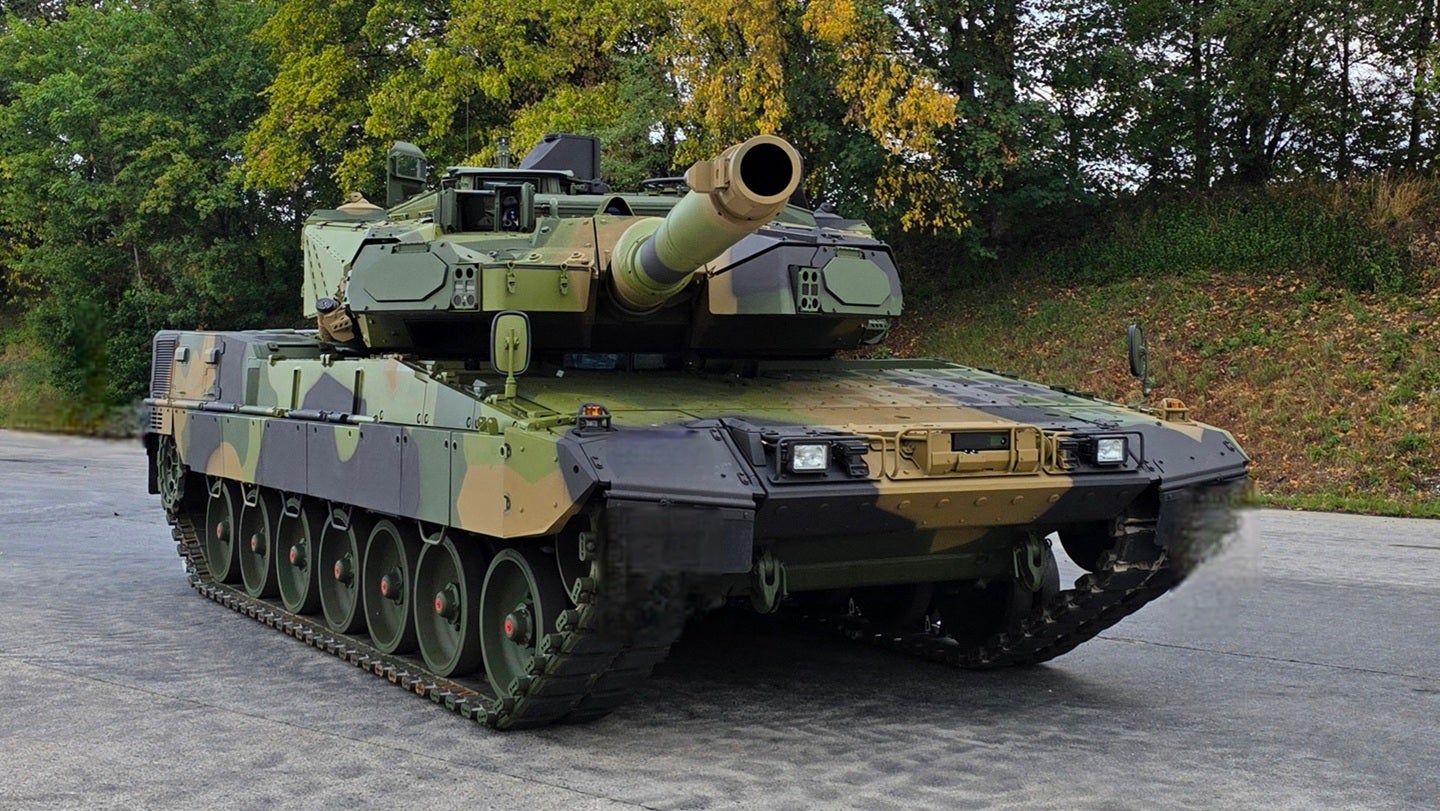
The production facility of KNDS and Ritek was established within 18 months and, according to Defense News, has a capacity of up to 36 battle tanks per year. What matters is less the annual quantity than the question of what is permanently connected: manufacturing, testing, spare parts, and maintenance. Norway is not just receiving a German system; Germany gains an industrial and logistical anchor in the far north.
This is the real lesson from the European defense problems of recent years. Interoperability does not arise from a joint press release but from identical platforms, shared maintenance, and personnel who master the same procedures. The Leopard 2A8 is, in this case, a land warfare system, but its political function extends far beyond the tank itself. It forms a building block for a regional defense economy that, in times of crisis, relies less on long national supply chains.
Hansa is an alliance of long supply chains
The Hansa Treaty encompasses, according to the Norwegian Ministry of Defense, maritime operations, combined land warfare, rapid reinforcement, defense industry, and space-based reconnaissance, target acquisition, and communication. This breadth is sensible but also carries a known risk: the more projects are gathered under a political label, the easier it is to create the impression that cooperation is already capability.
For the U212CD submarines, the institutional foundation is more solid. Germany and Norway have each ordered six submarines. The approximately 73-meter-long, larger, and quieter submarines are based on the Type 212A family but feature improved sensors and propulsion systems. Joint training, maintenance, and infrastructure at Haakonsvern create a level of availability that no country could guarantee as efficiently on its own. The 3SM anti-ship missile and potential Canadian involvement also expand the circle of users.
This is precisely where the difference lies between Hansa and many European declarations of intent. A joint submarine squadron or joint tank maintenance creates costs that are politically difficult to reverse. This is not a weakness but the institutional core of credible deterrence.
The northern flank demands more than tanks
The strategic logic is geographically clear. Norway is located at the access to the North Atlantic, at the Barents Sea, and near the sea routes through which Russian submarines reach the Atlantic. Germany, in turn, is trying to take on a lasting role in the North Atlantic after years of focusing on continental Europe. The German P-8A Poseidon is intended to monitor the GIUK gap; during Cold Response 2026, the Bundeswehr participated with about 1,800 soldiers.
The space component is therefore not a decorative addition. Andøya offers access to polar orbits and thus to a launch geometry important for reconnaissance satellites. Berlin and Oslo are examining a joint imaging satellite constellation as well as secure communication. For Germany, this would be a step towards not only financing European reconnaissance but also making it more resilient with a northern location.
However, one must not overlook the technical reality. A tank factory in Norway does not replace a munitions reserve. A satellite working group does not replace a completed constellation. And 1,800 soldiers at an exercise are not yet a permanently available reinforcement. The value of Hansa therefore depends on measurable milestones: spare parts inventories, maintenance times, joint operational planning, secured data connections, and actually available platforms.
European integration in a smaller format
Hansa is not a substitute for NATO and also not a model for a pan-European army. Precisely for this reason, it could work. A German-Norwegian format has a clearer perception of threats than many EU projects and connects concrete geography with manageable political decision-making processes. Canada can complement this structure through submarines, Arctic capabilities, and critical raw materials without the need for immediate harmonization of the entire European defense policy.
The weakness remains scalability. 37 Norwegian Leopard 2A8 tanks are a visible beginning but not a European series solution. If each bilateral partnership develops its own standards, data architectures, and maintenance chains, the end result will be an archipelago of good projects rather than a joint capability. Germany must therefore demonstrate that Hansa is embedded in NATO structures and is not just another national special path.
The Leopard 2A8 in Levanger is thus neither a revolution nor merely an industrial contract. It is a test for European defense integration. If common production leads to common availability, Berlin has achieved a strategic gain. If only the factory opens and the rest is postponed, Hansa remains symbolic politics with particularly good photo opportunities. Europe's dilemma continues to be: it cannot buy its security alone but must assemble it organizationally.
Sources
- Defense News, “From tanks to space, Norway and Germany forge ahead with Hansa defense pact,” October 30, 2026.
- Norwegian Ministry of Defense, “Norway and Germany sign a new defense arrangement,” February 2026.
- German Federal Ministry of Defense, “Deepening the German-Norwegian partnership,” 2026.
Germany and Norway began production of 37 Leopard 2A8 tanks in Levanger on October 15, 2026, as part of the Hansa defense agreement. This initiative aims to enhance NATO's northern flank through increased military cooperation and logistical ties. The agreement also encompasses maritime operations and combined land warfare capabilities, reflecting a strategic shift in Germany's military focus towards the North Atlantic.
- Germany and Norway are producing 37 Leopard 2A8 tanks in Levanger since October 15, 2026.
- The Hansa agreement aims to strengthen NATO's northern flank through industrial cooperation.
- Norway is acquiring a German military system, enhancing logistical ties with Germany.
- The agreement includes maritime operations and combined land warfare capabilities.
- Germany is increasing its military presence in the North Atlantic region.