
Australia's $1.7B Ghost Shark Fleet Makes Sea Denial Scalable in 2026
 Marcus Chen
Australia's $1.7B Ghost Shark Fleet Makes Sea Denial Scalable in 2026
Australia has spent years waiting for a submarine force it does not yet possess. The immediate answer is now visible: an extra-large autonomous underwater vehicle that can leave a shipping container, carry a dozen sea mines, and disappear without a crew. Canberra is spending A$1.7 billion on a Ghost Shark fleet described only as “dozens and dozens” of systems. That is not a substitute for a Virginia-class submarine. It is something more useful for the next five years: a way to put uncertainty into an adversary’s route plan at scale.
The Payload Is the Point
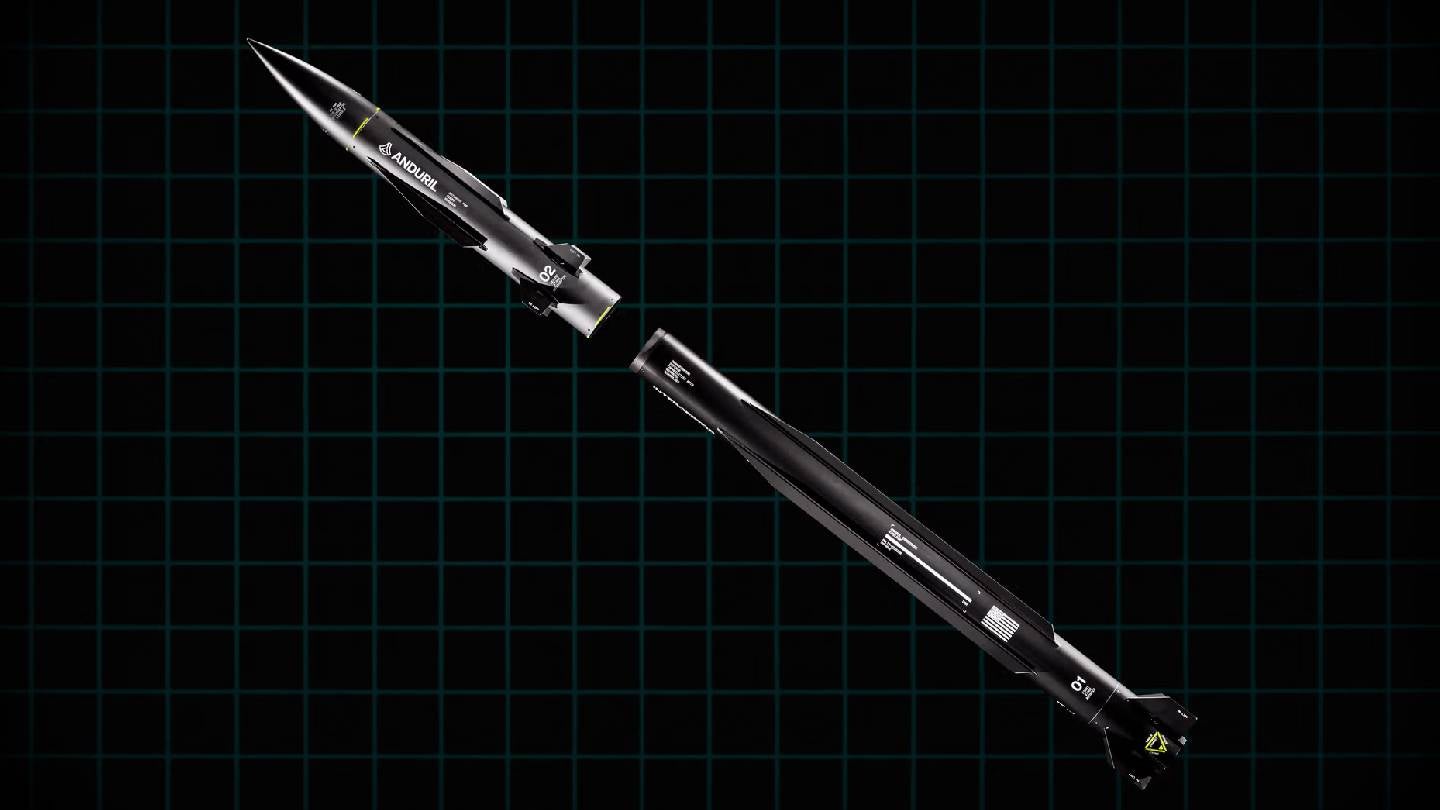
At an Oct. 19 unveiling at Anduril Australia’s Sydney facility, officials disclosed three payload families for the Royal Australian Navy’s Ghost Shark: sea mines, Altius-600 loitering munitions, and logistics caches. Defense News reported that a single vehicle could clandestinely place roughly a dozen mines in a maritime chokepoint. The Altius payload adds a second option: a Ghost Shark can approach quietly, release a surveillance-and-strike drone, and preserve its own freedom to continue the mission.
The modular bay matters more than any advertised top speed or endurance figure. Australia has not published a full operational specification, and that is deliberate. The weapon is the uncertainty. A PLAN commander planning to move through a strait, around a harbor entrance, or toward a seabed cable route must now account for a platform that may have launched from a pier, a small ship, or a commercial-looking container. The Royal Australian Navy says future payloads could include lightweight or heavyweight torpedoes and electronic-warfare packages. Until those claims become fielded capability, they should be treated as a development path, not an inventory list.
Why This Fits Australia's Geography
Australia’s problem is distance. Its northern approaches are enormous, its critical trade routes run through predictable maritime corridors, and its six Collins-class submarines are aging. Nuclear-powered boats under the AUKUS plan will arrive years from now, assuming the production schedule holds. Ghost Shark can begin closing that gap before the first SSN enters Australian service.
This is a classic sea-denial calculation. A crewed submarine brings superior sensors, command-and-control, endurance, and the ability to make complex decisions in contact. It is also scarce, expensive, and politically visible. An autonomous underwater vehicle with a mine payload offers less information and less flexibility, but it can be risked in greater numbers. If an adversary must spend a frigate, a helicopter detachment, or days of route-clearance operations to deal with each suspected vehicle, the cost exchange begins to favor Canberra.
The arithmetic is still incomplete. “Dozens and dozens” is not a force structure. The RAN has not said how many Ghost Sharks will be combat-ready, how quickly they can be re-tasked, or how they will receive targeting data in a contested undersea environment. A mine is only as useful as its placement, fuzing, identification rules, and post-deployment confidence. Autonomy does not eliminate the communications problem; it moves the problem earlier, into mission planning and sensor fusion.
A Distributed Fleet, Not a Miniature Submarine
Recent reporting by Defense News and USNI News points to a broader Australian approach: combine Ghost Shark with the smaller Speartooth vehicle and other uncrewed systems rather than wait for one exquisite platform to solve every mission. That is the right direction. A network of different-sized systems can conduct reconnaissance, seed mines, deliver supplies, and complicate anti-submarine warfare without exposing a $4 billion crewed submarine to every task.
But distributed warfare only works if the distribution is real. The systems need deployers, maintainers, mission planners, secure data links, recovery procedures, and a doctrine that allows commanders to accept autonomous behavior when communications fail. Australia’s A$1.7 billion buys hardware; it does not automatically buy the operational ecosystem. Canberra should publish readiness metrics, not just production milestones: available vehicles, trained crews, payload turnaround time, and the percentage of missions that can proceed after losing contact.
The AUKUS Bridge Has Limits
Ghost Shark is often presented as a bridge to nuclear-powered submarines. It is better understood as a hedge against the bridge becoming too long. The Collins fleet cannot be assumed to cover every patrol requirement, while the Virginia-class transfer and SSN-AUKUS timelines remain vulnerable to American and British shipyard capacity. An autonomous fleet gives Canberra another layer of sea denial during the period when political commitments are ahead of industrial capacity.
It also gives the United States and Japan a useful partner capability. The U.S. Navy is testing larger uncrewed undersea concepts, and Australian systems operating around northern approaches could contribute to a common undersea picture. Yet interoperability should not become a euphemism for dependence. If Australian Ghost Sharks require American targeting, American software updates, or American recovery assets to function, Canberra has purchased a remote-controlled capability, not sovereign undersea power.
The Strategic Effect Is Uncertainty
China does not need to believe every Australian claim for the program to matter. It only needs to assume that some Ghost Sharks are real, armed, and difficult to find. That forces more investment in mine countermeasures, route surveillance, harbor security, and undersea communications protection. In a Taiwan contingency, the systems could not stop a large maritime operation by themselves. They could, however, make the approaches to northern Australia, the Indonesian archipelago, and key South Pacific logistics routes harder to use and harder to insure.
The danger is overclaiming. A drone with a mine bay is not a submarine, and a payload reveal is not proof of combat readiness. Australia should judge Ghost Shark by one question: how many days can it sustain a denial campaign after the first vehicles are detected or lost? If the answer is measured in weeks rather than a demonstration cycle, the program will have changed the regional balance.
The conclusion is straightforward. Ghost Shark will not replace AUKUS, and it will not make Australia immune to blockade or coercion. It can make the sea around Australia cheaper to contest. That is precisely why the program deserves attention: not because an autonomous vehicle is glamorous, but because dozens of imperfect systems may impose more operational friction than a handful of perfect ones.
Sources
- Defense News, “Australia unveils secretive Ghost Shark underwater drone payloads,” Nov. 2, 2026.
- USNI News, “Royal Australian Navy’s Ghost Shark UUVs Will Have Minelaying, UAV Payloads,” Oct. 21, 2026.
- ASPI Strategist, “Mines, drones, supplies: Australia lets adversaries know what Ghost Shark can do,” Oct. 29, 2026.
Australia is investing A$1.7 billion in the development of the Ghost Shark fleet, a series of autonomous underwater vehicles designed for sea denial operations. The Royal Australian Navy plans to utilize these vehicles to deploy sea mines and loitering munitions, enhancing maritime security in the region. This initiative aims to address the limitations of the aging Collins-class submarines and provide a strategic advantage in undersea warfare by introducing uncertainty for potential adversaries.
- Australia is investing A$1.7 billion in the Ghost Shark fleet.
- The Ghost Shark can carry sea mines and loitering munitions.
- The fleet aims to enhance sea denial capabilities in the region.
- Future payloads may include torpedoes and electronic warfare packages.
- The program is seen as a bridge to future nuclear-powered submarines.