
Saudi Arabia intercepts a Houthi ballistic missile in 2026 as fighting approaches Aden
 Ahmed Al-Rashid
Saudi Arabia Intercepts Houthi Ballistic Missile in 2026 as Fighting Approaches Aden
On November 2, 2026, the Saudi-led coalition announced the interception of a ballistic missile launched by the Houthis towards the kingdom, while sources told Reuters that Houthi forces advanced to within approximately 80 kilometers of Aden. These two pieces of news are not separate incidents; the Yemeni front is once again becoming a direct test of Riyadh's ability to protect its depth, rather than just an internal Yemeni battle.
From Air Alert to Ground Pressure
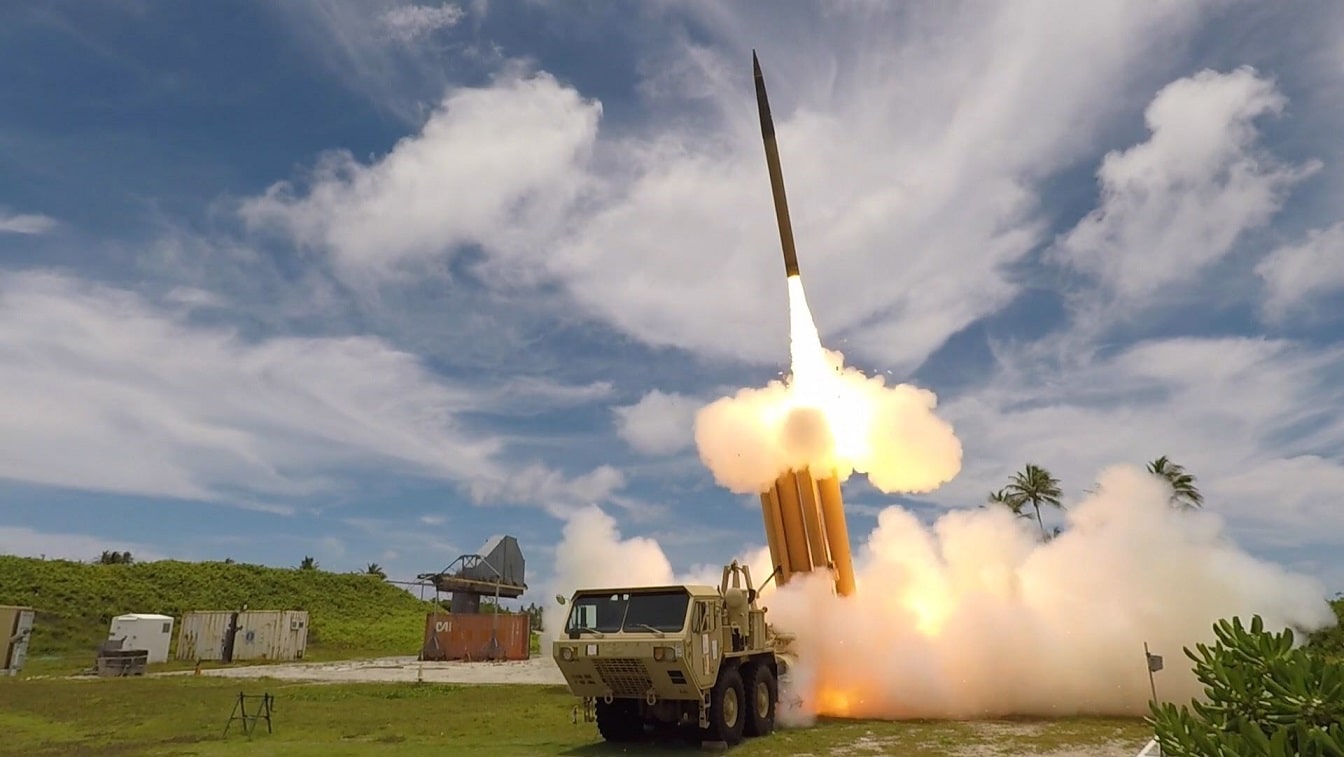
Al Jazeera reported that the coalition announced the interception of another Houthi missile aimed at Riyadh, coinciding with intensifying fighting in Al-Jawf Governorate. Regional sources also spoke of cross-border airstrikes targeting Saudi military sites. Not all of these accounts can be treated as equal facts; precise numbers, launch sites, and interception methods have not been publicly disclosed, and some information comes from parties involved in the conflict. Politically, it is certain that the Houthis want to transfer the cost of the war to Saudi territory, and Riyadh has been forced to reassert its defensive umbrella in multiple directions.
The approach to Aden adds a more dangerous layer. If the field advance is confirmed, the Houthis are not only pressuring the Yemeni government and local forces but are also nearing a maritime knot overlooking the Gulf of Aden and Bab el-Mandeb. Controlling an island, elevation, or coastal passage does not mean possessing full maritime capability, but it grants the group observation and launch points, as well as a bargaining chip regarding shipping movements. From a military standpoint, the distance to Aden is less important than the quality of the routes that have come under threat and the ability of government forces to maintain supply lines.
What the Interception System Reveals
The success of intercepting one missile does not equate to closing the front. Air defense operates within three interconnected dimensions: sensors and interception, training, and then command and control systems. Saudi Arabia possesses an advanced network of radars and American interception missiles, but their effectiveness depends on early warning, battery distribution, missile stockpiles, and rules of engagement. If the defender is forced to protect Riyadh, oil facilities, airports, and southern borders simultaneously, each interception consumes a financial and operational resource that cannot be quickly replenished.
The deeper problem is that the ballistic missile is not alone on the battlefield. The Houthis can mix missiles with drones, ground attacks, and ambushes at the borders. This type of combined attack exhausts the most expensive air defense system if it lacks low-cost layers to counter drones, ground forces capable of striking launch platforms, and human intelligence to identify their locations before launch. Purchasing additional batteries may improve the numbers, but it does not alone address the cycle of reconnaissance, targeting, and reloading.
Saudi Arabia Between Washington and Tehran
The communications between the Saudi and American defense ministers amid regional tensions confirm that Riyadh still sees the American presence as an irreplaceable guarantee. At the same time, Anadolu reported that Iranian Foreign Minister Abbas Araghchi stated that dialogue with Saudi Arabia is ongoing, calling for regional security free from foreign military presence. Here lies the contradiction that shapes Saudi calculations: understanding with Iran may reduce the Houthis' ability to escalate, but practical deterrence against missiles and attacks remains tied to American networks.
This does not mean that Tehran controls every Houthi decision or that Saudi-Iranian dialogue will automatically stop the war. The Houthis have local interests and use the discourse of Palestine and the Red Sea to expand their legitimacy, but external technical and political support enhances their ability to persist. Therefore, any negotiation that does not include a verifiable mechanism to stop attacks and dismantle missile platforms will remain a temporary truce and may merely be a period for repositioning.
The Danger at Bab el-Mandeb
The approach to Aden links the ground front with maritime security. Saudi Arabia can protect its ports and oil facilities through air defense, but it cannot turn every commercial ship passing near Yemen into a target it protects itself. Additionally, any new escalation will increase insurance premiums and lead shipping companies to prefer the route around the Cape of Good Hope, even if no successful attack occurs. In this case, the economic outcome may be achieved before the Houthis succeed in sinking a single ship.
For the UAE, Oman, and Egypt, the Houthi advance towards Aden imposes difficult decisions regarding support for local forces and protecting shipping lines without being drawn into an open war. The longer the fighting continues, the more the gap between declared alliances and the actual ability to manage a multi-front war, from the Saudi border to Bab el-Mandeb, becomes apparent.
Assessment
Saudi Arabia achieved a tactical gain by intercepting the missile, but developments around Aden and Al-Jawf mean that the initiative remains distributed. The Houthis' ability to combine ground pressure with missile threats punishes Riyadh for its over-reliance on purchasing systems, while the political solution remains fragile without a measurable security mechanism. Any military personnel who has served in the region knows that air defense buys time, but it does not win wars. The contradiction that will face the kingdom in 2026 is that it wants to reduce reliance on the United States, at a time when the widening Yemeni threat makes that reliance more necessary.
Sources
- Reuters, November 2, 2026, report on Houthi advances to within 80 kilometers of Aden.
- Al Jazeera, November 2, 2026, report on the interception of a Houthi missile and escalating fighting in Al-Jawf.
- Anadolu Agency, November 3, 2026, Iranian statements on the continuation of dialogue with Saudi Arabia.
- Associated Press and The Jerusalem Post, reports from November 1 and 2, 2026, on Gulf tensions and Saudi-American defense cooperation.
Saudi Arabia intercepted a Houthi ballistic missile on November 2, 2026, as Houthi forces advanced to within 80 kilometers of Aden. The conflict is escalating, with reports of intensified fighting in Al Jawf Governorate. The interception reflects Saudi Arabia's ongoing military operations to protect its territory amid increasing threats from Houthi forces.
- Saudi Arabia intercepted a Houthi ballistic missile on November 2, 2026.
- Houthi forces advanced to within 80 kilometers of Aden.
- The situation indicates a direct threat to Saudi Arabia's territorial integrity.
- The report highlights the complexity of the military engagement in Yemen.
- Iranian officials stated that dialogue with Saudi Arabia is ongoing.