
PLA 155mm Naval Gun Sea Trials Approach Deployment, 055 Destroyer Firepower Ledger Reopened
 Li Minghui
PLA Navy's 155mm Naval Gun Sea Trials Near Deployment, 055 Destroyer's Firepower Ledger Reopened
On June 13, the South China Morning Post brought an old detail back to the forefront: the Chinese Navy's 155mm naval gun, reportedly completed about two weeks of sea testing near Dalian aboard the experimental ship "Wu Yunduo." The interesting part of this news is not the grand term "naval gun revival," but rather it brings an old question back to the table: in an era where missiles and drones are expensive, does the PLA Navy really need a larger gun?
First, let's see what this gun has confirmed
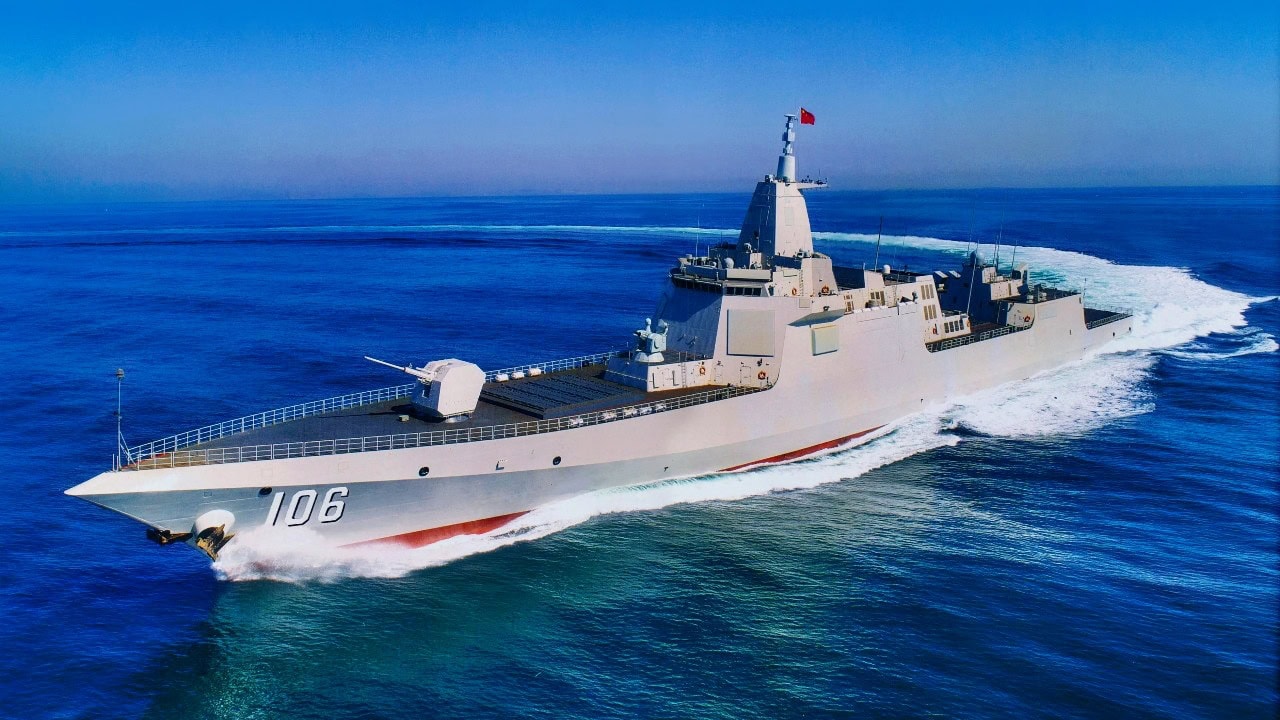
Public information remains limited. The South China Morning Post states that this system uses 155mm shells, installed at the bow of the approximately 6000-ton experimental ship "Wu Yunduo," which went to sea in early May and returned about two weeks later. Photos from February already showed the ship being fitted with a large naval gun at the Liao Nan Shipyard in Dalian, Liaoning. Sea trials typically involve more than just a simple outing; they assess hull stability, fire control accuracy, reliability of continuous firing, and the impact of large-caliber recoil on the deck and ammunition supply system.
Naval News provided a more cautious analysis in February. It compared the turret in the photos with transport images circulating online in 2025, noting that the label indicated a caliber of 155mm and a system weight of about 21.8 tons, but still used a tone of "reasonable speculation." I believe this phrasing is important: what can be confirmed now is the shipboard testing and caliber clues, but it cannot be directly inferred that it has been finalized for service, nor can it be said that the next batch of 055 will definitely switch guns.
155mm is not meant to replace missiles
Today's destroyer main guns look like old furniture on the deck. The H/PJ-45 series 130mm naval guns used on the 052D and 055 are sufficient for warning shots, close-range anti-surface, and limited land support missions. If the 155mm continues to advance, its core value lies not in being "stronger than missiles," but in being "cheaper than missiles and having more margin in terms of charge and range compared to 130mm ammunition."
A partial horizontal comparison can be made: the U.S. Zumwalt-class AGS 155mm naval gun has high technical goals, but ammunition costs spiraled out of control, ultimately becoming a lesson learned. An article on naval gun technology from Xinhua in 2025 mentioned that the AGS could originally strike land targets about 185 kilometers away, while the 127mm MK45 could also reach around 70 kilometers with extended-range guided munitions. This indicates that the direction of large-caliber naval guns is not absurd; the real challenges are ammunition pricing, supply reliability, and hull suitability.
In the Taiwan Strait scenario, it supplements firepower density
If we place it in the Taiwan Strait scenario, the 155mm naval gun resembles a "suppression tool" before and after landing operations, rather than a decisive weapon. Targets such as enemy beachhead positions, mobile anti-ship missile sites, radar stations, and shallow depth fortifications can certainly be struck by ballistic and cruise missiles, but each one is expensive and not suitable for prolonged suppression. The advantage of naval guns is sustained firepower and lower per-shot costs, especially when combined with drone targeting, guided shells, and fleet data links, which can provide denser firepower in tactical depth.
- Advantages: Lower ammunition costs, suitable for sustained suppression, with 155mm charge capacity and improved projectile space exceeding that of 130mm.
- Costs: Heavy turret, large ammunition, reduced rate of fire, higher requirements for hull structure, ammunition supply systems, and fire control integration.
- Limitations: It cannot replace air defense missiles or anti-ship missiles, nor is it suitable for high-value destroyers to remain close to land-based anti-ship firepower zones for extended periods.
In simple terms, the 155mm naval gun does not turn warships back into battleships, but rather adds a "consumable firepower tier" to large surface vessels. This tier may not be frequently used in low-intensity maritime friction but could become valuable in high-intensity landing support.
What I care more about is which type of ship it will be installed on
Mainstream speculation points to subsequent batches of the 055 or successors to the 052D, but this raises a question mark. The 055 has space and power redundancy, theoretically making it the easiest to accommodate a 21-ton turret; however, the 055 also serves as a regional air defense and fleet command node, making it tactically unwise to push it into a close-in fire support position. If future specialized destroyers or amphibious support ships are developed to enhance land firepower, it would align better with the usage logic of this gun.
An easily overlooked detail is that the Chinese Navy has not abandoned electromagnetic railgun experiments, yet it is now pushing the conventional 155mm gun to the sea trial stage. This does not seem like a technological regression, but rather like the engineering department is doing risk hedging: railguns may take many more years, while conventional artillery and guided munitions can form usable capabilities sooner. The real unanswered question is whether the PLA ultimately wants a "gun that can be showcased on ships" or a complete firepower system that can be supplied long-term, mass-produced, and has manageable ammunition costs.
Main sources: South China Morning Post, Naval News, Xinhua Military Science and Technology.
The People's Liberation Army Navy conducted sea trials for a 155mm naval gun on the Wu Yunduo test ship near Dalian on June 13. This development raises questions about the role of larger caliber naval artillery in modern naval warfare, particularly in terms of cost-effectiveness compared to missiles. The gun aims to enhance fire support capabilities, especially in scenarios requiring sustained firepower.
- The 155mm naval gun has completed sea trials near Dalian.
- The gun is installed on the Wu Yunduo test ship.
- The system aims to provide cost-effective fire support compared to missiles.
- The gun's deployment raises questions about its operational role in naval strategy.
- The PLA Navy continues to explore conventional artillery alongside advanced technologies.