
PLA Conducts Four Taiwan Strait Combat Readiness Patrols in May, 10 Aircraft Cross Midline, Revealing New Normal
 Li Minghui
PLA Conducts Four Military Readiness Patrols in the Taiwan Strait in May, 10 Incursions Across the Median Line Reveal New Normal
On May 29, the Taiwan Air Force Command released a set of figures that are more interesting than the scale of a single day: from 6 AM on May 28 to 6 AM on May 29, the Taiwanese military detected 10 incursions by PLA aircraft, 8 naval vessels, and 4 civilian ships operating around the Taiwan Strait. Notably, all 10 aircraft crossed the so-called median line of the strait and its extended line, entering the northern, central, southwestern, and eastern airspace of Taiwan. While this number may seem small, the fact that "10 incursions all crossed the line" indicates that the Eastern Theater Command is compressing actions that previously carried political signals into routine training subjects.
Not a Major Exercise, But a Tighter Rhythm
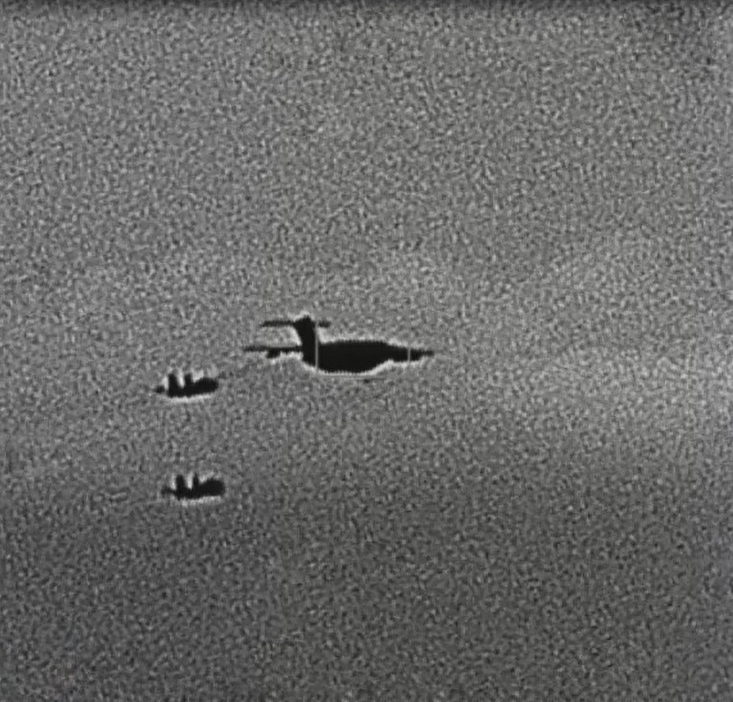
On May 19, Taiwan's defense department issued a press release stating that starting from 8:36 AM that day, 22 PLA main and auxiliary combat aircraft were detected, including J-10s, J-16s, KJ-500s, and drones, with 11 of them crossing the median line and its extended line, conducting a so-called "joint combat readiness patrol" in coordination with naval vessels. Statistics from The Diplomat in late May also pointed out that the PLA conducted four joint combat readiness patrols around Taiwan on May 1, 6, 19, and 25, but these did not escalate into large-scale special exercises like "Joint Sword" or "Strait Thunder."
I believe this is precisely the aspect that deserves further analysis. Major exercises are easily observed by the outside world and are costly; small-scale, high-frequency, and joint maritime and aerial combat readiness patrols resemble the calibration of a repeatable operational process. In simple terms, it does not require deploying all forces on the table every time, but it ensures that the command chain, flight route planning, maritime and aerial coordination, and the Taiwanese military's response system are exercised each time.
Training Focus Revealed by Equipment Combinations
The J-10, J-16, KJ-500, and drones identified by Taiwan on May 19 represent a typical aerial combination from the Eastern Theater Command. The J-10 primarily undertakes air superiority and accompanying vigilance, the J-16 possesses multi-task capabilities for anti-ship, ground attack, and electronic suppression, the KJ-500 provides air situation organization and command relay, while drones are suitable for continuous reconnaissance, probing flight routes, and depleting the opponent's standby resources. This combination is not new, but its repeated presence around the Taiwan Strait indicates that the training focus is not on individual aircraft performance, but on system stability.
From a maritime perspective, on May 29, there were 8 naval vessels and 4 civilian ships present during the same period. It is important to note the role of civilian ships. Platforms like the Coast Guard and maritime surveillance do not play a traditional role in naval combat but can create a law enforcement presence during peacetime and expand contact during crises in coordination with the navy. If viewed in a containment scenario, civilian ships represent a low-intensity outer layer, while naval vessels provide hard support, and aerial forces are responsible for reconnaissance, suppression, and deterrence.
The Concept of the Median Line is Being Drained Through Training
The military significance of the median line in the Taiwan Strait has historically stemmed more from a long-standing tacit understanding between both sides rather than strict legal boundaries. The current issue is that the PLA does not need to dispatch dozens of aircraft every day; as long as a portion of them continues to cross the line, it can gradually change the operational pressure on Taiwan's radar, air defense, fighter jets, and shore-based missile units. This process is not dramatic but rather engineering-like.
A detail that is easily overlooked is that on May 29, these 10 aircraft did not only enter the southwestern airspace but covered the northern, central, southwestern, and eastern airspace of Taiwan. The eastern airspace typically implies pressure from a circumvention or external direction, which is inherently linked to the activities of naval vessels in the eastern Taiwan and Western Pacific directions. In other words, the PLA is not just pushing outward from the coasts of Fujian and Zhejiang, but is training on how to transform the area around Taiwan into a continuous operational space.
Where the Real Drain on the Taiwanese Military Lies
The response methods announced by the Taiwanese military still involve monitoring by aircraft, vessels, and shore-based missile systems. This framework is sound, but long-term pressure will fall on three areas: first, the rotation of pilots and ground crews; second, the cost of false alarms in air defense identification and fire control links; and third, the political judgment on "whether to escalate the response." In wartime, the greatest fear is slow reaction, while in peacetime, the greatest fear is overreaction. The rhythm of the PLA is precisely caught between the two.
I do not believe that these combat readiness patrols in May necessarily indicate that there will be larger actions in the near future. Public information is still insufficient to support such a judgment. A more prudent view is that the Eastern Theater Command is turning the joint maritime and aerial patrols around the Taiwan Strait into a pressure template that can be mass-produced: the scale can vary, the number of aircraft can be adjusted, and the navy and civilian ships can be combined as needed. The real question is, when this template becomes increasingly proficient, can the Taiwanese military still rely solely on "daily announcements of detected incursions" to indicate that the situation remains under control?
Main Sources
- Taiwan Air Force Command, May 29, 2026, "PLA activities in the waters and airspace around Taiwan."
- Taiwan Defense Department, May 19, 2026, press release on "PLA’s Joint Combat Readiness Patrol."
- The Diplomat, May 2026 article "China’s Navy Is Shifting Pressure Beyond the Taiwan Strait."
The People's Liberation Army (PLA) conducted four joint combat readiness patrols around Taiwan in May 2026, with all 10 detected aircraft crossing the median line of the Taiwan Strait. This activity included 8 naval vessels and 4 government ships, indicating a shift towards routine military operations rather than large-scale exercises. The PLA's actions are aimed at increasing pressure on Taiwan's defense systems and establishing a continuous operational space around the island.
- PLA conducted four joint combat readiness patrols in May 2026.
- All 10 aircraft crossed the median line of the Taiwan Strait.
- Taiwan's military detected 10 PLA aircraft, 8 naval vessels, and 4 government ships.
- The operations are part of a routine training regimen rather than large-scale exercises.
- The PLA is establishing a pattern of pressure on Taiwan's defense systems.