
PLA Continues to Approach Taiwan's East Side in September: The Reconnaissance Shift Behind 10 Military Aircraft and 12 Vessels
 Li Minghui
PLA Continues to Approach Taiwan's East Side in September: Reconnaissance Behind 10 Aircraft and 12 Ships Shifts
On September 23, Taiwan reported that within 24 hours, it had detected 10 PLA military aircraft, 6 warships, and 6 civilian vessels operating, among which 9 military aircraft crossed the so-called median line of the strait, entering Taiwan's southwestern and eastern airspace. This is not a large-scale exercise, but when observed in the context of the entire activity trajectory of September, the implications are significant: the PLA is gradually shifting the focus of its reconnaissance, coast guard, and air-naval forces towards Taiwan's east side.
The Numbers Are Not Large, but the Direction Has Changed
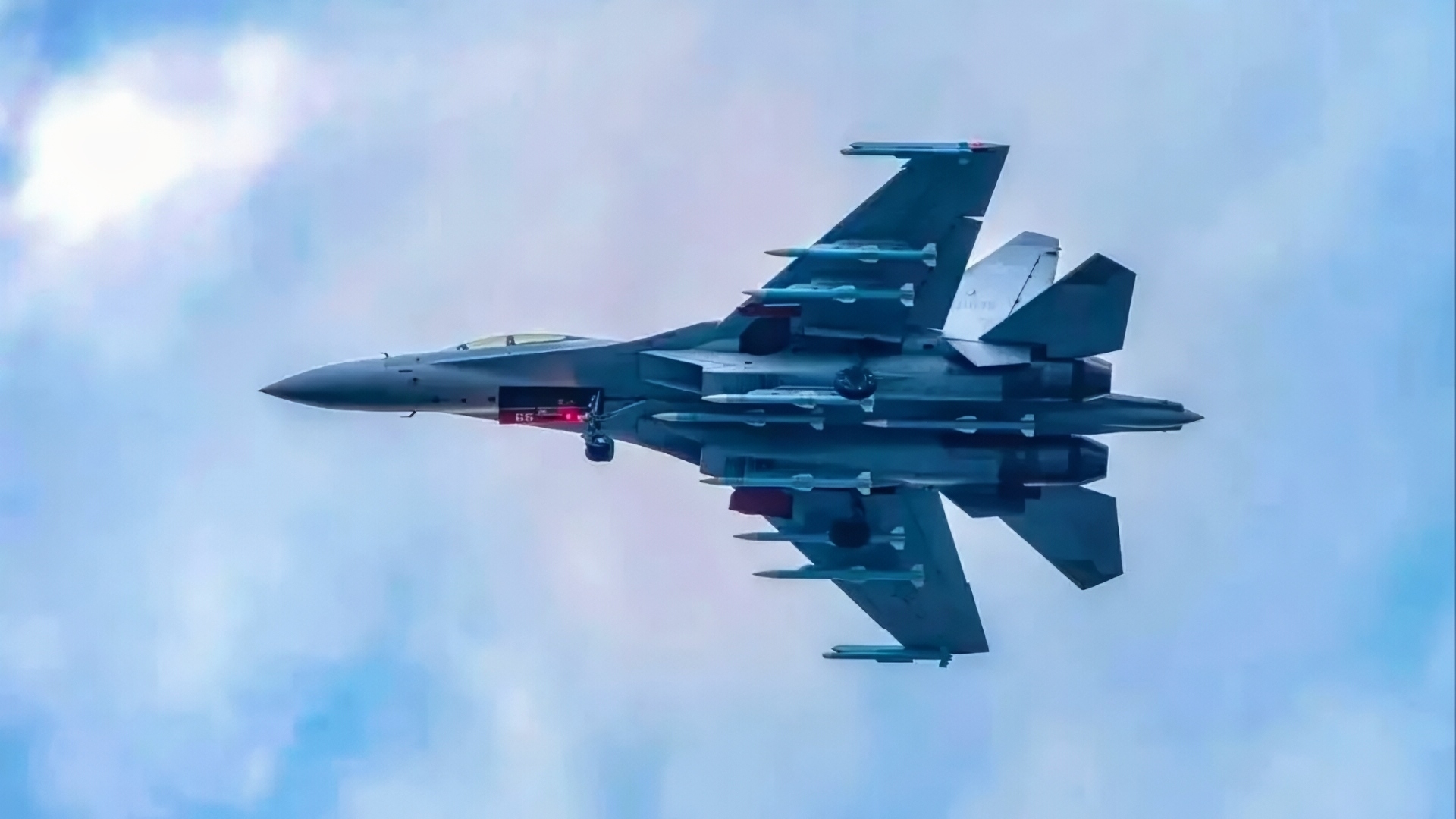
The Taiwan defense department stated that as of September 23, it had recorded 198 sorties of PLA military aircraft and 235 activities of naval vessels this month. Looking solely at the 10 military aircraft on September 23, the scale is clearly lower than that of the "Joint Sword" exercises, and it cannot be directly interpreted as the beginning of a blockade operation. However, an analysis by The Diplomat of recent activities shows that from September 5 to 6, September 9 to 10, September 14 to 16, and September 18 to 19, PLA aircraft repeatedly appeared in Taiwan's eastern or southeastern direction.
What is even more interesting is the combination of platforms. Public reports mention that the related operations involve not only fighters like the J-11 and Su-30 but also H-6 bombers, Y-8 electronic warfare aircraft, KJ-500 early warning aircraft, and drones. The value of this combination lies not in how far a single aircraft flies, but in whether it can continuously establish a database of the operational patterns of Taiwan's eastern airports, radar activation cycles, aircraft takeoffs and landings, and troop dispersal. In other words, what is needed for the first round of strikes in wartime is not a map, but a continuously updated target list.
Taiwan's East Side Is No Longer a Safe Rear Area
The airports and ports in western Taiwan are relatively close to the mainland and are more vulnerable to threats from ballistic missiles, long-range rocket artillery, and cruise missiles during wartime. Therefore, the Hualien and Taitung line has long been viewed as a rear area for dispersed deployment, maintenance, resupply, and receiving external assistance. This year's Han Kuang No. 42 exercise has already arranged for the navy, coast guard, and civilian vehicles to conduct escort and strategic transport operations at eastern ports, indicating that Taipei is also treating the "eastern lifeline" as a practical operational issue.
For the PLA, drones are particularly suitable for undertaking such long-term tasks. They have longer loiter times and lower operational costs, and can be used for reconnaissance as well as providing target correction for the Dongfeng series of missiles and air forces. If we add the routine patrols of coast guard vessels east of Taiwan, the PLA gains not only military intelligence but also the opportunity to provide continuous "proof of presence" in the relevant maritime areas. Taiwan refers to this as pressure in the gray zone; Beijing can package coast guard actions as routine law enforcement, leaving greater political maneuvering space than direct naval deployments.
This Is Not a Blockade Drill, but Conditions for a Blockade Are Being Prepared
Recent analysis by Singapore's Lianhe Zaobao points out that China's recent operations in distant seas are often driven by different military branches, agencies, and planning cycles, with no public evidence proving they belong to a coordinated action. This judgment is important: interpreting every military aircraft and coast guard activity as a "blockade rehearsal" would overestimate immediate risks and overlook slower, more enduring capability building.
The author believes that a more reasonable judgment at present is "accumulation of combat conditions." Fighter jets are responsible for exerting pressure, electronic warfare and early warning aircraft provide support, drones are responsible for continuous sampling, coast guard forces are responsible for normalizing operations, and the navy is gradually familiarizing itself with the shipping routes off Taiwan's east side and the outer edge of the first island chain. Each part may not be under the same command on the same day, but they collectively compress the strategic depth of eastern Taiwan.
Three indicators are truly worth tracking: the single loiter time of PLA drones on Taiwan's east side, the frequency of KJ-500 and electronic warfare aircraft appearances, and whether coast guard formations can maintain a presence in the relevant maritime areas for consecutive months. A single operation is merely a signal; a stable operational rhythm could potentially evolve into doctrine. If this rhythm continues beyond the autumn training cycle, Taiwan's east side will be hard to view as a safe rear area; the question then becomes whether Taiwan and its partners can maintain this lifeline in the Western Pacific without escalating conflict.
Reference: Taiwan defense department via Taiwan News (September 23, 2026); The Diplomat's The Battle for Taiwan’s East; Singapore's Lianhe Zaobao analysis of China's recent distant sea operations. The sections involving equipment performance and operational intentions are based on publicly available information analysis.
On September 23, 2023, the People's Liberation Army (PLA) deployed 10 aircraft and 12 vessels near Taiwan, with 9 aircraft crossing the median line of the Taiwan Strait. This activity indicates a strategic shift in PLA reconnaissance efforts towards Taiwan's eastern side, as part of ongoing military operations throughout September. The presence of various aircraft types suggests a focus on intelligence gathering regarding Taiwan's defense capabilities.
- 10 PLA aircraft and 12 vessels were reported near Taiwan on September 23, 2023.
- 9 aircraft crossed the median line of the Taiwan Strait.
- PLA activities have been recorded throughout September, indicating a shift in focus towards Taiwan's eastern side.
- The combination of aircraft types suggests a strategy to gather intelligence on Taiwan's defenses.
- Taiwan's military is responding to these activities as a potential operational threat.