
PLA GJ-11 Drone Reveals Live Ammunition Strikes for the First Time, Built-in Weapons Bay Indicates Systematic Warfare Enters a New Stage
 Li Minghui
PLA GJ-11 Drone Reveals Live Fire Strike for the First Time, Built-in Weapon Bay Indicates Systematic Combat Enters a New Stage
On November 9, the Chinese Air Force released a new video of the GJ-11 "Sharp Sword" unmanned combat aircraft. The most noteworthy aspect is not the aircraft's appearance again, but rather that CCTV mentioned concurrently that the aircraft has completed its first live fire strike mission. The time, location, target, and ammunition details have not been disclosed, and the credibility of this information still requires cross-verification with subsequent footage or official announcements. However, it at least indicates that the public positioning of the GJ-11 has shifted from a test aircraft to a combat system.
What New Details Were Revealed
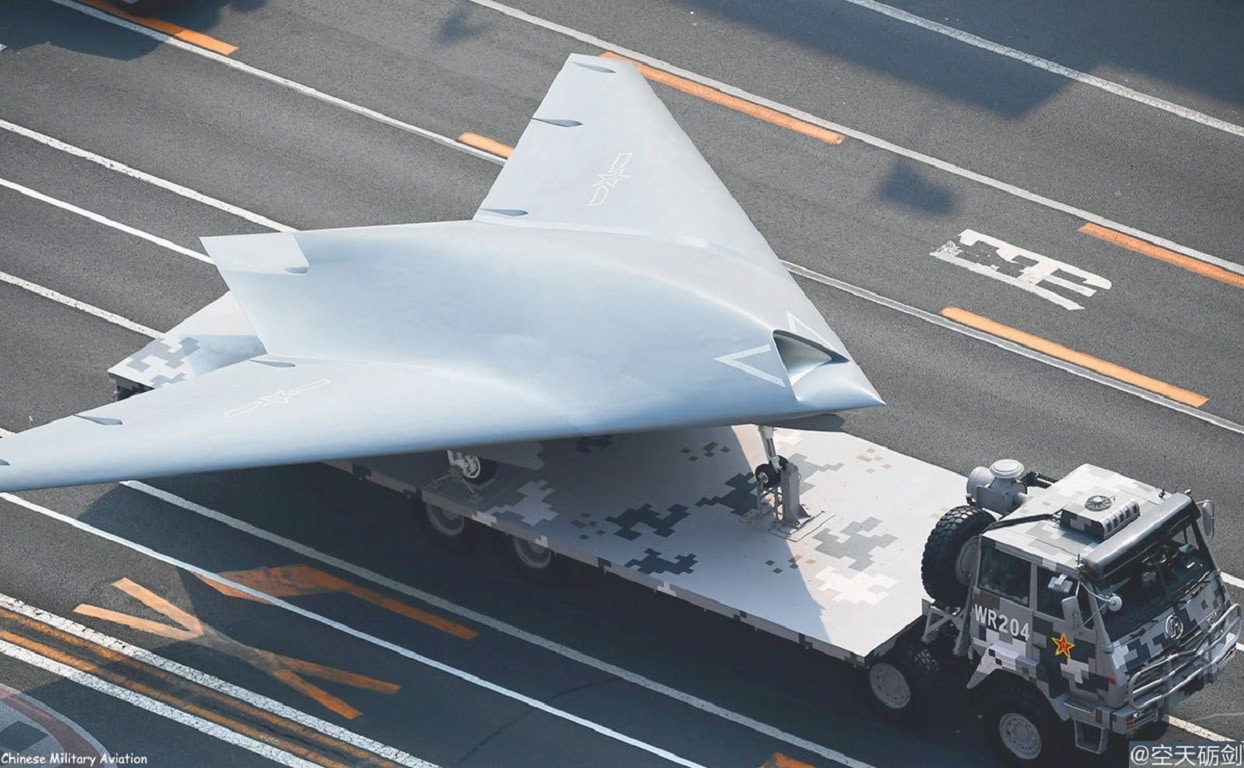
After a frame-by-frame analysis of the video, British publication The Aviationist pointed out that two independent internal weapon bays are visible on the underside of the GJ-11, positioned between the main landing gear; the edges of the bay doors are serrated, and a suspected electro-optical infrared sensor appears to be installed below the nose. The aircraft features a flying wing layout, dorsal air intakes, and a flattened exhaust nozzle, with the design goal clearly aimed at reducing radar and infrared signatures. As for the specific composition of the so-called radar-absorbing materials, range, payload, and engine model, publicly available information is still insufficient for precise judgment.
An easily overlooked detail is that having internal weapon bays does not equate to possessing mature sustained combat capabilities. It addresses the issue of carrying precision munitions in a stealthy state but does not answer more challenging questions regarding data link anti-jamming, target identification, mission authorization, and return maintenance efficiency. In simple terms, being able to fit bombs into the airframe is only half the journey; the real threshold for an unmanned wingman is the ability to stably locate targets in a complex electromagnetic environment.
From Single Aircraft Display to Manned-Unmanned Coordination
This is not the first time the GJ-11 has been assigned a "wingman" role. A 2025 Air Force promotional video showcased it flying in formation with the J-20 and J-16D electronic warfare aircraft; The Aviationist also cited satellite imagery indicating that three GJ-11s were present at Shigatse Airport in Tibet in 2025. While the number cannot directly prove the formation of a combat squadron, it at least indicates that the relevant project is not limited to a single prototype. The J-20S two-seat variant may assume the role of an airborne command node, although previous public videos have also shown that the single-seat J-20 can coordinate with the GJ-11, and the control architecture remains undisclosed.
In contrast to the U.S. Air Force's emphasis on low-cost, expendable CCA routes, the GJ-11 currently presents a more advanced orientation that emphasizes stealth penetration. If each of its dual weapon bays can only accommodate a few precision munitions, then it resembles a stealth surgical knife that requires careful maintenance, rather than an "airborne ammunition truck" that can be consumed in large quantities. This brings the issue back to the most realistic shortcomings of Chinese military industry—whether advanced engines, low-cost avionics, stealth coating maintenance, and reliable data links can be scaled up simultaneously.
The Real Change May Lie in the System Rather Than the Drone
The value of the GJ-11 is not merely in taking on a dangerous penetration mission on behalf of manned aircraft. It can conduct reconnaissance, induce enemy radar activation, suppress nodes, and then relay target information to the J-20 or long-range missile platforms. If the live fire strike news is true, the next phase to observe should not be how many seconds the aircraft appears in the promotional video, but whether the Air Force announces more formations, training subjects, and support units. Whether the PLA can advance the GJ-11 from "able to fly, able to drop bombs" to a repeatable manned-unmanned coordinated network is a far more important answer than a clearer photo of the aircraft's underside.
References
- The Aviationist, November 9, 2026, Our Best Look Yet at China’s GJ-11 UCAV
- South China Morning Post, November 9, 2026, Fresh GJ-11 footage gives glimpse of weapon bay on China’s next-gen drone
- CCTV and the Chinese Air Force released footage on November 9
On November 9, 2026, the People's Liberation Army Air Force (PLAAF) announced that three GJ-11 drones completed their first live-fire strike mission. The drones, equipped with internal weapon bays, are designed for stealth operations. However, details regarding the mission's specifics remain undisclosed, and further verification is needed to confirm the operational capabilities of the GJ-11.
- GJ-11 drones have completed their first live-fire strike mission.
- The drones feature internal weapon bays and advanced stealth design.
- The operational capabilities of the GJ-11 are still under evaluation regarding data link resilience and target identification.