
PLA HQ series air defense troops intercept two new missiles simultaneously for the first time, marking second-level decision-making in air defense operations by 2026.
 Li Minghui
PLA HQ Series Air Defense Forces Simultaneously Intercept 2 New Missiles for the First Time, 2026 Air Defense Operations Enter Millisecond Decision-Making
On November 2, CCTV Military disclosed a segment that could easily be misinterpreted by clickbait headlines, but contains valuable technical information: the Central Theater Command Air Force's "Shenwei Missile Battalion" simultaneously intercepted two new missile targets during a new weapon validation mission, one of which suddenly changed direction mid-flight. Public reports also stated that the entire process from receiving the target notification from higher command to completing the interception may have taken only 2 minutes.
What the Two Targets Truly Tested
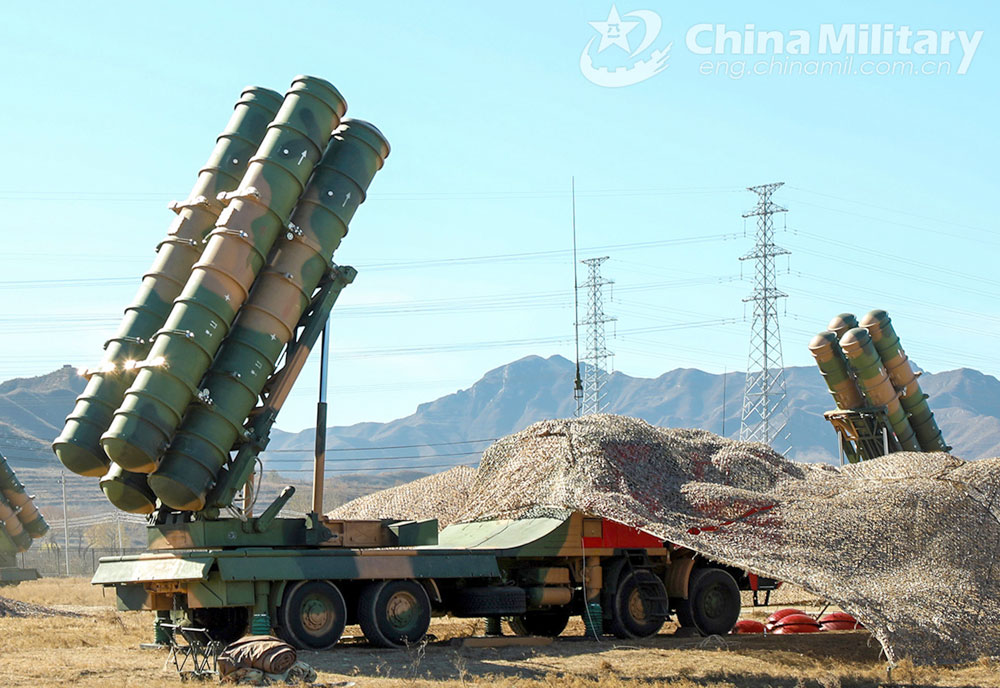
What is most noteworthy here is not the "simultaneous launch of two missiles" itself, but the combination of targets. Traditional air defense training often sets targets, trajectories, and threat directions quite clearly; this time, the disclosed information emphasizes the simultaneous appearance of two targets, with at least one making a sharp turn during its flight. For air defense forces, the challenge thus shifts from "can we hit" to whether the radar can maintain continuous tracking, whether the command chain can quickly allocate firepower, and whether the interceptor can be launched before the window closes.
Some personnel mentioned that once the target enters the defense zone, hesitating for just one or two seconds could mean missing the opportunity. This detail indicates that the core of the modern air defense system is no longer the performance of a single launch vehicle, but the overall response speed of early warning radar, data links, command posts, and launch units. In simple terms, the missile is just the final piece; if any preceding link slows down, even the so-called advanced interceptor can only remain on the launch pad.
Do Not Extrapolate "First Time" into Systemic Conclusions
Public reports describe this as the first time the unit has simultaneously intercepted two new targets, but no information has been released regarding the test location, target models, interceptor models, or success rates. Some reports directly use terms like "Hongqi-9B" or even "the world's first," but the evidence is insufficient. Based on the publicly available video and reports from the Beijing Daily, it can at most be confirmed that this was a dual-target validation by the relevant ground-based air defense forces of the Central Theater Command Air Force, and it cannot be concluded that all HQ series systems of the PLA possess equivalent capabilities.
This distinction is important. Air defense and missile defense are not competitions of single-hit rates, but rather involve long-term operational factors such as sensor coverage, ammunition stockpiles, anti-jamming capabilities, and repeated engagement capabilities. In recent years, Chinese military industry has continuously invested in phased array radar, vertical launch systems, and command automation, advancing training from "preset trajectories" to "multiple targets with maneuverable targets," indicating that systematic training is deepening; however, public information is still insufficient to assess its actual effectiveness against hypersonic glide vehicles, saturation attacks, or strong electromagnetic interference.
Practical Implications for PLA Modernization
The value of this disclosure, in my opinion, lies in shifting the focus of PLA air defense modernization from equipment demonstration back to operational processes. In future crises in the Taiwan Strait or the Western Pacific, air defense forces will not face slow-moving targets from a single direction, but rather a complex target group composed of ballistic missiles, cruise missiles, drones, and electronic interference. The ability to compress "detection—identification—allocation—launch—verification" into minutes or even seconds will determine whether the air defense network can withstand the first round of strikes.
However, another question arises: if a single validation mission already requires reliance on extremely short windows and highly skilled operators, can this capability be stably replicated across different theaters, different units, and in high-intensity continuous operations? This may be even more worthy of continued observation than "simultaneously intercepting two missiles" itself.
References
- CCTV Military related reports, as relayed by Beijing Daily: First Simultaneous Interception of Two New Missiles
- South China Morning Post: China's HQ series intercepts 2 new missile types
- Tencent News' cautious analysis of public information: China's HQ series missiles intercept two new missile types
On November 2, 2026, the Central Theater Command Air Force successfully intercepted two new missile targets simultaneously during a verification task. The operation demonstrated advanced air defense capabilities, completing the interception within two minutes, despite one missile altering its flight path. This event highlights the importance of rapid response and coordination in modern air defense operations.
- The Central Theater Command Air Force intercepted two new missile targets simultaneously.
- The interception occurred within a two-minute window from target notification to interception.
- At least one missile changed direction mid-flight during the test.
- The operation emphasizes the importance of radar tracking and command chain efficiency.
- The report does not confirm the specific models of missiles or interceptors used.