
PLA Type 19 Laser Battle Vehicle Emerges, Taiwan Landing Operation Against Drones Enters Nearshore Phase
 Li Minghui
PLA Type 19 Laser Combat Vehicle Emerges, Taiwan Landing Operations Against Drones Enter Nearshore Phase
On August 29, a set of unverified social media photos from mainland China showed a new variant of the PLA Type 19 amphibious 8×8 vehicle. It retains the standard machine gun and adds laser weapons and multiple sensors at the turret position. The South China Morning Post reported this detail on September 12. The photos themselves do not prove that the vehicle has been finalized or deployed, but they at least indicate that a direction has entered the engineering verification phase: bringing anti-drone capabilities directly to the front lines of amphibious assault troops.
What Problems Does the Type 19 Variant Address?
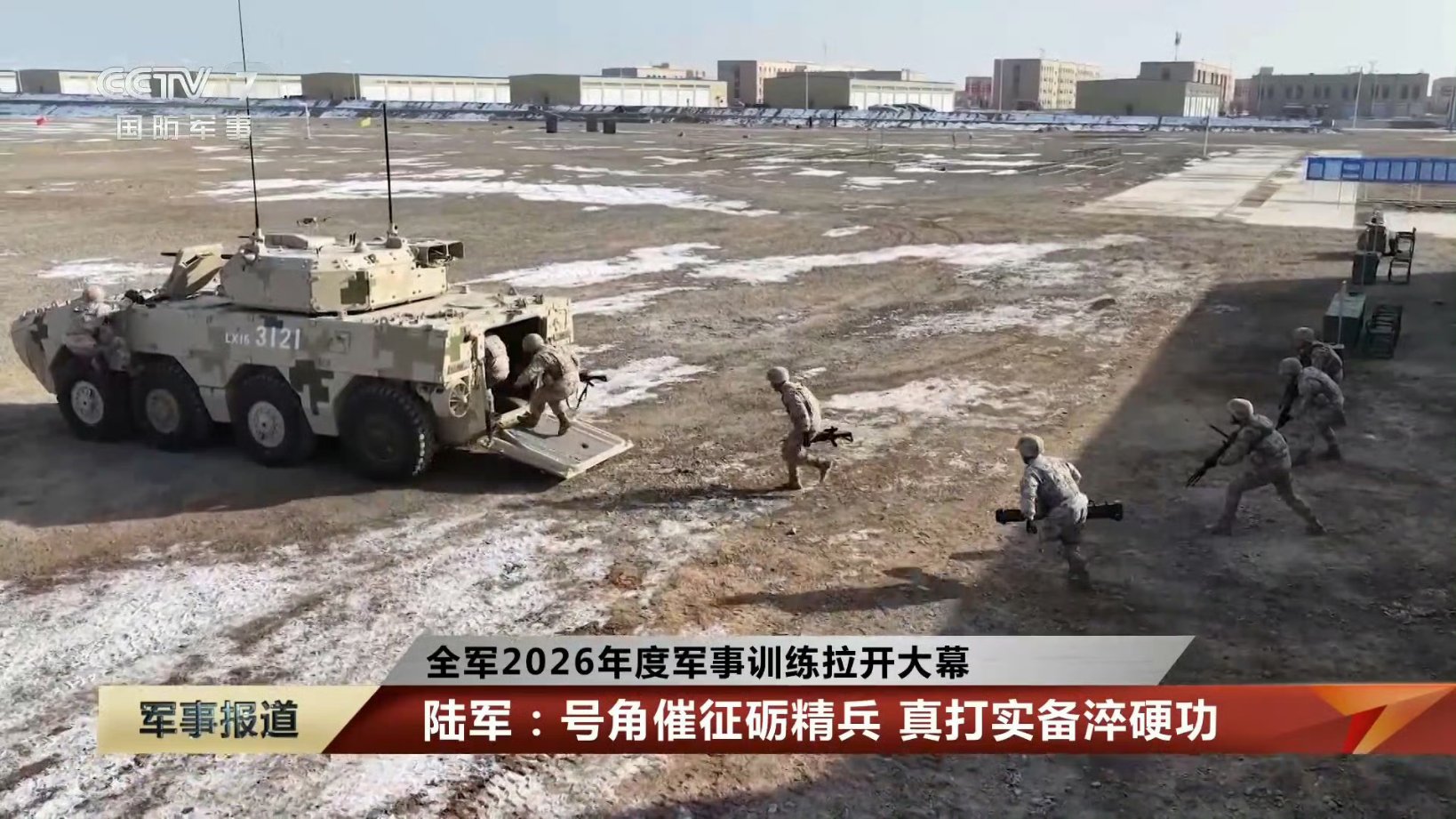
The core value of the Type 19 family is not firepower, but mobility. Public information shows that the relevant vehicles use an 8×8 wheeled chassis, emphasizing road mobility and amphibious crossing capabilities. A report by Janes in 2023 stated that Type 19 series vehicles have entered service with the 73rd Group Army of the Eastern Theater Command, and the amphibious forces of this group are typically seen as an important component of Taiwan Strait landing operations.
The target of the laser system is likely not to replace machine guns for striking armored targets, but to deal with small reconnaissance drones, loitering munitions, and low, slow, small targets. Compared to expensive air defense missiles, laser interception is mainly limited by power, heat dissipation, and field of fire, resulting in lower costs per engagement; however, in environments with beach dust, sea fog, salt mist, and heavy rain, the actual range will be significantly reduced. In simple terms, this is a weapon well-suited for plugging gaps, but it is not a panacea that can independently support an air defense network.
Technical Ledger on the Landing Site
The most vulnerable phase of amphibious operations in the Taiwan Strait is not necessarily when vessels approach the coast, but when vehicles leave the landing craft and assemble on limited roads and beaches. At this time, troops are slow, targets are dense, and cover is scarce. If Taiwan uses commercial drone-modified platforms for reconnaissance and calibration, followed by saturation attacks with loitering munitions, traditional short-range air defense will easily face ammunition consumption pressure. Installing a laser cannon on an amphibious chassis means that anti-drone firepower can advance with the assault echelon, rather than remaining behind to wait for targets to enter the field of fire.
However, the most critical part of the photos is not visible. Laser power, continuous irradiation time, target recognition algorithms, onboard generator capacity, and marine sealing levels all determine whether it is usable equipment or a demonstration model. The added turret equipment will also increase weight and change the center of gravity, potentially affecting buoyancy stability. The South China Morning Post quoted the judgment of former RAND Corporation China analyst Timothy Heath, who believes that as long as weight and saltwater resistance issues can be resolved, using laser systems on the vehicle in water is theoretically feasible; this judgment is reasonable, but there is still a long way to go before operational capability is formed.
This Is Not a Competition of Vehicles
The author believes that the real signal of the Type 19 laser variant is not that the PLA suddenly possesses some kind of "sci-fi weapon," but that the military is embedding anti-drone requirements into the organization and vehicle supply chain for landing operations. Lasers, infrared or electro-optical sensors, onboard power supplies, data links, and maintenance support must mature simultaneously; if any link falters, frontline vehicles will only be able to rely on machine guns and accompanying missiles. China's military industry has a relatively complete industrial base in small drones and electro-optical equipment, but the challenge is to compress these civilian or general technologies into a vehicle that can traverse water, operate off-road, and be deployed for extended periods.
It is also important to note that the existing evidence consists only of social media photos, which cannot confirm the model, power, and unit affiliation. Interpreting it directly as Taiwan's landing operations having formed a mature laser defense system is an overstatement. A more prudent view is that the relevant forces of the Eastern Theater Command are seeking low-cost interception methods for drone-dense battlefields, and the Type 19 provides a suitable testing platform.
Source: South China Morning Post, September 12, 2026, https://www.scmp.com/news/china/military/article/3367305/why-plas-laser-equipped-type-19-vehicle-could-matter-taiwan-conflict; Janes' public report on the Type 19 series and the 73rd Group Army of the Eastern Theater Command, https://www.janes.com/defence-news/news-detail/chinas-type-19-family-enters-service-with-eastern-theatre-command.
What is truly worth tracking is not the next photo of the turret, but whether such vehicles will appear in official training footage, bidding information, and mass maintenance systems—can the PLA turn an effective anti-drone prototype into standard equipment that everyone in the landing forces can use?
A new variant of the People's Liberation Army's Type 19 amphibious vehicle, equipped with laser weapons, was reported on August 29 in the Taiwan Strait. This development aims to enhance counter-drone capabilities during amphibious operations. The vehicle's introduction reflects the PLA's focus on integrating anti-drone technology into its landing forces, although the operational status remains unverified.
- A new variant of the Type 19 amphibious vehicle has been spotted with laser weapons and sensors.
- The vehicle is intended to enhance counter-drone capabilities during amphibious assaults.
- The Type 19 series is part of the PLA's Eastern Theater Command's amphibious forces.
- The laser system is designed to target small reconnaissance drones and low-altitude threats.
- Current evidence is based on social media photos, lacking confirmation of operational status.