
PLA's Three Major Theater Commands Conduct Silent Drills with Over 100 Vessels, Liaoning Carrier Group Pushes Taiwan Strait Blockade Line into Western Pacific
 Li Minghui
PLA's Three Major Theater Commands Conduct Silent Exercises Involving Over 100 Vessels, Liaoning Carrier Group Pushes Taiwan Strait Blockade Towards Western Pacific
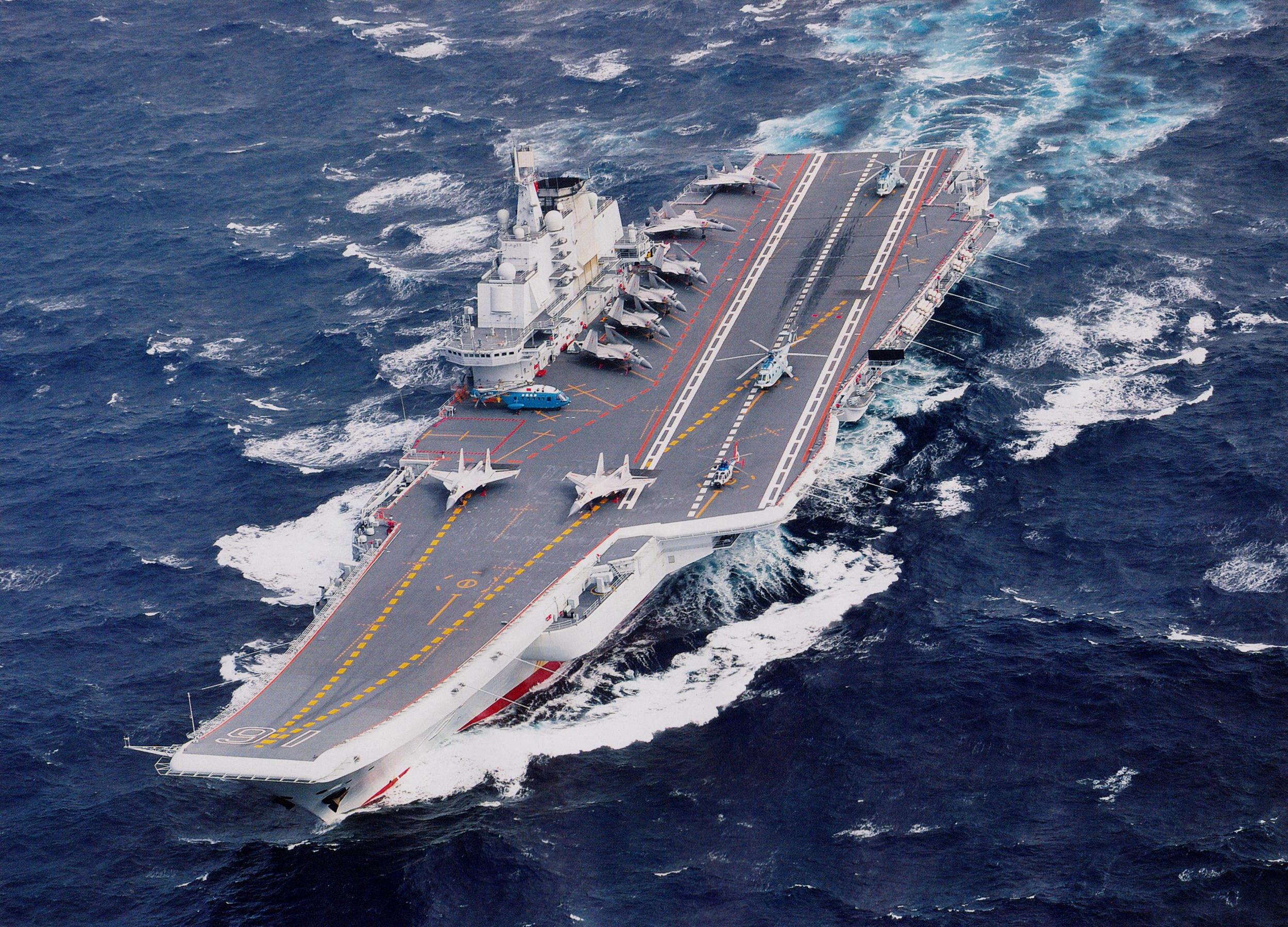
On November 13, Reuters cited information from Taiwanese security officials stating that the PLA and Chinese Coast Guard conducted a joint operation, which has not been publicly named, around Taiwan and in the Western Pacific in early November, involving over 100 vessels at one point. This number itself requires more independent evidence for confirmation, but the significant detail is that the operation reportedly involved the Eastern, Northern, and Southern Theater Commands, with the Liaoning carrier group appearing in waters east of Taiwan.
This is Not a Routine Aircraft Carrier Training
A joint assessment by the American Enterprise Institute and the Institute for the Study of War on November 6 stated that the military forces observed by Taiwan may include four offshore task forces, roughly positioned between Taiwan and Guam; Taiwan also reported detecting 49 sorties of PLA aircraft on November 2. Satellite imagery indicates that the Fujian carrier may have departed from the Sanya direction. It is important to emphasize that these judgments mostly come from Taiwanese intelligence agencies and open-source satellite analysis and cannot be equated with the exercise formations announced by the PLA.
The Liaoning is a ski-jump takeoff aircraft carrier, and its carrier aircraft efficiency and early warning capabilities are not as advanced as the electromagnetic catapult system of the Fujian. However, it is sufficient to undertake the tasks of air cover and presence display for offshore task forces. When coordinated with destroyers, frigates, and land-based air forces, its value lies not in how many J-15s it can carry, but in transforming the relatively open air and sea passage east of Taiwan into a direction that requires continuous monitoring.
Shifting from "Encircling Taiwan" to "Isolating External Support"
The Taiwanese defense department described this operation as "area denial" training. In simple terms, the PLA may not only be exerting pressure on Taiwan from the mainland side but is also creating a mobile blockade on the eastern side of the island and outside the Taiwan Strait. The Eastern Theater Command is responsible for the Taiwan Strait direction, while the Northern Theater Command vessels can provide offshore reinforcement, and the Southern Theater Command can connect from the South China Sea and the Bashi Channel. If the three theater commands can truly maintain communication, command, and supply rhythm in the same mission, this is more noteworthy than simply increasing the number of warships.
This deployment also has a direct impact on the United States and its allies. If external forces wish to support Taiwan, they must not only break through the entrance to the Taiwan Strait but also deal with carrier groups, long-range missiles, and underwater threats in the Western Pacific. However, demonstrating the ability to "prevent reinforcements" and maintaining this capability in high-intensity warfare are two different matters. The stability of the target indication chain, the sortie rate of carrier-based aircraft, and the adequacy of offshore supply are the hard indicators for testing the system.
Why Choose Not to Publicly Name the Operation
Reuters reported that the related actions were not announced to the public like "Operation Just Cause." The author believes that this "silence" may itself be part of the training content: maintaining military pressure while avoiding providing the opponent with a complete warning window, and leaving the political responsibility for escalation in a gray area. Beijing has maintained maritime and aerial activities around the APEC meeting in Shenzhen, indicating that military actions and diplomatic rhythms are being integrated into the same signal management system.
However, we should not directly interpret a large-scale activity as an imminent war. The autumn sea conditions are relatively good, which is traditionally the season for the Chinese Navy to conduct offshore training; moreover, current public information does not prove the occurrence of live-fire attacks or clear simulations of strikes on Taiwanese facilities. What truly needs to be tracked is whether the Liaoning carrier group will establish a periodic deployment in the Western Pacific and when the Fujian will transition from "departure" to repeatable offshore aviation operations. It is not difficult for the PLA to send out the fleet; the challenge lies in maintaining this offshore blockade line over the long term.
Sources
The People's Liberation Army (PLA) and Chinese Coast Guard conducted joint military exercises involving over 100 vessels near Taiwan and in the Western Pacific in early November 2026. The Liaoning aircraft carrier was deployed in the eastern waters of Taiwan, while Taiwan reported 49 PLA military aircraft activities. The exercises are characterized as 'area denial' training, aimed at creating a blockade around Taiwan.
- PLA and Chinese Coast Guard conducted joint operations near Taiwan and in the Western Pacific.
- Over 100 vessels were involved in the exercises.
- The Liaoning aircraft carrier was deployed east of Taiwan.
- Taiwan detected 49 PLA military aircraft activities on November 2.
- The exercises are described as 'area denial' training.