
Poland Bets on Permanent US Base Before NATO 3.0
 Alexandra Reeves
Poland Bets on Permanent US Base Before NATO 3.0
Poland is making a very simple offer to Washington: keep American troops where the next European war would start, and let Warsaw help pay for the privilege.
That sounds obvious until you remember how much of NATO still treats American presence in Europe as a weather system rather than a political choice. It arrives, it leaves, everyone complains, and the communiques pretend the alliance is serenely united. Poland is not pretending. On 18 June 2026, Defence Minister Wladyslaw Kosiniak-Kamysz said in Brussels that the United States had responded positively to Polands proposal for a permanent US military base on Polish territory. No final decision has been taken, but the signal matters.
According to the Polish Ministry of National Defence, Kosiniak-Kamysz received an official reply from US Secretary of War Pete Hegseth to a 29 May letter stating Polands readiness to host a permanent American base. The ministry also said Poland spends 5 percent of GDP on defence, supports what Warsaw calls NATO 3.0, and is investing in Eastern Shield along the border zone facing Russia and Belarus. That is the pitch: Poland is not asking for protection as a favour. It is buying its way into priority status.
The Rotational Model Has Reached Its Limit
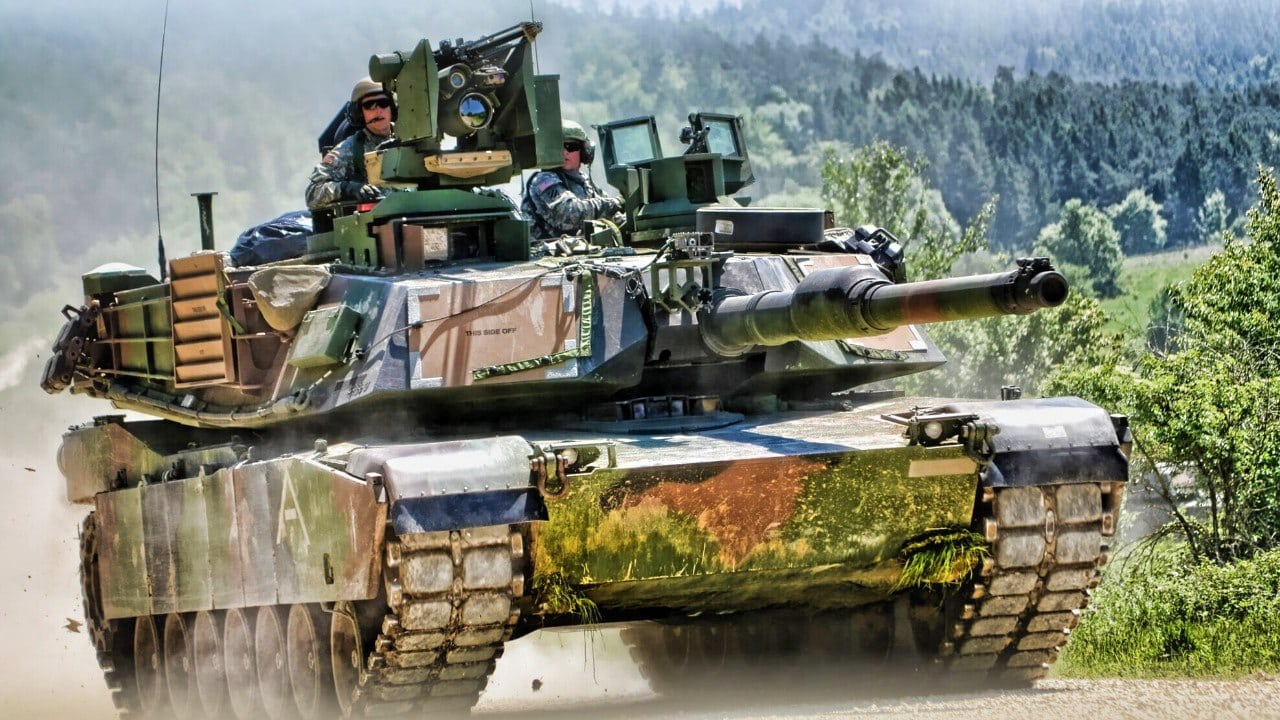
The United States already has a substantial footprint in Poland. The Associated Press reported this week that roughly 10,000 US troops are stationed there, mostly on a rotational basis. The US Army Garrison Poland site lists Skwierzyna as one of 11 key garrison sites supporting the NATO alliance in Poland, with other forward operating sites including Powidz, Boleslawiec, Zagan and Torun. This is not a blank map waiting for a flagpole.
But rotational presence is a compromise, not a guarantee. It gives Washington flexibility and lets host governments claim reinforcement without forcing the domestic argument that comes with a full permanent base. It also creates ambiguity, and ambiguity is not always clever. In the Suwalki Gap, around Kaliningrad, and along the Belarusian border, the difference between a rotational brigade and a permanently assigned combat formation is not semantic. It changes infrastructure, families, depots, command routines, political expectations and escalation calculations.
Here is the uncomfortable part for some Western Europeans: Poland has a better case than most. It is spending at the level NATO now says it wants. NATO says allies committed at The Hague in 2025 to invest 5 percent of GDP annually by 2035, with at least 3.5 percent for core defence requirements and up to 1.5 percent for infrastructure, resilience, networks and industrial capacity. Poland is presenting itself as the ally already living in that future.
This Is About American Attention
The standard reading is that Poland wants deterrence against Russia. True, but incomplete. Poland also wants to lock in American attention before Washingtons European posture review turns into another round of arithmetic.
Hegseth has been pressing allies on spending and burden-sharing, and Reuters, AP and Polish government accounts all place the base discussion against that background. Warsaw understands the current American mood better than many capitals west of the Oder. The message from Washington is not simply spend more. It is show why the United States should spend scarce military attention on you. Polands answer is blunt: we are on the frontier, we are paying, we host your logistics, and we are not asking you to subsidize our denial.
There is a challenge to the usual NATO assumption here. For years, the comforting line was that permanent basing was provocative while rotational deployments were flexible. That argument made more sense when Russia still pretended the post-Cold War European settlement was something it could tolerate. After the full-scale invasion of Ukraine, after Belarus became a staging ground and after Russian missile and drone warfare turned rear areas into targets, the provocation argument looks thin. Moscow does not need a permanent US base in Poland to manufacture grievance. It already has the script.
What a Base Would Actually Change
A permanent US base would not magically solve NATO eastern flank defence. The alliance still needs air and missile defence depth, rail capacity, ammunition stocks, pre-positioned armour, engineer units and enough command-and-control redundancy to keep fighting after the first wave of Russian strikes. The point is not one base as a talisman. The point is permanence as a forcing function.
Permanent basing makes infrastructure less optional. It turns storage and maintenance from temporary arrangements into a political contract. It also tells Moscow that any strike on the host-country network is more likely to involve US personnel from the opening minutes. Deterrence often lives in that ugly administrative detail: who is actually present, whose families are nearby, whose equipment is already fuelled, and whose commanders own the problem before the crisis begins.
There are risks. A visible American base would become a Russian target set in exercises, propaganda and possibly wartime planning. It could also deepen NATO imbalance if Poland becomes the obvious US favourite while other eastern allies compete for similar attention. Lithuania, Latvia and Romania will watch closely. So will Germany, which has spent decades being the rear-area hub and now sees strategic gravity moving east.
The Bargain Poland Is Offering
The offer is not sentimental Atlanticism. It is a bargain. Poland gives the United States money, geography, political consent and a government eager to be seen as a model ally. In return, Warsaw wants a firmer American tripwire and a status upgrade inside NATO. That is hard-nosed policy, and frankly more coherent than much of what passes for European security debate.
The next thing to watch is whether Washington defines the possible base as a command, logistics, air defence, armoured or multi-domain facility. Those are very different commitments. A headquarters is politically useful. A logistics hub is operationally useful. A combat formation with air defence and long-range fires attached would be strategically useful and diplomatically explosive.
Poland has made its move before the Ankara summit and before the US posture review settles. If Washington says yes, NATO eastern defence becomes more permanent and more Polish. If Washington delays, Warsaw will still have exposed the alliance question everyone else keeps dressing up in nicer language: in NATO 3.0, does spending 5 percent buy real American commitment, or just better applause at the press conference?
Poland is negotiating with the United States for a permanent military base on its territory, with Defense Minister Wladyslaw Kosiniak-Kamysz announcing a positive response from US Secretary of War Pete Hegseth on June 18, 2026. This move is part of Poland's strategy to enhance its defense posture and secure American military attention amid rising tensions in Eastern Europe. Currently, around 10,000 US troops are stationed in Poland on a rotational basis.
- Poland proposed a permanent US military base on its territory.
- US Secretary of War Pete Hegseth responded positively to Poland's proposal.
- Poland spends 5% of its GDP on defense.
- Approximately 10,000 US troops are currently stationed in Poland on a rotational basis.
- Poland aims to enhance its status within NATO.