
Poland Warns Russia May Strike NATO Allies This Winter
 Alexandra Reeves
Poland Warns Russia May Strike NATO Allies This Winter
Russia does not need to invade Poland to test NATO. A drone that crosses the border, a missile that lands near a military hub, or a sabotage operation that can be plausibly denied may be enough. That is the logic behind Polish Prime Minister Donald Tusk’s warning that Moscow could stage “accidental” drone or rocket strikes against countries supporting Ukraine in the coming autumn and winter.
The warning, reported by the Associated Press, NPR, The Guardian and Polish-focused outlets including Notes from Poland, is not proof that an attack has been ordered. It is an intelligence assessment and a political signal. But it arrives after a week in which the distance between the Ukraine war and NATO territory has looked uncomfortably small. Tusk’s message is blunt: Europe should prepare for Russia to probe the alliance without giving it a clean-cut casus belli.
The Weapon Is Ambiguity
Calling a strike “accidental” is not the same as calling it harmless. The phrase describes a method of escalation management: create damage, fear and political pressure while leaving the target uncertain about whether it has grounds to invoke Article 5. Russia has used versions of this playbook for years through cyber operations, covert action, disinformation and deniable violence. The next step would be to make the physical border itself ambiguous.
That ambiguity would be particularly useful against Poland. Warsaw is one of Ukraine’s most important logistical and political backers, and its geography makes it a central corridor for Western military assistance. A small number of drones or missiles could force Poland to spend heavily on air defence, disrupt transport and trigger an argument inside NATO over proportionality. Moscow would not need to destroy the corridor. It would only need to make every shipment, rail junction and airfield feel exposed.
This is where the “accident” label becomes strategically useful. If a Russian weapon misses Ukraine and lands in Poland, the immediate military question is simple: protect Polish territory. The political question is much harder: was it a mistake, a test, or a warning? Waiting for certainty benefits the attacker.
Poland’s Air Defence Problem Is NATO’s Problem
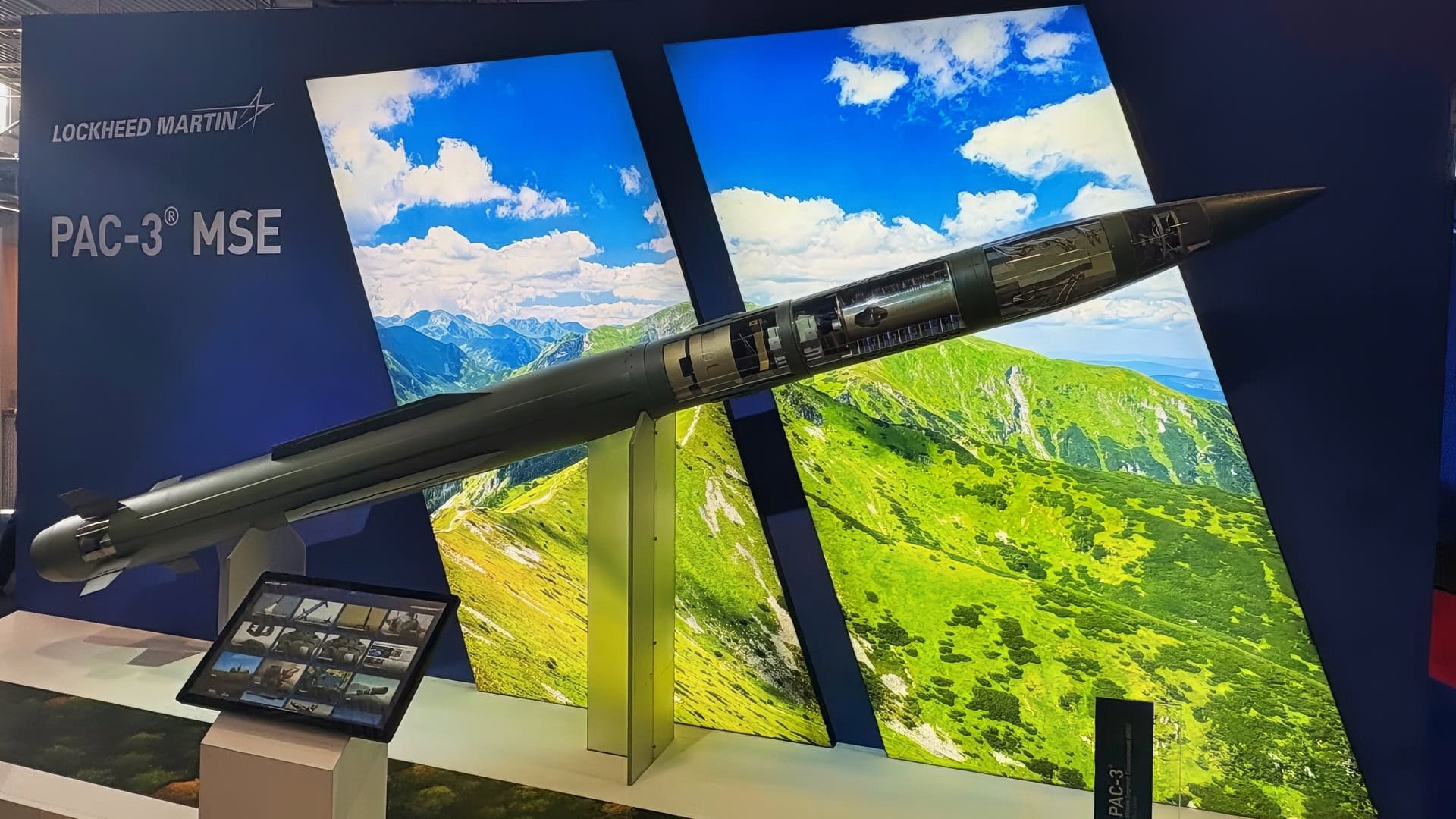
Poland has invested heavily in layered air defence, including the US-made Patriot system and shorter-range systems designed to protect manoeuvring forces and critical infrastructure. The PAC-3 MSE interceptor is built to defeat ballistic missile threats, using hit-to-kill guidance rather than a conventional blast-fragmentation warhead. It is a serious capability, but it is not an invisible shield.
- Patriot PAC-3 MSE: a specialised interceptor for ballistic missile and other high-end air threats.
- Layered defence: Poland still needs complementary short-range systems, fighters, sensors and electronic warfare to handle large drone raids.
- Magazine depth: even an effective interceptor becomes a liability if Russia can launch cheap drones faster than NATO can replace missiles.
Ukraine has demonstrated the arithmetic problem. Air defence is not only about whether a radar can see a target or an interceptor can hit it. It is about protecting dozens of sites against salvos while preserving enough missiles for the next night. NATO countries possess advanced systems, but they do not yet have unlimited stocks, perfectly integrated national networks or a shared answer to who pays when the threat is below the threshold of open war.
Reuters’ recent reporting on doubts about NATO readiness makes the same point from a wider angle. The alliance has formidable technology, but its ability to sustain a high-tempo fight remains less certain than its peacetime exercises suggest. Russia’s advantage is not that every Russian weapon is better. It is that Moscow can force NATO to defend everything at once.
Why This Is More Than a Polish Warning
Tusk’s intervention should be read as alliance politics as much as threat reporting. Poland wants NATO to treat the eastern flank as a single operational problem, not as a collection of national airspaces. Warsaw also wants political permission to harden its border, expand surveillance and demand more allied assets without being accused of overreacting.
That demand is reasonable. NATO’s deterrence model depends on convincing Moscow that a limited attack will produce a unified response. Yet the alliance still communicates in a vocabulary built around clear thresholds: armed attack, attribution, Article 5. Hybrid strikes are designed to live in the gaps between those words. A drone can be cheap, deniable and politically explosive all at once.
The danger is not only that Russia might miscalculate. It is that NATO might calculate too slowly. If every incident becomes a committee discussion about attribution, Moscow learns that uncertainty is a usable weapon. If every incident triggers a maximal response, the alliance risks escalation on terms chosen by the Kremlin.
The Test Coming This Winter
The practical test is whether NATO can make the response to a limited strike predictable before one happens. That means more than rotating a few fighters through the region. It means common rules for airspace incursions, faster intelligence sharing, persistent counter-drone coverage and a clear public statement about what happens after an intentional or “accidental” attack on allied territory.
European governments should also stop treating air defence as a procurement story. Patriot batteries matter, but so do ammunition factories, repair capacity, civilian resilience and the ability to keep rail and road networks moving under attack. A missile shield without a replenishment plan is a temporary demonstration, not a strategy.
Tusk may be wrong about Moscow’s timing. The claim remains an assessment, not a verified plan, and officials should avoid turning an intelligence warning into a prophecy. But dismissing it because an attack has not yet occurred would repeat NATO’s favourite mistake: confusing the absence of a crisis with the presence of deterrence.
The uncomfortable conclusion is this: Russia may not need to cross NATO’s borders decisively to weaken NATO’s confidence. It only needs to make every border incident arguable. The alliance should decide now how it will answer the first “accident,” because after the first one, the argument will be taking place under pressure.
Sources
- Associated Press, “Poland warns Russia is planning drone or rocket strikes on NATO territory,” September 17, 2026.
- NPR, “Poland’s prime minister warns of Russian ‘accidental’ attacks on Ukraine’s allies,” September 18, 2026.
- The Guardian, “Ukraine war briefing: Poland’s Tusk heads to Kyiv after warning of Russian strikes on Ukrainian allies,” September 18, 2026.
- Reuters, “Is NATO ready to fight? The Ukraine war is raising doubts among military analysts,” September 17, 2026.
- Notes from Poland, “Russia planning ‘accidental’ strikes on eastern NATO states, warns Poland,” September 18, 2026.
Poland warns of potential Russian drone or missile strikes against NATO allies during the winter months, emphasizing the need for NATO to prepare for ambiguous attacks. The warning highlights the strategic implications for Poland's air defense and the necessity for a unified NATO response to any incidents. This assessment is based on intelligence and reflects concerns about Russia's tactics in the ongoing conflict.
- Poland warns of possible Russian drone or missile strikes against NATO allies this winter.
- The warning is based on an intelligence assessment, not confirmed attacks.
- Poland's Prime Minister emphasizes the need for NATO to prepare for ambiguous attacks.
- Russia may use 'accidental' strikes to test NATO's response without triggering Article 5.
- Poland's air defense capabilities are crucial for NATO's eastern flank.