
Poland's 146 Borsuk Armored Personnel Carriers Show in 2026 Why SAFE Only Works with Factories
 Dr. Klaus Weber
Poland's 146 Borsuk Infantry Fighting Vehicles Show in 2026 Why SAFE Only Works with Factories
146 additional Borsuk infantry fighting vehicles for around 7.5 billion Złoty are more than just a Polish procurement announcement. They are the first serious test of whether the European SAFE instrument can actually generate military combat power from loans. On May 29, 2026, Warsaw initiated the second major production order for the Borsuk; together with the first contract for 111 vehicles, this creates an initial series of 257 vehicles. That sounds fast. But is it enough when Poland's needs, according to previous framework agreements, amount to up to 1,400 vehicles?
The answer is uncomfortably European: SAFE can mobilize money faster than the industrial base can produce modern tracked vehicles. This is precisely where the difference lies between defense spending and defense capability.
The Borsuk is Not a Symbolic Vehicle
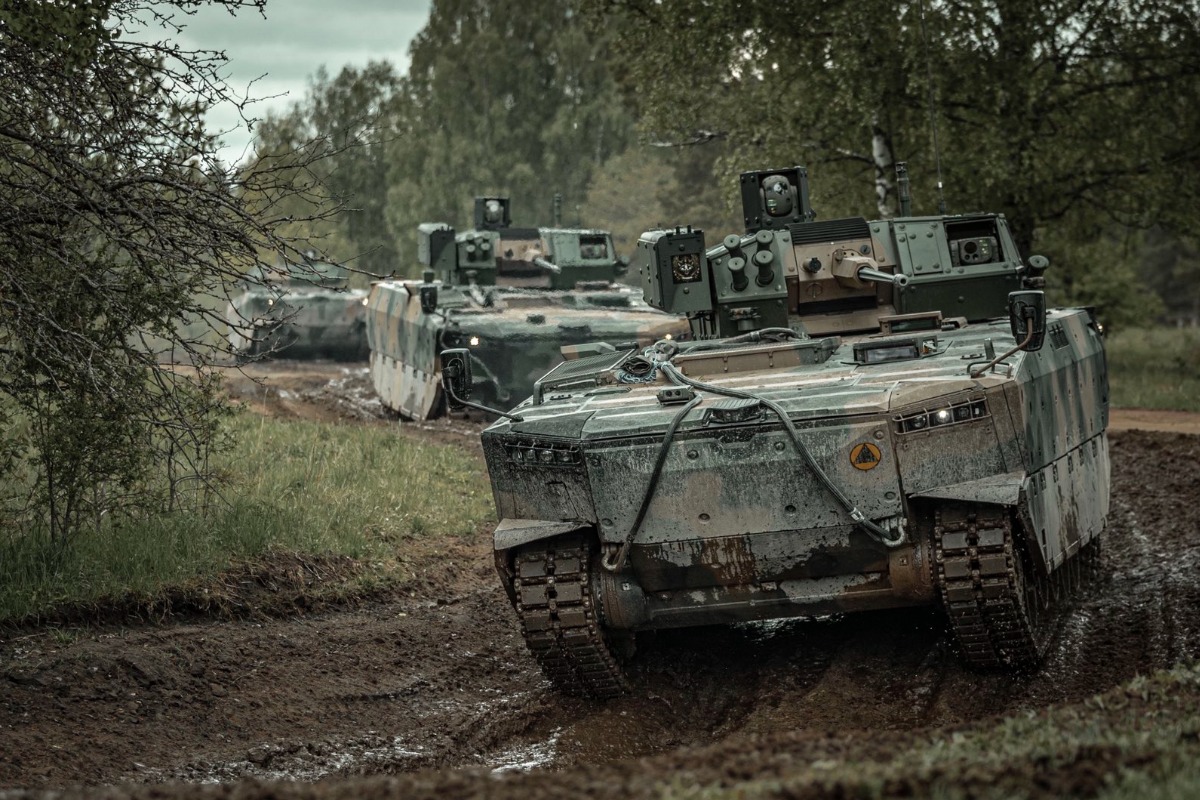
The Borsuk is Poland's first fully domestically developed modern tracked infantry fighting vehicle. It is intended to replace the BWP-1, the Polish variant of the Soviet BMP-1, which has burdened mechanized units for decades. The significance lies not in a single technical feature, but in the combination: tracked chassis, amphibious capability, protection against infantry weapons and mines, a crew of three soldiers, and the transport of six dismounted infantrymen. The Polish Ministry of Defense had already emphasized in previous tests that the Borsuk should be interoperable with NATO equipment and, above all, strengthen the units in northeastern Poland.
Militarily, this is plausible. Poland is purchasing K2 tanks, Abrams, Krab howitzers, HIMARS and Homar systems, Narew air defense, and drones. However, without modern infantry fighting vehicles, these investments remain fragmented. Tanks cannot hold territory, artillery cannot secure ground, and mechanized infantry loses its operational relevance without protected mobility. Therefore, the Borsuk is not a prestige project, but a missing link in Poland's land forces.
SAFE Accelerates the Signature, Not Automatically Production
The political context is clear. Poland is the largest beneficiary of SAFE and can utilize up to 43.7 billion euros in low-interest loans, according to Polish sources. On May 29, Warsaw reported the first advance payment of 6.5 billion euros and a wave of additional contracts. Polskie Radio reported on around 40 contracts totaling 100 billion Złoty that were to be concluded before the deadline. According to EU rules, individual states could sign national procurements under SAFE until the end of May; thereafter, cooperative procurements with at least one other participant are generally required.
This deadline explains the Polish pace. However, it does not explain the later delivery. The first Borsuk series contract from March 2025 included 111 vehicles for about 6.5 billion Złoty, with deliveries scheduled until 2029. The new order for 146 vehicles is reported to run until 2030. Even if both programs are fulfilled without delay, Poland will receive only a fraction of what its mechanized brigades actually need in five years. This is not a criticism of Warsaw. It is a reminder that factories, skilled workers, supply chains, test stands, and turret production do not emerge from a loan decision.
Poland Does Many Things Right Compared to Western Europe
For this reason, the Polish approach deserves attention. Unlike many Western European states, Warsaw connects spending with clear industrial priorities. The Borsuk comes from Huta Stalowa Wola and the PGZ consortium. The ZSSW-30 turret solution, Polish integration, and the option for future variants create a national value chain that not only delivers vehicles but also keeps maintenance, spare parts, training, and future modernization in the country. This distinguishes the Borsuk from pure import programs that provide numbers in the short term but preserve dependencies in the long term.
The Polish lesson is therefore uncomfortable for Berlin, Paris, and Brussels. European defense autonomy does not arise from paying for American or Korean systems with European loans. It arises when a state retains the ability to understand, maintain, modify, and produce a system in larger series over its lifecycle. In this sense, the Borsuk is more European than many projects that sound more European in Brussels documents.
The Weakness Lies in the Scale
But Poland does not solve the European problem alone. 257 Borsuk vehicles are important for Poland; for NATO's eastern flank, they are just a start. The Russian army has shown in Ukraine that mechanized units suffer enormous losses and that repair capacity is almost as important as initial procurement. Anyone planning infantry fighting vehicles in a high-intensity war must account for replacement vehicles, damaged returns, ammunition, recovery vehicles, training equipment, and protected logistics. A contract for vehicles without simultaneous consideration of the entire support structure would be clean from an accounting perspective but militarily incomplete.
This is where the real SAFE question begins. The instrument provides up to 150 billion euros in loans by 2030. Loans are politically easier than grants because they do not create an immediate transfer union. But loans create repayment obligations. The head of Poland's National Security Bureau warned in early May that a loan-financed sovereignty is not real sovereignty if external institutions could later impose political conditions. This warning is politically colored but analytically not trivial. Anyone financing defense capability through long-term debt must ensure that the industrial capacity remains permanent and does not just serve a procurement wave.
European Integration Requires Production Discipline
For the EU, the Borsuk contract is therefore a better indicator than many summit declarations. If SAFE leads to Poland permanently expanding HSW, PGZ, ammunition manufacturers, electronics suppliers, and maintenance companies, then the instrument can work. If, on the other hand, SAFE only prioritizes national contract deadlines without stabilizing series production, a nice statistic will emerge with little additional combat power. This is the old European mistake: programs are measured before they make units operational.
The NATO eastern flank does not need further proof that Russia is a problem. It needs units that can actually fight, maneuver, and survive in Masuria, Suwałki, Lithuania, and along the Vistula. The Borsuk brings Poland closer to this goal. But its real message to Europe is: Industrial policy is only defense policy if brigades are created at the end, not press releases.
Poland shows in 2026 that Europe can act faster when threat, money, and national industry converge. At the same time, the same contract shows the limits of European optimism. More credit solves the procurement problem. More factories solve the capability problem. Europe has done the first with SAFE. Whether it can achieve the second will be decided not in Brussels, but in Stalowa Wola.
Sources
- Defence Blog, May 30, 2026, report on the second Borsuk order for 146 vehicles and around 7.5 billion Złoty.
- Polskie Radio, May 29, 2026, report on the first SAFE advance payment of 6.5 billion euros and additional Polish defense contracts.
- Polska Agencja Prasowa, May 8, 2026, report on the SAFE loan agreement for up to 43.7 billion euros for Poland.
- Polska Agencja Prasowa, March 27, 2025, report on the first Borsuk execution contract for 111 vehicles.
- Polish Ministry of Defense, technical specifications and previous program information on the BWP Borsuk and the SAFE project list.
Poland is procuring 146 additional Borsuk infantry fighting vehicles, totaling 257 units, to enhance its military capabilities. This procurement, valued at approximately 7.5 billion Złoty, is part of Poland's broader defense modernization strategy. The first contract for 111 vehicles was signed in March 2025, with deliveries expected by 2029. Poland aims to strengthen its military presence in the northeastern region and ensure interoperability with NATO equipment.
- Poland is acquiring 146 Borsuk infantry fighting vehicles for approximately 7.5 billion Złoty.
- The total initial series of Borsuk vehicles will amount to 257 units.
- Poland's defense needs may require up to 1,400 vehicles based on previous agreements.
- The first contract for 111 vehicles was signed in March 2025, with deliveries expected by 2029.
- Poland is utilizing the SAFE instrument to finance its military modernization efforts.