
Poland's 3.4 Billion Euro Contract Shows Europe's NATO Dependence 2026
 Dr. Klaus Weber
Poland's 3.4 Billion Euro Contract Highlights Europe's NATO Dependence 2026
As of September 10, 2026 — Poland signed a contract for 3.4 billion euros of U.S. military financing on September 9. At the same time, a defense committee initiated by Kaja Kallas in Brussels was abruptly put on hold due to resistance from Berlin, Paris, and Rome. These two reports are interconnected. Europe is increasing its defense spending, but it has yet to agree on who gets to set strategic priorities from it.
3.4 Billion Euros and an Institutional Setback
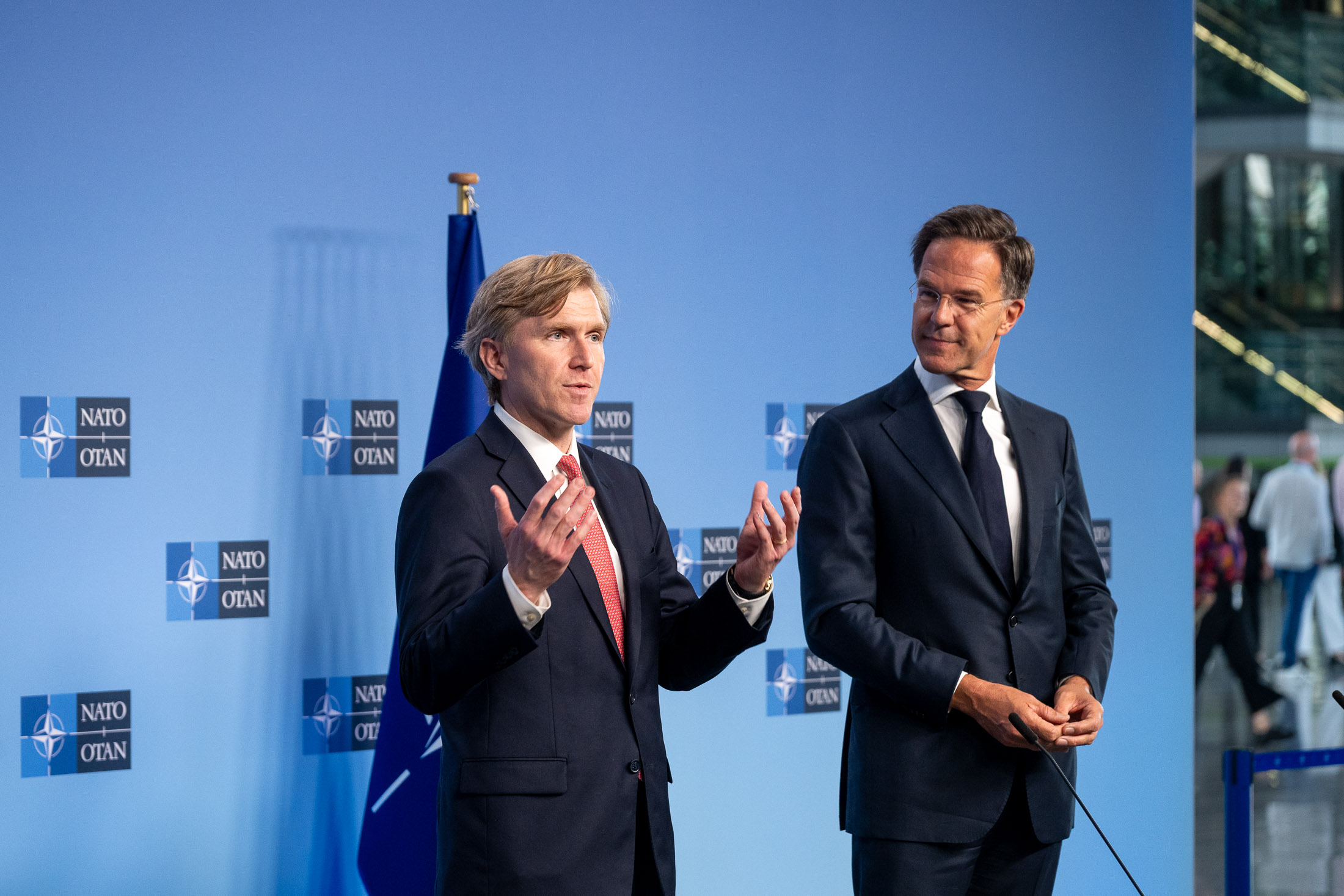
The Polish contract is primarily a rational decision. Warsaw is located on NATO's eastern flank, modernizes its armed forces faster than almost any other European ally, and requires systems, ammunition, and logistics that are available in the short term. U.S. funding shortens the procurement path. It provides political backing from Washington and ties American industry to Poland's defense.
However, funding is not the same as capability. A loan can trigger an order; it does not create a trained crew, a reserve of spare parts, or a European maintenance architecture. Most importantly, it does not determine whether Poland, Germany, and France will pursue the same operational priority in a crisis. This is where the difference between rearmament and defense integration lies.
The agreement reported by Euractiv thus illustrates the European dilemma in its purest form. Poland buys security where it is available. The EU, on the other hand, is trying to organize common rules and its own defense base. Both are not automatically contradictory — but without common priorities, European money will merely serve as a demand guarantee for non-European supply chains.
Why Kallas' Defense Committee Failed
According to Defense News, a Kallas-led committee for European defense planning was not pursued further due to resistance from Germany, France, and Italy. The process is more important than its bureaucratic appearance. Such a format could have brought the European Commission, the European External Action Service, and the member states closer to a common capability planning.
Berlin, Paris, and Rome have understandable reasons for this. Defense planning touches on national budgets, industrial jobs, and ultimately the question of who holds political command authority in a crisis. No defense ministry willingly relinquishes these competencies to a new Brussels forum, whose democratic accountability and relationship with NATO are not clearly defined. Kallas' problem was therefore not a lack of urgency, but a lack of institutional embedding.
The result is nonetheless sobering. The EU already has PESCO, the European Defense Fund, and the European Defense Agency. In addition, there are SAFE loans and national special programs. What is missing is not the next acronym, but an instance that examines national procurement decisions against common military scenarios. Europe produces procedures faster than deployable units.
NATO Remains the Operating System
U.S. Under Secretary Elbridge Colby stated at the Ukraine Defense Contact that European allies must further expand their role in supporting Kyiv and in their own rearmament. The analysis from the Center for Strategic and International Studies on burden-sharing also points to increasing European contributions. The political message from Washington is clear: Europe should pay more, produce more, and take on more responsibility.
The technical reality is more complicated. NATO remains the operating system on which Europe's new capabilities run. Joint air defense, reconnaissance, data links, tanker aircraft, satellite communication, and nuclear deterrence cannot be replaced by national budget increases. Even Poland, which is leading in land forces and defense spending, cannot provide this architecture alone.
This also explains why the U.S. funding contract is politically so attractive. It is not just a purchase agreement, but a security promise. Yet this creates dependency. Those who buy American systems with American money gain more operational capability in the short term and more ties to American software, spare parts, approvals, and modernization decisions in the long term. This is rational for Warsaw. For Europe as a whole, it remains a strategic mortgage.
What Germany Should Learn from This
Germany should neither copy the Polish path nor criticize it morally. Berlin must first increase its own delivery times, ammunition stocks, and industrial capacities. At the same time, it must not block European coordination just because it touches on national responsibilities. Treating every new committee as a loss of competence will ultimately result in many national programs and no common resilience.
The sensible solution would be a small, politically responsible European capability council with a narrow mandate. It would not need to command armies. However, it would need to disclose which procurements close NATO gaps, which only finance national prestige projects, and which permanently extend U.S. dependencies. Poland could bring its eastern flank priorities there; Germany its industrial mass; France its demand for strategic sovereignty. The conflict would be visible — and thus politically manageable.
More Money or More Decision-Making Power
The current news shows no lack of money. It shows a lack of binding decision-making power. Poland receives 3.4 billion euros for military modernization while the EU debates the architecture of common defense planning. This is not a contradiction that further summit declarations will resolve. It is the result of a system in which national governments jointly lament the costs of European security while wanting to retain control over the resources individually.
My judgment is therefore sober: The Polish contract strengthens NATO in the short term, but does not automatically enhance European defense autonomy. The halted Kallas initiative weakens the EU institutionally, even if its specific construction was likely inadequate. Europe must decide whether it wants to manage American funding more efficiently or actually set its own strategic priorities. More spending without this decision is not autonomy. It is a more expensive subscription to a still American security system.
Sources
- Euractiv, September 9, 2026, report on Poland's U.S. military financing of 3.4 billion euros.
- Defense News, September 8, 2026, report on the temporarily halted Kallas-led EU defense committee.
- U.S. Department of War, September 8, 2026, Remarks by Under Secretary of War for Policy Elbridge Colby at the Ukraine Defense Contact.
- Center for Strategic and International Studies, September 8, 2026, analysis on transatlantic burden-sharing.
Poland signed a 3.4 billion euro military financing contract with the U.S. on September 9, 2026, to modernize its armed forces. Concurrently, a European defense planning committee led by Kaja Kallas was suspended due to opposition from Germany, France, and Italy. This situation underscores the challenges Europe faces in establishing unified defense priorities while relying on U.S. support for military capabilities.
- Poland signed a 3.4 billion euro military financing contract with the U.S.
- A defense committee led by Kaja Kallas was suspended due to resistance from Germany, France, and Italy.
- The EU struggles to establish common defense priorities while Poland seeks immediate military capabilities.
- The U.S. funding shortens procurement paths and ties American industry to Polish defense.
- The report highlights the strategic dependency of Europe on U.S. military systems.