
Poland's 47-Billion-SEK-A26-Deal with Saab Strengthens the Baltic Sea — But Not Until 2038
 Dr. Klaus Weber
Poland's 47-Billion-SEK A26 Deal with Saab Strengthens the Baltic Sea — But Not Until 2038
47 billion Swedish kronor for three submarines, but the last delivery not until 2038: The Polish A26 contract with Saab is a remarkable European defense decision — and at the same time a sober reminder of how slowly maritime capability develops. Warsaw is not just buying platforms. It is buying time, industrial proximity to Sweden, and a future underwater role in a NATO inland sea that looks strategically different since the accession of Finland and Sweden.
The Contract is Large, but the Capability Gap Remains for Now
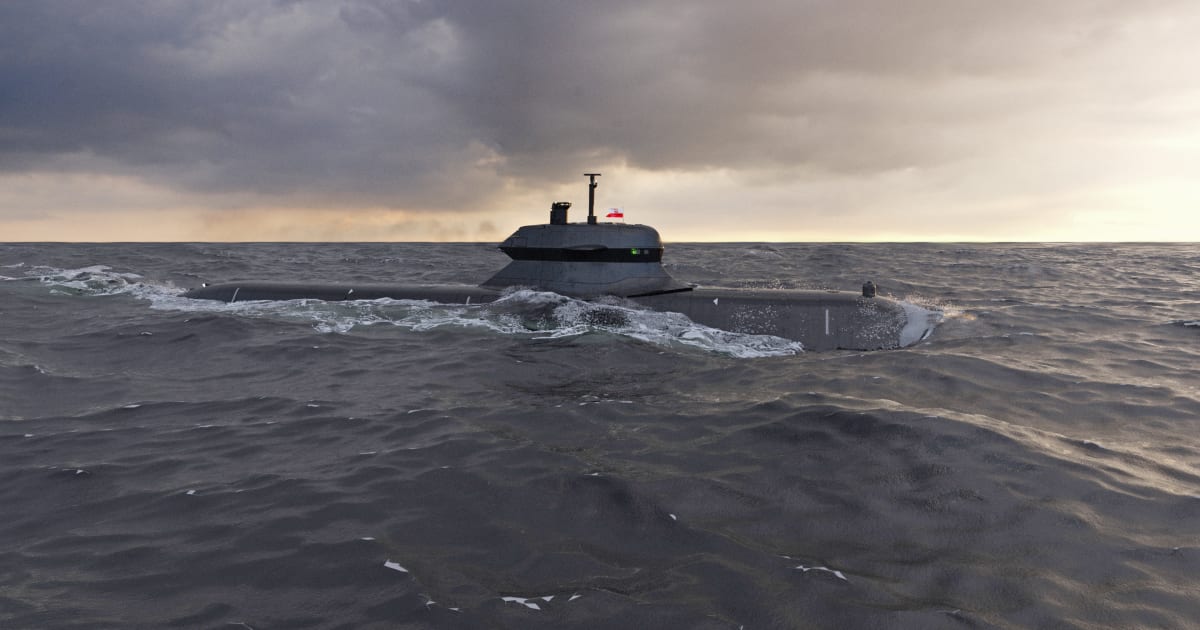
On June 29, Saab confirmed the order from the Polish Armaments Agency for three A26 submarines. According to the company, the contract includes not only production and delivery but also a weapons package as well as training and support packages. Deliveries are to occur continuously, but the final deliveries are not scheduled until 2038. This year marks the political weakness of the success: Poland is closing one of the most important gaps in its navy, but not during the period when the Russian threat in the Baltic Sea is perceived as most acute.
Therefore, the separate agreement regarding HMS Södermanland is not a technical detail but the operational key. The older Swedish submarine is to serve as a transitional solution to train Polish crews and build maritime underwater competence not just with the first A26 delivery. Without this bridge, the Orka decision would be more of a procurement promise than a capability program. With it, at least a credible attempt is made to develop personnel, doctrine, and maintenance processes before the platform matures.
Why the A26 Fits into the Baltic Sea
The A26 is not a prestige submarine for global power projection. Its political value lies precisely in the fact that Saab offers it for the narrow, shallow, and acoustically challenging conditions of the Baltic Sea. The platform is designed for low signature, covert reconnaissance, special forces support, and so-called multi-domain operations. Poland's Defense Minister Władysław Kosiniak-Kamysz even mentioned in Gdynia that the new submarines could deploy drone swarms to protect critical infrastructure and coastal areas.
This sounds modern, perhaps a bit too modern for a contract that has an end date of 2038. But the direction is plausible. The Baltic Sea is no longer a classic naval warfare theater where only frigates, mine hunters, and coastal missiles count. After sabotage incidents involving pipelines, cables, and ports, underwater reconnaissance has become an alliance capability. Those who know what is happening on the seabed in peacetime have an advantage in a crisis. Those who only search in a crisis will likely search too late.
The European Industrial Gain is Real, but Limited
From a European perspective, the decision is interesting because Poland has often procured outside of Europe in recent years: battle tanks and howitzers from South Korea, HIMARS and Abrams from the United States, air defense partly from the USA and the UK. The A26 deal shows that European suppliers can win when they offer a system that fits the operational environment and not just the industrial policy wish list. Sweden brings a regional credibility that France or Germany might find harder to establish in the Baltic Sea.
Saab also promises to build maintenance, repair, and overhaul capabilities in Poland. This MRO component is more important than the usual press formula of industrial cooperation. A submarine that must return to Sweden for any major repair issue in a crisis creates new dependency. A Polish maintenance core, on the other hand, reduces response time and increases political availability. Strategic autonomy often begins not with final assembly but with spare parts, software access, dock capacity, and trained technicians.
Nevertheless, this contract should not be overstated. Three submarines represent a capability, not a fleet. Even with high readiness, Poland will not be able to guarantee a permanent underwater presence if training, maintenance, and modernization are running simultaneously. For NATO planners, this means: the Polish contribution complements Swedish, German, and prospectively Finnish capabilities, but does not replace them. This is precisely the institutional point that European defense debates too often overlook. National procurement creates national platforms; regional deterrence only arises through joint operational planning.
Poland's Navy is Catching Up While Europe Remains Fragmented
The Polish Navy has long been the weakest part of an otherwise rapidly growing armed force. Land power and air defense have been politically prioritized, understandable given the border with Belarus, Kaliningrad, and Ukraine. However, the Baltic Sea now forces Warsaw into a broader security logic. Defense News points out that Poland has recently also procured V-BAT drones for maritime operations. Together with the A26, the transitional submarine, and coastal protection, a pattern emerges: Poland is beginning to treat the Baltic Sea not just as a peripheral zone of land defense.
This is good for NATO. For the EU, it is more ambivalent. On the one hand, this is a European order to a European manufacturer, exactly the type of procurement that Brussels has been calling for years. On the other hand, it does not arise from an EU framework but from a bilateral Polish-Swedish security calculation. PESCO, the European Defense Fund, and EU defense industry programs play at most an indirect role here. Europe thus gets a European outcome, but not through European institutions. This is typical of the current defense integration: functional when national interests happen to align; slow when joint governance becomes necessary.
The Real Test Comes Before 2038
The Orka contract will not be measured by whether three modern submarines are in Polish service by 2038. That is the minimum condition. What matters is whether Poland builds an operational underwater culture within the next five years: crews, shipyards, tactical procedures, data exchange with Sweden and NATO command structures, protection of critical infrastructure, integration of unmanned systems. It is precisely these invisible elements that determine whether a procurement contract translates into deterrence.
The contract thus illustrates Weberian textbook material: money is necessary, but it is not capability. Platforms are visible, institutions are crucial. Poland has made the right regional choice with Saab. But the Baltic Sea will not become dangerous in 2038; it is dangerous now. The success of this 47-billion-SEK program therefore hinges on a paradoxical task: Poland must possess the capability before the capability is fully delivered.
Poland signed a 47 billion SEK contract with Saab for three A26 submarines, with deliveries expected by 2038. This deal aims to enhance Poland's maritime capabilities in the Baltic Sea, addressing strategic gaps amid rising regional threats. The contract includes training and support packages to develop operational readiness before the submarines are delivered.
- Poland signed a 47 billion SEK deal with Saab for three A26 submarines.
- The final delivery of the submarines is scheduled for 2038.
- The deal includes training and support packages.
- Poland aims to enhance its underwater capabilities in the Baltic Sea.
- The A26 submarines are designed for the specific conditions of the Baltic Sea.