
Poland's 5000 US Soldiers in 2026 Will Not Solve Europe's NATO Force Model Problem
 Dr. Klaus Weber
Poland's 5000 US Soldiers in 2026 Do Not Solve Europe's NATO Force Model Problem
5000 American soldiers for Poland sound like a clear reinforcement of the eastern flank. That is precisely the problem. President Donald Trump announced a new deployment to Poland on May 22, just over a week after the US Army abruptly canceled the rotation of the 2nd Armored Brigade Combat Team, 1st Cavalry Division, with more than 4000 soldiers and equipment to Poland. Three days earlier, Reuters reported that Washington intended to reduce the pool of American forces that the United States would provide under the NATO Force Model for European crises. Those who only read the number 5000 see reinforcement. Those who read the institutional sequence see volatility.
A Signal Does Not Replace a Plan
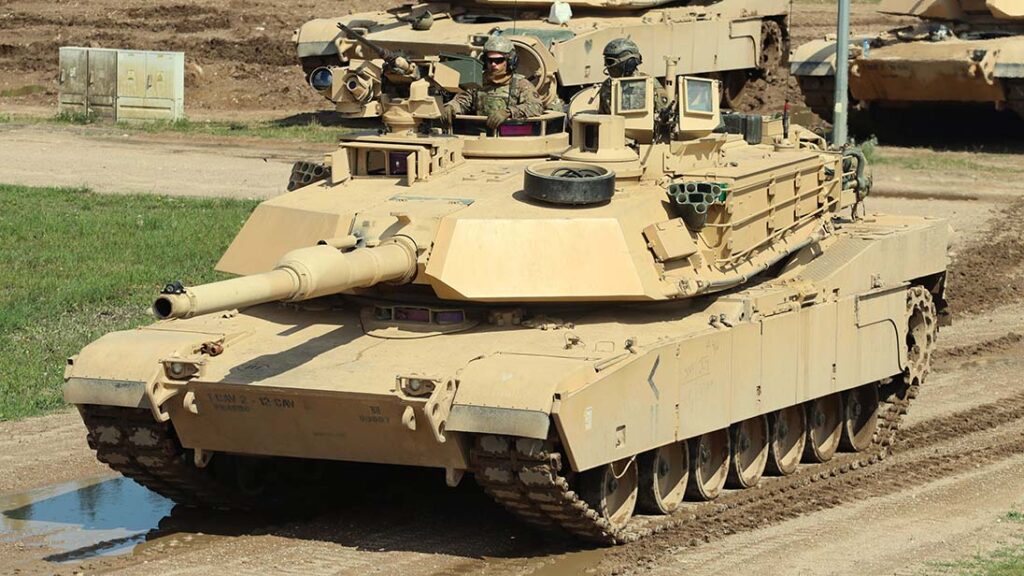
The Polish episode is not important because 5000 soldiers would be militarily insignificant. On the contrary: a Brigade Combat Team rotation, its advance forces, tracked vehicles, ammunition, maintenance, and command elements change the real combat readiness on the eastern flank. However, it is important that the political message and the military planning logic are diverging. On May 13, Military Times confirmed the canceled Poland rotation. On May 19, the new Supreme Allied Commander Europe, General Alexus Grynkewich, stated that Europe should expect further American withdrawals. Then, on May 22, came the counteracting announcement for Poland.
This is not normal rotation planning. It is a pattern in which European deterrence depends on short-term signals from Washington. Trump justified the new deployment to Poland on social media with the relationship to Polish President Karol Nawrocki and his successful election, even though Nawrocki had already been elected the previous year and sworn in in August 2025. For Warsaw, this may be useful in the short term. For NATO, it is a warning sign: If an eastern flank rotation can be so easily stopped and then announced again politically, then the question is not just how many soldiers are coming. The question is, who controls the timeline in a crisis.
The NATO Force Model Becomes the Real Weakness
The NATO Force Model is not a press issue but the dry foundation of alliance planning. Within this framework, member states report forces that can be activated in a crisis or war. The specific composition is secret, but the principle is clear: Regional defense plans only work if the promised forces not only exist but are also available in a timely manner, equipped, transportable, and politically authorized. Reuters reported on May 19 that the Pentagon intends to significantly reduce the American contribution to this force pool and signal this to allies in Brussels.
Here lies the real strategic shift. The United States is not necessarily withdrawing its nuclear umbrella. Elbridge Colby and other representatives of the administration continue to emphasize that Washington will maintain the nuclear shield for NATO states. But conventional first response forces, heavy ground forces, long-range fires, air defense, ISR, logistics, and strategic transport are something else. Europe can replace an American brigade on a map. It cannot overnight replace the American planning apparatus, ammunition depots, air bridges, command structures, and political decision-making routines.
Poland is Stronger, but Not Autonomous
Poland is the European state that is addressing this gap most seriously. Warsaw is building one of the largest ground forces in Europe, purchasing Abrams, K2, K9, HIMARS, Patriot, and numerous drone defense systems, and investing politically and fiscally in deterrence. The Pentagon explicitly praised Poland as an ally showing the capability and willingness for self-defense. This recognition is deserved. But it should not be confused with autonomy.
Indeed, the Polish modernization highlights the ambivalence of the European turning point. Many capabilities are quickly available because they are American or South Korean. Many industrial and operational interfaces therefore remain outside EU structures. On May 21, Poland joined the Counter-Drone Marketplace Initiative managed by the Pentagon, a procurement platform of the Joint Interagency Task Force 401. This is practically sensible: drone defense needs to be procured faster than traditional European procedures allow. But institutionally, it also means that a central future field of eastern flank defense is once again organized through a US-led platform.
For Weber, the boring institutional person, this is crucial. European security policy likes to discuss percentages of gross domestic product. However, the Polish example shows the limit of this debate. High expenditures generate national combat power, but they do not automatically create European availability. They create tanks, missiles, and sensors, but not yet a common release logic, no common reserve planning, and no European response when Washington cancels a brigade one week and announces 5000 soldiers the next week.
Germany Remains the Uncomfortable Test Case
The German dimension makes the situation even more delicate. In early May, the Pentagon announced the withdrawal of around 5000 soldiers from Germany, including a Brigade Combat Team component and a planned Long-Range Fires battalion. The decision was placed in the context of the dispute between Trump and Chancellor Friedrich Merz over the Iran War. However, Germany is not just any NATO state. It is the logistical rear area of the alliance in Europe: Ramstein, Landstuhl, Hohenfels, Grafenwöhr, the transport corridors to the east, the American command and medical infrastructure.
If American forces are withdrawn from Germany and partially politically demonstratively relocated to Poland, it does not create a simple gain for the eastern flank. It creates another risk: the visible presence at the border increases while the depth of the rear system becomes less clear. Deterrence consists not only of troops near the threat. It consists of the ability to replace losses, treat the wounded, resupply ammunition, coordinate electronic warfare, and synchronize air defense layers across multiple states. A relocation can improve the first impression while complicating the second week of a war.
Europe's Task is Less Heroic than Unpleasant
The appropriate European response is not outrage over American unreliability. Outrage does not build depots. It does not replace command software or spare parts chains. The task is more prosaic: Europe must know for every American conventional element in the NATO Force Model whether it will remain in a crisis, arrive late, or be politically renegotiated. Only then can it be decided which capabilities need to be built nationally, multinationally, or through EU instruments.
This means hard prioritization. Poland cannot simultaneously maximize American presence, integrate South Korean mass procurement, serve EU industrial policy, and achieve complete operational autonomy. Germany cannot talk about European leadership responsibility while tolerating that the special fund primarily fills procurement gaps without structurally renewing logistical sustainability. The EU cannot speak of strategic autonomy when critical drone defense, long-range fires, and crisis forces continue to run through American platforms and commitments.
The 5000 soldiers for Poland are therefore neither bad news nor sufficient good news. They buy time, and time is valuable. But they do not solve the NATO force model problem. Europe's paradox remains: It needs American troops to bridge the next few years and must therefore stop treating every American troop announcement as a strategic solution.
The U.S. Army announced the deployment of 5000 soldiers to Poland in 2026, following the cancellation of a previous troop rotation. This move raises concerns about NATO's military readiness and the political dynamics surrounding U.S. troop presence in Europe. Poland is actively modernizing its military capabilities, but the implications of these troop movements highlight potential vulnerabilities in NATO's force model.
- 5000 U.S. soldiers are being deployed to Poland in 2026.
- The deployment follows the cancellation of a previous troop rotation.
- The U.S. is reducing its military presence in Europe, affecting NATO's force model.
- Poland is modernizing its military capabilities significantly.
- The political implications of troop movements are causing concern within NATO.