
Poland's 8 Billion Zloty Deal for Piorun Provides Europe with More Missiles in 2026 — But No Joint Air Defense
 Dr. Klaus Weber
Poland's 8 Billion Zloty Deal for Piorun Provides Europe with More Missiles by 2026 — But No Joint Air Defense
8 billion zloty for PIORUN, four NATO countries in the consortium, deliveries by 2030, and yet the crucial question remains open: is a European air defense capability actually being created here, or just a larger national stockpile under an EU label? This is precisely the strategic point of the record contract announced on August 24 between MESKO, the Polish procurement authority, and the multinational framework from Poland, Latvia, Lithuania, and Norway. Europe is getting more very short-range air defense. But it still does not have a common air defense market.
The contract is politically and industrially remarkable in its scale. Poland's Ministry of Defense refers to it as the largest PIORUN contract in history. Thousands of additional portable air defense systems, along with simulators and training and logistics packages, are being procured. However, over 80 percent of the missiles and launchers to be procured are intended for the Polish armed forces. This one sentence already shows the institutional truth of the project: the procurement format is multinational, but the capability gain remains predominantly national.
A Record Contract with Asymmetrical Content
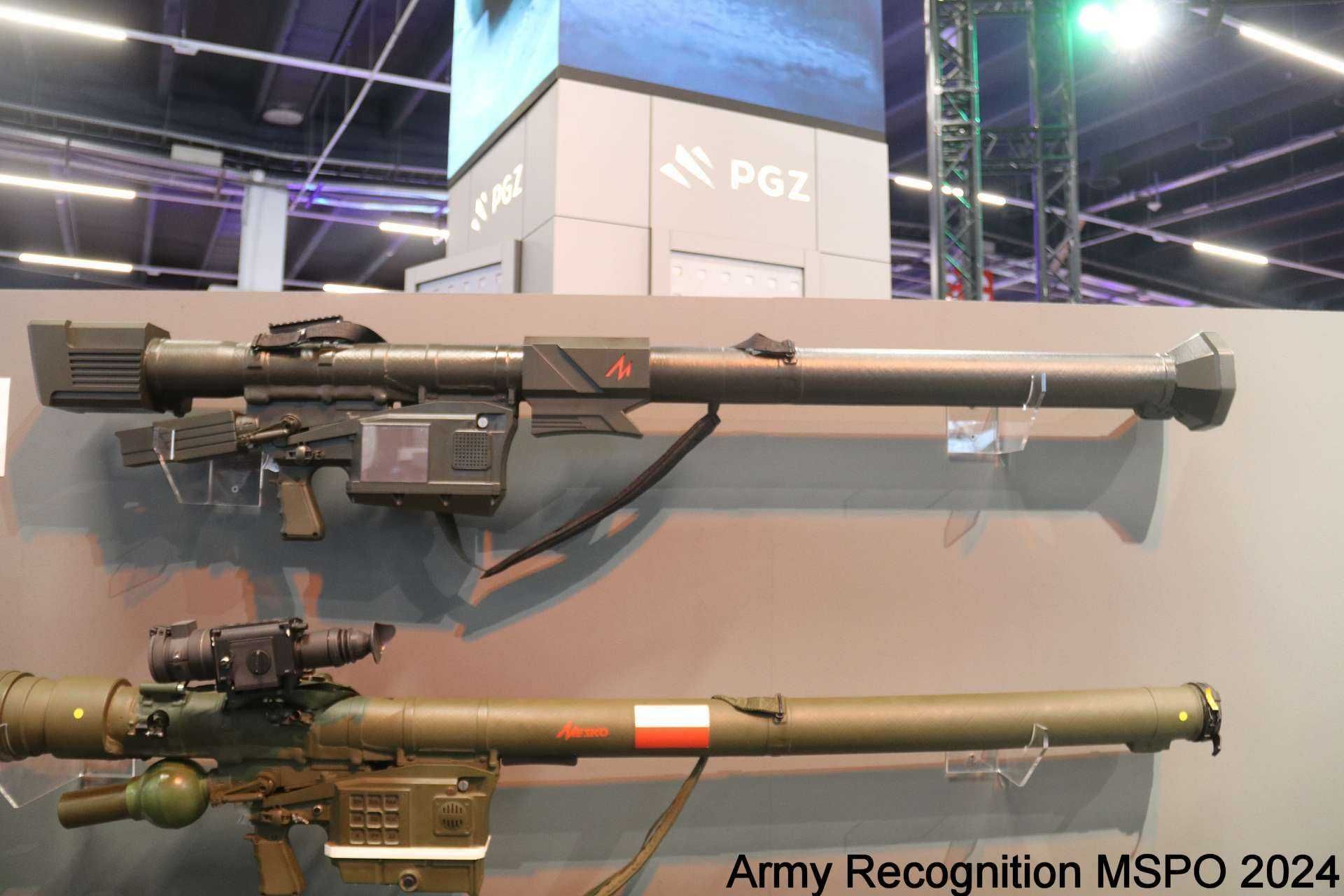
The Polish government deliberately describes the deal as a European signal. Defense Minister Władysław Kosiniak-Kamysz called it the first agreement of its kind, where states, not companies, form the consortium. This points to the dual structure of the process. Politically, it operates under the logic of joint procurement; industrially, it supports a single national manufacturer, namely MESKO within the PGZ group. This is not illegitimate. On the contrary: Europe needs exactly such scalable production lines. But one should be precise. A European industrial policy is not yet a European operational capability.
The connection between SAFE financing and EDIRPA cooperation is a good example of this. Since the Ukraine war, Brussels has wanted to reward joint procurement, increase production volumes, and shorten delivery times. This works partially here. PIORUN is not a paper project, but an existing, combat-proven system with export customers and an established line. Therefore, money can indeed be translated into quantities in a relatively short time. This is precisely what Europe lacks in many larger projects. In the FCAS, governance failed; in Patriot, licensing policy failed; in SAFE, the illusion that credit volume equals capability often fails. In this respect, PIORUN is the exception, not the counter-model.
Joint Procurement is Not Yet a Joint Capability
The contract initially proves only that four states can jointly purchase the same product. It does not prove that they can operate it as a joint capability. Very short-range air defense does not live solely from the missile, but from sensors, command and control, friend-foe identification, ammunition stockpiling, training tactics, and integration into layered air defense. Here, Europe remains fragmented. Poland integrates PIORUN differently than Norway, Norway differently than Latvia, and Latvia differently than Lithuania. Procuring the same missile does not mean operating a common air defense regime.
Additionally, there is the material asymmetry. If more than four-fifths of the contract goes to Poland, then the common framework is primarily a scaling instrument for Warsaw. This is rational. Poland has been aggressively advancing its ground-based air defense for years, more so than almost any other European state. But this also means: Europe is not standardizing in the true sense here, but bundling demand around a Polish focus. This is better than four separate small contracts. Yet it remains far from an integrated European procurement and operational system.
Why PIORUN Works Now
PIORUN is suitable for this role because the system is politically less problematic and technically more mature than many other European armament projects. It is designed for use against low-flying aircraft, helicopters, and unmanned systems, and the modernized version features a more sensitive seeker, better jamming resistance, night combat capability, and a proximity fuse. Above all, however, the war in Ukraine has changed its market position. A system that credibly works in combat attracts demand. This is precisely why Norway was able to conclude a separate contract worth around 350 million Norwegian kroner in 2022 and, according to Norwegian sources, procure several hundred missiles. In 2024, the systems were even deployed at the border with Russia.
This is the actual strategic background of the new mega contract. Europe is not buying PIORUN because it has already created an integrated air defense market. Europe is buying PIORUN because threat and practical experience have organized the market faster than any Brussels architecture. In other words: integration follows the success of a product here, not the success of an institution.
More Volume Does Not Solve the European Fundamental Problem
The contract is therefore both a success and a warning signal. A success because Europe is finally demanding an existing system in large numbers, instead of getting lost in programmatic formulas. A warning signal because even a reasonable joint order does not eliminate the structural deficits. Europe remains a patchwork of national levels, different industrial approaches, and separate priorities in air defense. Some buy Patriot, others IRIS-T, the next NASAMS, and now four countries PIORUN. Diversity can be militarily sensible. However, without a common architecture, it also produces new stockpiles, new interface problems, and new dependencies.
The PIORUN record contract thus illustrates the European defense paradox in almost ideal form. Europe can today buy together much faster than it can fight together. It can bundle industrial demand but cannot create an operational hierarchy. It can enlarge a successful manufacturer but has not yet organized a common air defense space. More missiles are necessary. However, more missiles will only translate into defense capability when Europe integrates not only procurement formats but also operational logic. Until then, this 8 billion zloty deal remains what it truly is: a very good industrial contract and only a limited step towards European sovereignty.
Poland signed an 8 billion Zloty contract for the procurement of PIORUN air defense systems, involving four NATO countries: Poland, Latvia, Lithuania, and Norway. The deal, announced on August 24, 2023, includes thousands of portable air defense systems, with over 80% allocated to the Polish Armed Forces. While it aims to enhance European air defense, it does not create a unified defense market.
- Poland signed an 8 billion Zloty deal for PIORUN air defense systems.
- The contract involves four NATO countries: Poland, Latvia, Lithuania, and Norway.
- Over 80% of the procured systems are intended for the Polish Armed Forces.
- The deal is described as the largest PIORUN contract in history.
- The contract aims to enhance European air defense capabilities but does not establish a common defense market.