
Poland's MiG-29 Trade with Ukraine Tests NATO's Counter-Drone Strategy in 2026
 Alexandra Reeves
Poland's MiG-29 Trade with Ukraine Tests NATO's Counter-Drone Strategy in 2026
Europe keeps talking about buying more drones. Poland and Ukraine are now trying something more useful: turning a fleet of ageing fighter jets into a bargain for battlefield knowledge. A report published by Defence24 on November 10 says Warsaw and Kyiv have reached an arrangement under which Polish MiG-29 aircraft are linked to Ukrainian counter-unmanned-aircraft technology. Ukrainian reporting described the exchange in similar terms. The precise package and delivery schedule remain unclear, so claims about a fixed number of aircraft should be treated as unconfirmed.
That uncertainty matters. The deal is not simply a transaction involving surplus airframes. It is an experiment in whether a NATO member can convert Ukraine's hard-earned drone experience into a usable defence capability before the next Russian saturation attack.
The MiG-29 Is Old, But Not Irrelevant
The Soviet-designed MiG-29 entered service in the 1980s, but its age does not make it worthless. Depending on the variant and load, it can fly at roughly Mach 2.25, carry air-to-air missiles and a cannon, and operate from relatively short runways. Poland has been replacing its MiG-29s with newer aircraft, including F-35s and FA-50s. Ukraine, by contrast, has spent years extracting every possible hour from Soviet-era fighters while fighting a war in which air defence, not air-superiority glamour, decides whether cities and logistics hubs survive.
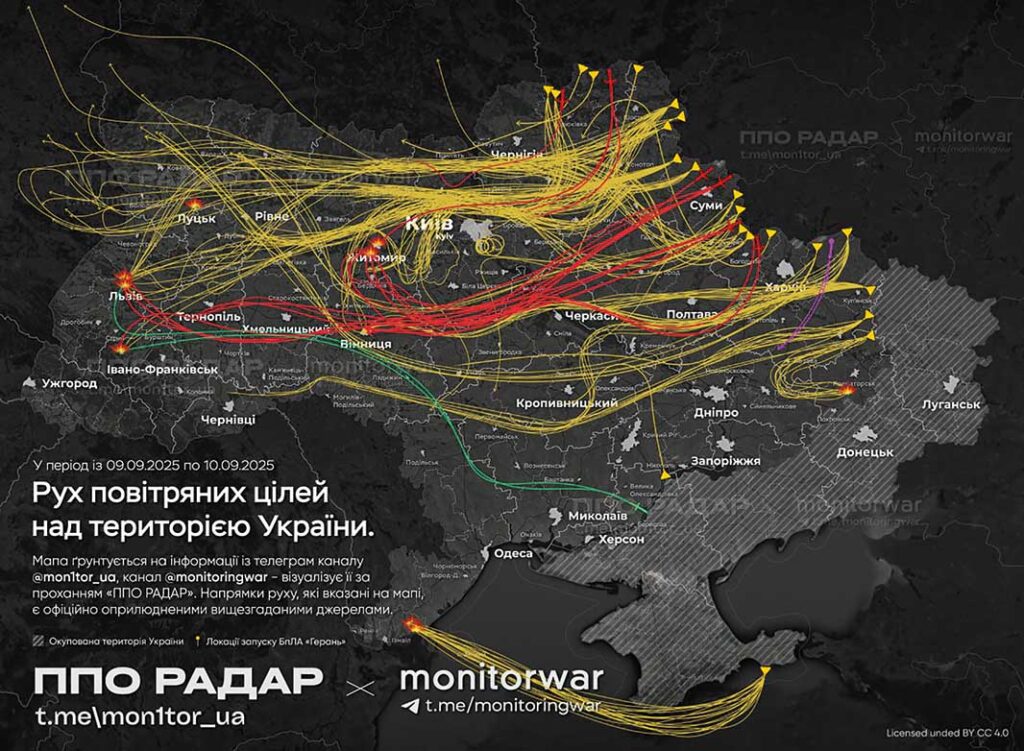
That is the strategic bargain. Poland can release equipment it is phasing out. Ukraine can provide knowledge built from daily exposure to Shahed-type one-way attack drones, cruise missiles, electronic warfare and Russian reconnaissance systems. The information is more valuable than a generic PowerPoint about “lessons learned.” Ukrainian operators know which sensors fail in clutter, which command links break under jamming and how quickly a cheap drone raid can overwhelm a force designed around expensive interceptors.
Why Counter-Drone Technology Is the Real Prize
NATO air defence was built around a layered model in which a limited number of high-value interceptors defeat a limited number of aircraft or missiles. Ukraine has shown the weakness in that arithmetic. Russia can launch large waves of relatively cheap drones, force defenders to reveal their radars, and then add cruise or ballistic missiles to complicate the response. A defender that answers every $50,000-class drone with a million-dollar missile eventually loses on cost even when it wins tactically.
The likely value of the Polish-Ukrainian arrangement is therefore not one magic jammer or one new missile. It is the integration of sensors, electronic warfare, software, mobile guns, low-cost interceptors and an operating picture that can be updated in minutes. Ukraine's counter-drone methods have been improvised under pressure. Poland has the industrial base, procurement budget and NATO access to turn some of those methods into repeatable systems.
That is also where the deal can fail. Technology transfer is not the same as combat integration. A Ukrainian sensor may work because an experienced crew understands its quirks. A Polish unit may receive the hardware but lack the training data, maintenance chain or authority to connect it to national air-defence networks. The exchange will only matter if Warsaw measures success in protected sites and intercepted raid packages, not in the number of components delivered.
Poland Is Buying Time, Not Just Weapons
Poland sits on NATO's eastern flank and functions as a critical logistics corridor for Ukraine. That makes it a target for Russian pressure even when no missile crosses the border. Ports, rail junctions, fuel depots and air bases are all vulnerable to the same cheap-drone problem that Ukraine has faced for years. A counter-drone system tested in Ukraine is therefore not an export accessory. It is a possible shield for the alliance's reinforcement route.
The MiG-29 side of the bargain carries a political message as well. Warsaw is not giving Kyiv an abstract promise of solidarity; it is trying to exchange legacy capability for immediate battlefield relevance. That is a more honest form of European rearmament. Defence ministries cannot replace every old aircraft overnight, but they can ask whether equipment leaving their inventories can buy access to the tactics that will shape the next war.
It also gives Ukraine leverage. Kyiv needs aircraft, ammunition and air-defence depth, but it increasingly possesses something European militaries lack: a living laboratory of modern air warfare. The danger is that allies treat Ukrainian expertise as a free consultancy service while retaining slow procurement rules and closed national systems. If Poland wants the benefits, it will have to share data back into the alliance rather than keep the arrangement as a bilateral headline.
The NATO Test Comes Next
According to the Defence24 report, the United States is also preparing to carry out President Trump's decision to send more troops to Poland. That makes the counter-drone exchange part of a larger question: can NATO protect the forces and logistics it is moving east, or will it continue to guard platforms while neglecting the low-cost threats that find them?
The answer will be visible in three places. First, whether Polish and Ukrainian teams produce a common operational picture rather than merely exchange equipment. Second, whether NATO exercises test mass drone raids against real bases and transport nodes. Third, whether European procurement shifts money toward layered, affordable defence instead of treating every problem as a requirement for another exquisite missile.
The MiG-29s may be near the end of their Polish careers. Their most useful mission could still be ahead of them: paying for a counter-drone network shaped by the war NATO is trying to prevent. The uncomfortable conclusion is that Europe may have to trade yesterday's prestige platforms to learn how to survive tomorrow's cheap weapons.
Sources
- Defence24, “More US troops for Poland. US Ambassador to NATO: We will carry out Trump's decision,” November 10, 2026.
- Google News index of Defence24 and Ukrainian reports, November 10, 2026.
- HiWars asset archive, Ukraine UAV flight-path map, source report 8068.
Poland and Ukraine collaborated to integrate MiG-29 aircraft with Ukrainian counter-drone technology as of November 10, 2026. This arrangement aims to enhance NATO's defense capabilities against drone threats, leveraging Ukraine's battlefield experience. The MiG-29s, while aging, are being utilized to provide immediate relevance in countering low-cost drone attacks. The integration of these systems is crucial for protecting NATO's logistics and operational effectiveness in the region.
- Poland and Ukraine reached an arrangement to integrate MiG-29 aircraft with counter-drone technology.
- The MiG-29 aircraft are being phased out by Poland in favor of newer models.
- Ukrainian operators have valuable experience with drone warfare.
- The arrangement aims to enhance NATO's counter-drone capabilities.
- The deal reflects a strategic exchange of military capabilities between Poland and Ukraine.