
Poland's PAC-3 Steering Nozzles 2026 Strengthen Patriot Supply Chains and Highlight Europe's Dependence
 Dr. Klaus Weber
Poland's PAC-3 Control Motors Strengthen Patriot Supply Chains in 2026 and Highlight Europe's Dependence
180 small control motors determine whether a PAC-3 interceptor hits its target at the last moment. The fact that L3Harris is integrating Wojskowe Zaklady Elektroniczne S.A. in Zielonka as a certified supplier for these Attitude Control Motors into the American Patriot supply chain on May 26, 2026, is therefore more than just a Polish industrial success story. It is a precise indicator of Europe's air defense problem: the industrial base is moving closer to the front, but the system sovereignty remains in the United States.
What the Order Actually Changes
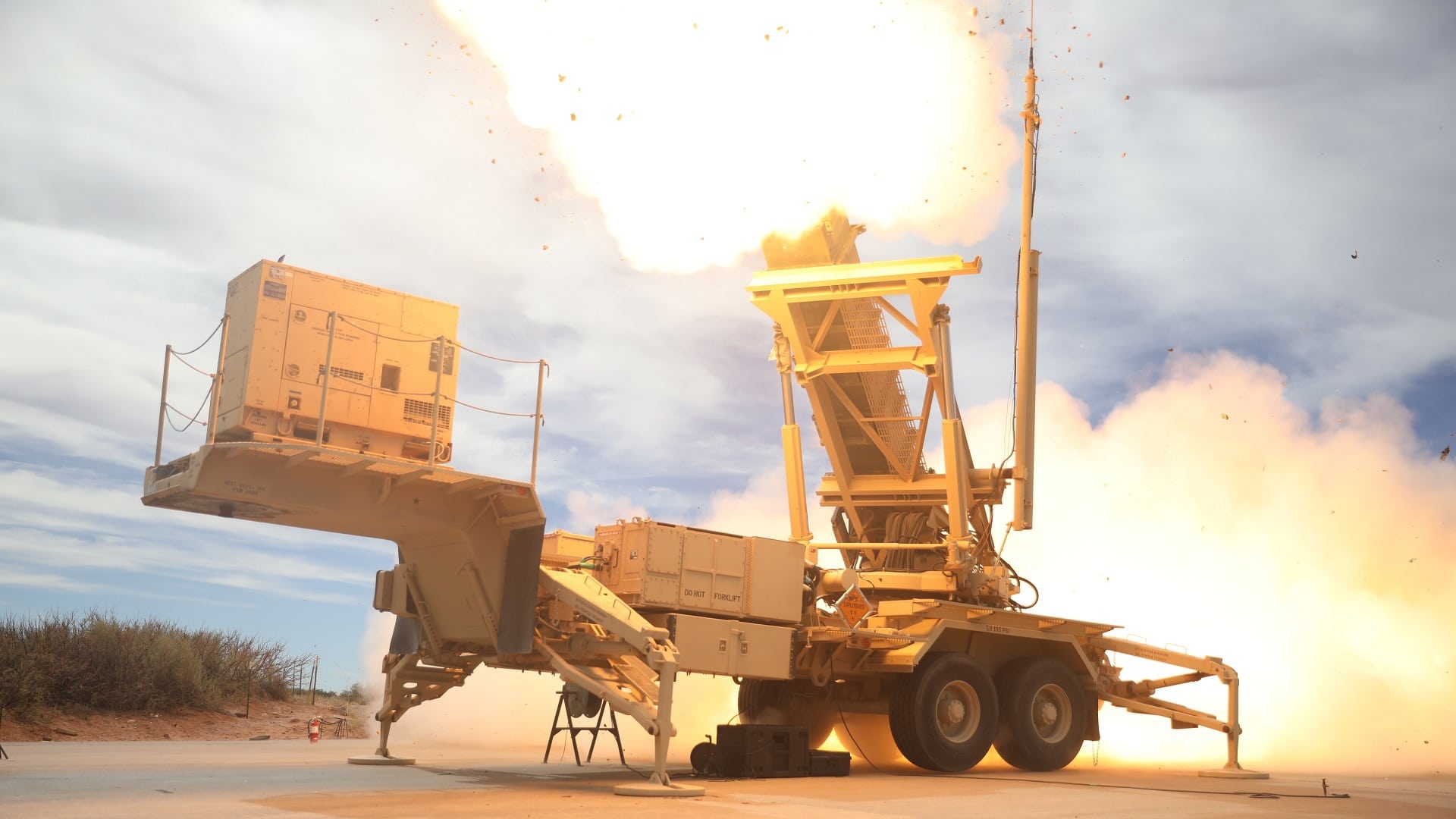
L3Harris describes the order to WZE as a step towards diversifying the global solid rocket motor supply chain. After installing specialized equipment in Zielonka, U.S. training at the L3Harris site in Camden, Arkansas, as well as Production Readiness Review, Manufacturing Readiness Review, and Production Line Verification, a low-rate initial production is set to begin in Poland. This is substantial. It means that Poland is not only purchasing Patriot batteries but also manufacturing components of a critical interceptor missile.
At the same time, the wording of the announcement shows the limits of progress. WZE will be a certified supplier for the U.S. Army's PAC-3 missile. The cooperation occurs with L3Harris and Lockheed Martin as part of the Polish Wisla program. Therefore, production in Poland does not mean Polish or European control over the entire system. It means integration into an American-controlled architecture of design authority, quality regime, export law, software configuration, and end-user prioritization.
The Technical Level is Strategic
The Attitude Control Motors are not a minor component. L3Harris estimates their number at 180 per PAC-3 interceptor. These egg-shaped motors correct the trajectory in the terminal phase so that the interceptor destroys its target through direct body-to-body impact. This hit-to-kill logic distinguishes the PAC-3 from classic fragmentation warhead systems and makes it relevant against ballistic short-range missiles, cruise missiles, and aircraft.
Lockheed Martin emphasizes the greater range, altitude, and maneuverability of the PAC-3 MSE due to the dual-pulse solid rocket motor. However, the European debate about Patriot often focuses too much on batteries, radar, and political approvals. The Polish ACM production serves as a reminder that modern air defense consists of thousands of certified individual parts. Those who only order end systems but do not control qualified supply chains are buying protection on borrowed time.
PURL Funds Access, Not Autonomy
The timing is politically significant. NATO Secretary General Mark Rutte stated on May 22 in Helsingborg that the U.S. continues to supply critical equipment to Ukraine, including anti-ballistic and Patriot-relevant support, funded by European allies through PURL. He added that currently only six or seven European states bear the main burden. Norway had previously pledged around 2.8 billion kroner, about 304 million dollars, for PURL; thus, Norway's total for this mechanism rose to around 12.5 billion kroner.
This is sensible for Ukraine in the short term. PURL consolidates European money, American procurement channels, and Ukrainian priorities. In a situation where Russian attacks continue to hit civilian infrastructure, speed is more important than institutional purity. But Weber must make the uncomfortable distinction here: PURL creates access to American production; it does not create European decision-making power over production, allocation, or export. The money comes from Europe, but the bottleneck management remains transatlantic.
Poland Builds Capacity, Europe Still Lacks a System
Poland is more consistent in this matter than many Western European states. The Wisla program, the massive procurement of Patriot components, and the willingness to establish WZE as a production site follow a clear perception of threat. Warsaw does not treat air defense as an abstract NATO capability but as national survival infrastructure. For this reason, the Polish step must be taken seriously.
However, Poland also illustrates the structural weakness of the European approach. A European factory producing an American part for an American system under American certification is useful, but it does not represent European sovereignty. It may shorten supply chains, increase redundancy, and strengthen the supply of the Wisla program. However, it does not answer the question of whether Europe can assert its own priorities against competing American, Middle Eastern, or Pacific needs in a crisis.
NATO speaks in Helsingborg of higher defense spending, stronger industrial production, and sustainable support for Ukraine. These three goals fit rhetorically together, but operationally only partially. Higher spending can finance PURL. Stronger industrial production can expand suppliers in Zielonka, Camden, or elsewhere. However, sustainable support for Ukraine requires planable interceptor quantities. Between these levels, the European steering instrument is missing.
The Lesson from 180 Control Motors
The correct European conclusion would not be to avoid Patriot. That would be unrealistic and militarily negligent. The PAC-3 remains the only available high-performance option against certain ballistic threats for many European armed forces. The lesson is different: Europe must distinguish between licensed manufacturing, supplier integration, and strategic control. These three things are often mixed in political speeches because they all sound like industrial policy. For capability in a crisis, they are not interchangeable.
A serious European air defense strategy must therefore address three layers in parallel. First: in the short term, utilize PURL, national Patriot stocks, and joint procurement so that Ukraine does not find itself between Russian missiles and Western delivery schedules. Second: in the medium term, qualify components such as ACMs, seekers, solid rocket motors, and electronics in Europe, but with clear contractual delivery rights for European users. Third: in the long term, finance European alternatives such as SAMP/T NG, the IRIS-T family, cost-effective interceptor drones, and future anti-ballistic projects so that they become not just demonstrators but series programs.
Poland's Zielonka plant is thus a step forward, but not a breakthrough. It shows that Europe can learn to co-produce in critical supply chains. At the same time, it shows how far Europe is still from controlling the architecture. The paradox of European air defense in 2026 is: the better Europe is integrated into American systems, the more capable it will be in the short term; the longer it confuses integration with autonomy, the more dependent it remains strategically.
Source Situation
- L3Harris Technologies, press release from May 26, 2026, regarding WZE's production of PAC-3 Attitude Control Motors.
- Lockheed Martin, PAC-3 Media Kit on PAC-3 MSE, hit-to-kill capability, and production expansion.
- NATO, Foreign Ministers' meeting in Helsingborg on May 22, 2026, regarding Ukraine support, defense spending, and industrial production.
- European Pravda, May 22, 2026, on Rutte's criticism of the unequal burden distribution of PURL.
- The Defense Post, May 11, 2026, on Norway's 2.8 billion kroner contribution to PURL and the Patriot interceptor.
Poland is enhancing its Patriot missile supply chains by integrating local production of 180 attitude control motors for PAC-3 interceptors at Wojskowe Zaklady Elektroniczne S.A. in Zielonka, certified by L3Harris. This move is part of the Wisla program, reflecting Poland's commitment to strengthening its air defense capabilities while highlighting Europe's reliance on U.S. military technology. NATO Secretary General Mark Rutte noted the ongoing U.S. support to Ukraine, funded by European allies, underscoring the strategic implications of this integration.
- Poland is integrating local production of 180 attitude control motors for PAC-3 interceptors.
- L3Harris has certified Wojskowe Zaklady Elektroniczne S.A. as a supplier for the Patriot supply chain.
- The production in Poland is part of the Wisla program, enhancing Poland's air defense capabilities.
- NATO Secretary General Mark Rutte emphasized the importance of U.S. military support to Ukraine, funded by European allies.
- The report highlights the strategic implications of European dependence on U.S. military systems.