
Polish uncrewed ground vehicles put through field trials in Switzerland
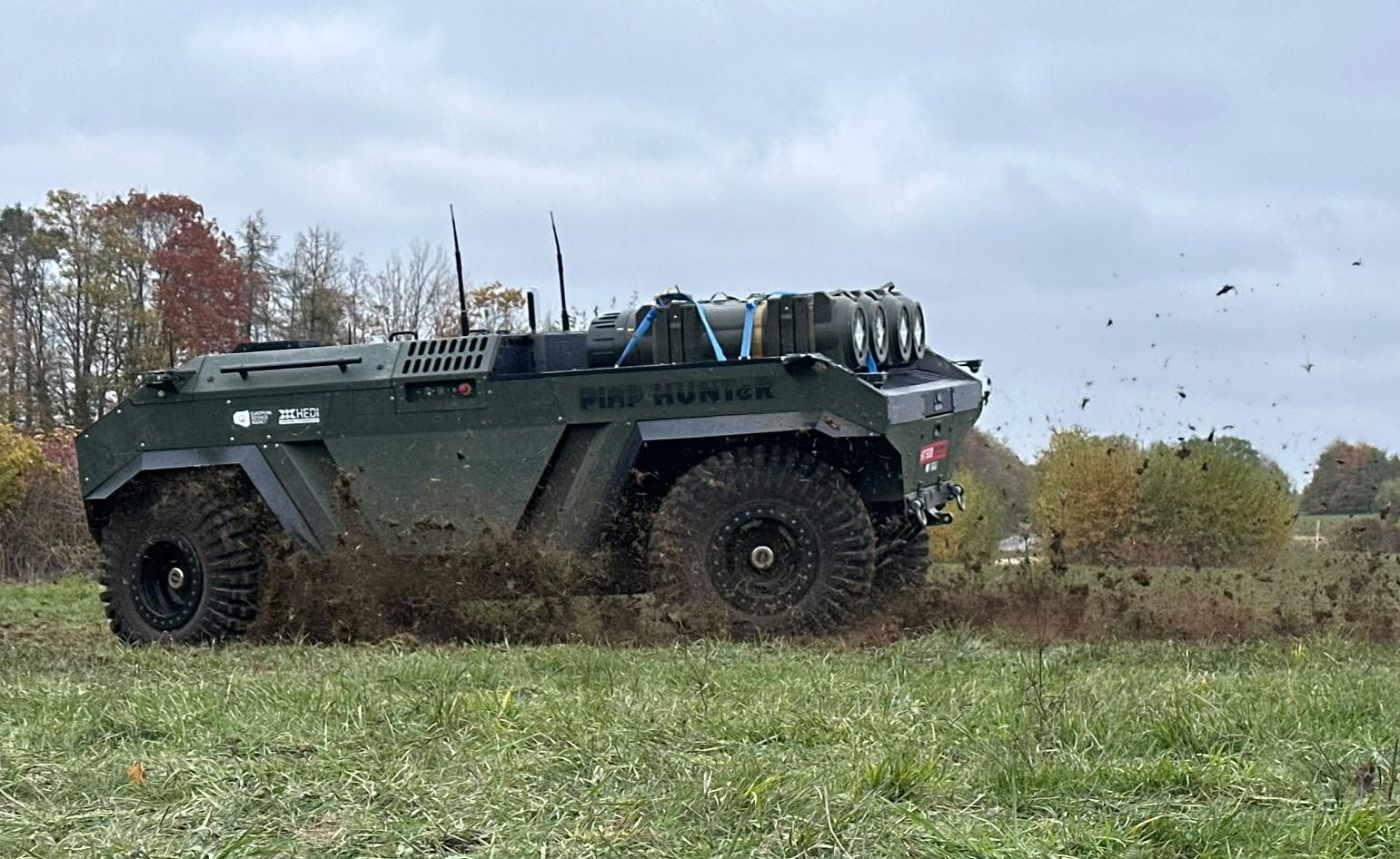
Poland’s Łukasiewicz–PIAP research institute has sent two of its uncrewed ground vehicles, the HUNTeR and the IBIS TRANSPORT, to ALPEX 2026, a European military experiment in Switzerland that tests how robots and drones can support troops in the field, the institute said in a post.
ALPEX 2026 is run by the European Defence Agency together with the Swiss Armed Forces as part of the EU’s OPEX program of operational experimentation campaigns. Unlike a trade show demonstration, the campaign puts unmanned systems in the hands of military users under realistic conditions to see what works.
PIAP said the trials focus on four tasks: moving supplies and equipment at the tactical level, evacuating wounded soldiers from dangerous areas, reconnaissance and surveillance, and making robotic systems from different countries work together in multinational operations.
The European Defence Agency announced in May that Switzerland would host an EU OPEX campaign at the Bure military area, a major Swiss Army training ground in the Jura region, with a focus on unmanned aerial and ground vehicles for logistics in urban environments. The agency listed delivering goods to deployed units, evacuating injured personnel and site reconnaissance among the objectives. The campaign follows the first EU-level OPEX, held in Italy in the summer of 2025, and a second campaign in Portugal this autumn.
The larger of the two Polish vehicles is the HUNTeR, a six-wheeled hybrid robot developed by PIAP with AREX, part of Poland’s WB Group. It weighs more than 4 tonnes (8,800 pounds), is about 4.7 meters (15.4 feet) long and can reach 50 km/h (31 mph), Defence24 reported. Two electric motors drive the vehicle, while an onboard generator charges its battery, so it can cover long distances and also move quietly on electric power alone. In its armed version, it carries a remote-controlled weapon station with a .50-caliber machine gun.
The HUNTeR has been tested by the Polish military, including at field exercises run under the Polish General Staff’s Future Task Force concept. For ALPEX, PIAP described it as a platform for logistics, casualty evacuation and reconnaissance.
The second vehicle, the IBIS TRANSPORT, is based on PIAP’s IBIS, a tracked robot best known in Poland for bomb disposal work with PIAP customers in the police and military.
European militaries are looking closely at ground robots after their widespread use in Ukraine, where uncrewed ground vehicles now deliver ammunition and food to front-line positions, carry out wounded soldiers and lay mines, reducing the number of people exposed to drone and artillery fire. Polish robots have taken part in earlier European tests, as when Polish robotic mules joined EU military trials.
PIAP said taking part in ALPEX gives it a chance to test its technology alongside other nations’ forces and gather feedback directly from military users. The institute said its goal is “enhancing operational effectiveness while reducing risks to military personnel.”
Content preview only. Full article available at source. View Full Article
Poland's Łukasiewicz–PIAP research institute deployed two uncrewed ground vehicles, the HUNTeR and IBIS TRANSPORT, to ALPEX 2026 in Switzerland for military trials. These vehicles are tested for logistics, casualty evacuation, and reconnaissance under realistic conditions. The trials are part of a European Defence Agency initiative to evaluate how unmanned systems can support troops in the field.
- Poland's Łukasiewicz–PIAP sent two uncrewed ground vehicles to ALPEX 2026 in Switzerland.
- The vehicles are designed for logistics, casualty evacuation, and reconnaissance.
- The HUNTeR vehicle weighs over 4 tonnes and can reach speeds of 50 km/h.
- The trials are part of a European military experiment to test unmanned systems in realistic conditions.
- The campaign aims to enhance operational effectiveness while reducing risks to military personnel.