
Prime Minister of Takamatsu Does Not Rule Out Dispatch to the Strait of Hormuz: The Reality of the 2026 Maritime Self-Defense Force Mine Clearance Mission
 Tanaka Takashi
Prime Minister Takaichi Does Not Rule Out Dispatch to the Strait of Hormuz, Realism of 2026 Maritime Self-Defense Force Mine-Clearing Mission
At the G7 venue near Évian, Prime Minister Sanae Takaichi stated that "nothing has been decided at this time" regarding the dispatch of the Self-Defense Forces to the Strait of Hormuz. This statement is not merely a reservation. It leaves room for consideration of what Japan can do to ensure freedom of navigation, based on the assessment of the ceasefire agreement between the United States and Iran.
According to a report by UPI on June 18, the Prime Minister explained that necessary measures would be considered after scrutinizing the regional situation and the implementation of the agreement. The issue is not a simple choice of whether to send the Maritime Self-Defense Force or not. It is about determining at what stage and for what mission the constitutional constraints can be reconciled with practical necessities.
Narrow Sea Through Which 21% of Oil Passes
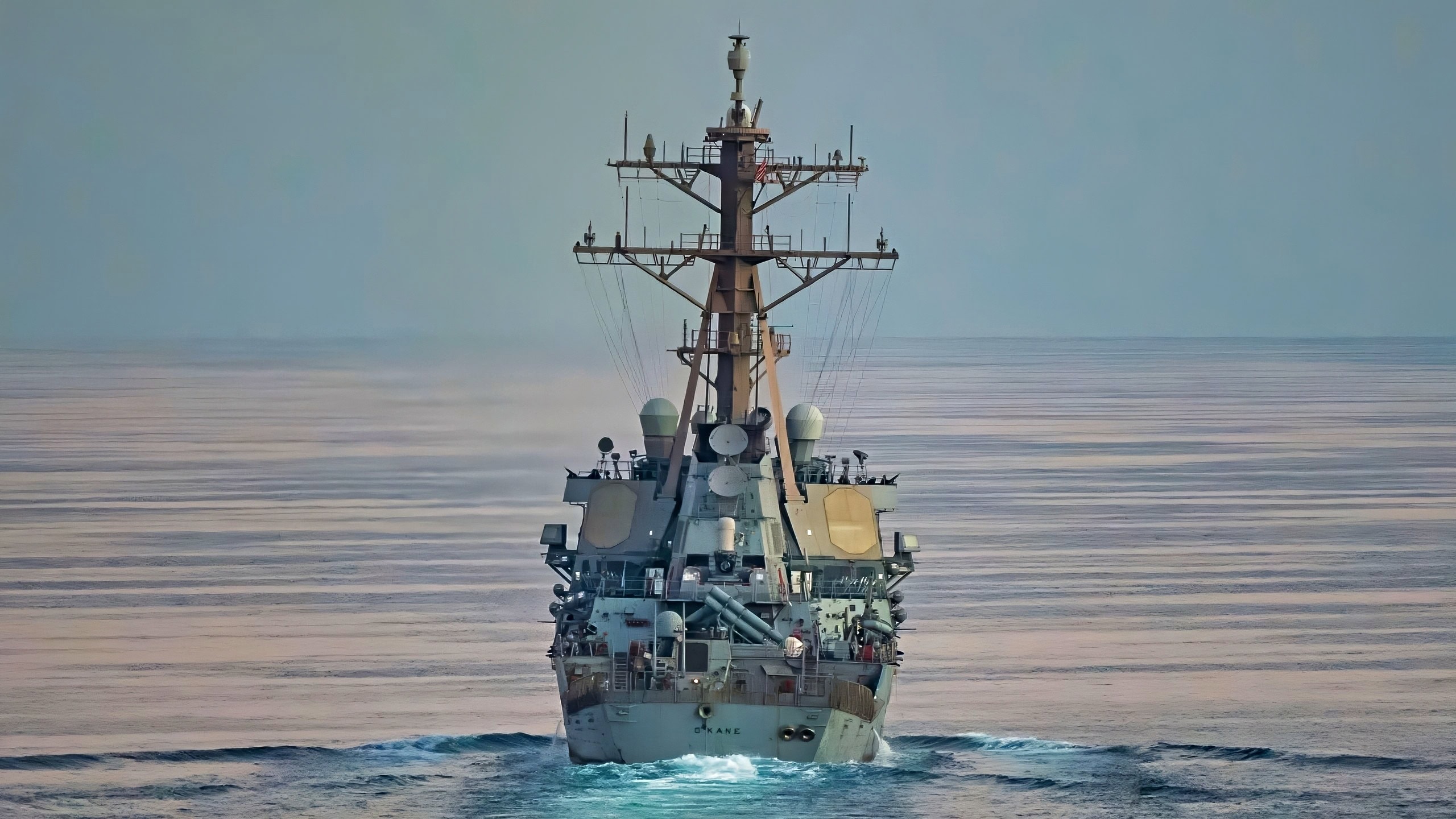
The U.S. Energy Information Administration (EIA) positions the Strait of Hormuz as the world's most critical chokepoint for oil transportation. In 2022, approximately 21 million barrels per day, equivalent to about 21% of global oil liquid consumption, passed through the strait. As of 2022, 82% of the crude oil and condensate passing through the strait was destined for the Asian market, with China, India, Japan, and South Korea being the main destinations.
For Japan, this is not a distant crisis in the Middle East. When discussing the defense of the southwestern islands, we tend to focus solely on the first island chain. However, from the perspective of those who have served in escort fleets, SLOC (Sea Lines of Communication) is not just a single line; it is a fragile chain linked by fuel, insurance, ports, and political decisions. A few days of blockage in the Strait of Hormuz could cast a shadow not only on domestic fuel prices but also on the training plans of the Air Self-Defense Force and the Maritime Self-Defense Force.
Simplification of "We Can Send Mine-Clearing Forces"
The focus this time is on distinguishing between mine-clearing during ongoing combat and the disposal of abandoned mines after a ceasefire. UPI's report indicates that mine-clearing during combat could be seen as an act of force against the side that laid the mines, while the removal of mines left after a ceasefire could be permissible under the Self-Defense Forces Law.
In 1991, the Maritime Self-Defense Force dispatched a mine-clearing unit to the Persian Gulf after the ceasefire in the Gulf War. This was the first full-scale overseas operational mission for the Self-Defense Forces and marked a turning point for both the MSDF and Japanese politics. However, the environment is different now compared to then. In modern strait security, where unmanned vessels, coastal anti-ship missiles, drones, and cyber disruptions to commercial ships overlap, simply dispatching mine-clearing vessels does not guarantee mission completion.
Capabilities of the MSDF and Lack of Flexibility
In terms of capabilities, the MSDF's mine-clearing units are among the most highly trained in the world. Mine warfare is a specialized area that the MSDF has maintained since the Cold War, and they have experience in joint operations with the U.S. Navy. However, having capabilities and having flexibility are two different things. With the overlapping demands of vigilance and monitoring in the southwestern region, responding to North Korea's ballistic missiles, and supporting U.S. forces in the Indo-Pacific, diverting units to the Middle East would obscure the operational readiness on the domestic front in a less visible manner.
In particular, mine-clearing vessels cannot be rapidly increased in number. The skills of the crew are not something that can be quickly transitioned from general escort vessel personnel. If the Japanese government advocates for "freedom of navigation," it must simultaneously present not only the political decision for dispatch but also frameworks for alternative units, logistics, replacement personnel, and information sharing.
Not a Showcase of Alliance Cooperation, but a Test of Decision-Making
As the UK and France mention the need for reopening waterways and mine-clearing, Japan's suggestion to participate in a joint statement likely reflects an awareness of alignment with allied and partner nations. However, what Japan should avoid here is inflating the mission solely based on the symbolism of alliance cooperation.
In my view, the first consideration should be a three-stage separation of missions. First, dispatching liaison officers for information gathering and commercial vessel protection. Second, assessing mine danger zones after a ceasefire. Third, limited participation in mine-clearing after explaining to the Diet and establishing rules of engagement. If escort vessels or mine-clearing vessels are dispatched without clarifying this order, it will place a political decision-making void on the frontline commanders.
The Strait of Hormuz has once again shown that Japan's maritime defense cannot be completed by focusing only on "surrounding waters." However, the real issue is not whether the MSDF can clear mines. It is what the government can define as outside the mission before starting mine-clearing.
Takaichi's statement is not a decision to dispatch. Rather, it should be viewed as a statement to avoid rushing a decision. However, in the post-crisis strait, political ambiguity can narrow the shipping routes even more than mines. If Japan is to recall the memories of 1991, it must consider not only that success but also the more complex operational environment compared to that time.
Prime Minister Takishi Sanae indicated that Japan is considering the deployment of Self-Defense Forces to the Strait of Hormuz, focusing on mine clearance operations. The Strait is crucial for global oil transport, with 21% of the world's oil passing through it. The report highlights the need for careful political decision-making regarding military involvement, referencing Japan's previous deployment in the Persian Gulf after the Gulf War.
- Prime Minister Takishi Sanae did not rule out the deployment of Self-Defense Forces to the Strait of Hormuz.
- 21% of the world's oil passes through the Strait of Hormuz, making it a critical chokepoint.
- The Japan Self-Defense Forces have high proficiency in mine warfare, but deployment decisions are politically sensitive.
- The report emphasizes the need for clear political decisions regarding military operations in the region.
- Japan's past deployment of minesweeping forces in the Persian Gulf after the Gulf War is referenced as a precedent.