

Summary and Key Points: Noted defense expert Kris Osborn of Warrior Maven explains that the USS Gerald R. Ford (CVN-78) is approaching a record-breaking 11-month deployment that has tested the structural and psychological limits of the U.S. Navy’s newest supercarrier.
-Since June 2025, the Ford has pivoted from Venezuela to intensive combat operations against Iran, sustaining a high-tempo sortie rate that has accelerated mechanical wear.
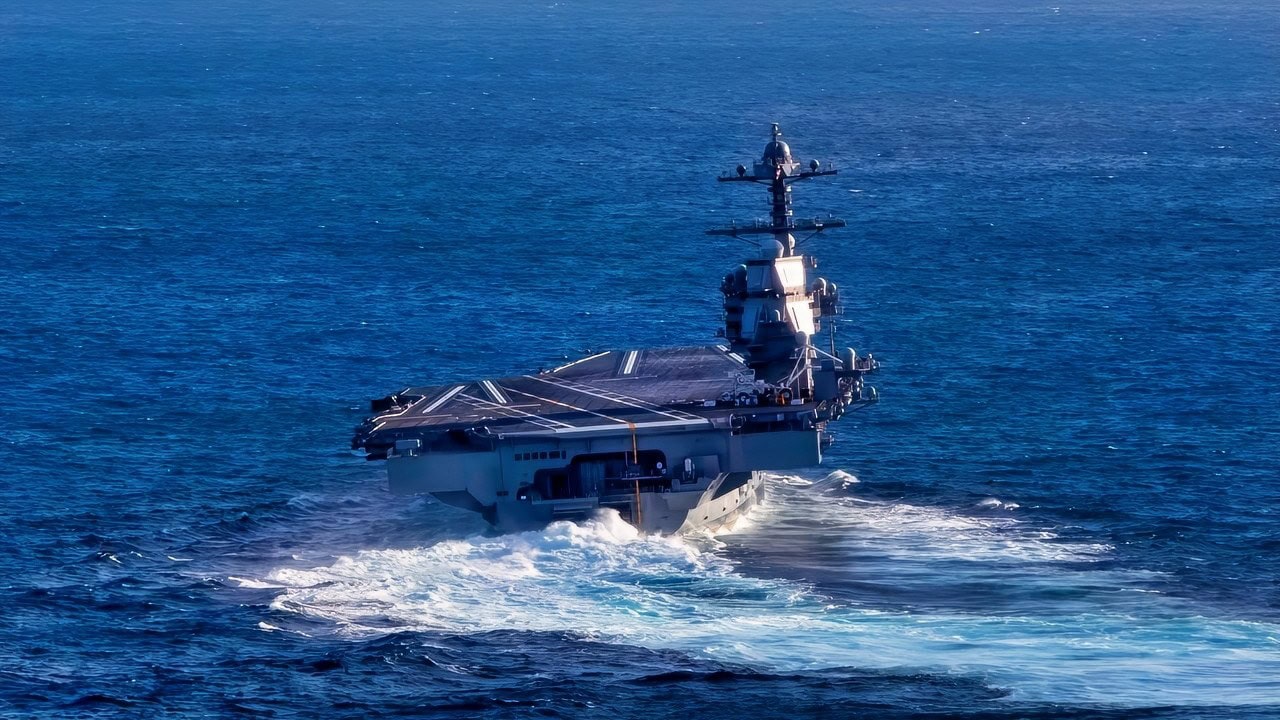
ATLANTIC OCEAN (Oct. 29, 2019) USS Gerald R. Ford (CVN 78) conducts high-speed turns in the Atlantic Ocean. Ford is at sea conducting sea trials following the in port portion of its 15 month post-shakedown availability.(U.S. Navy photo by Mass Communication Specialist 3rd Class Connor Loessin)
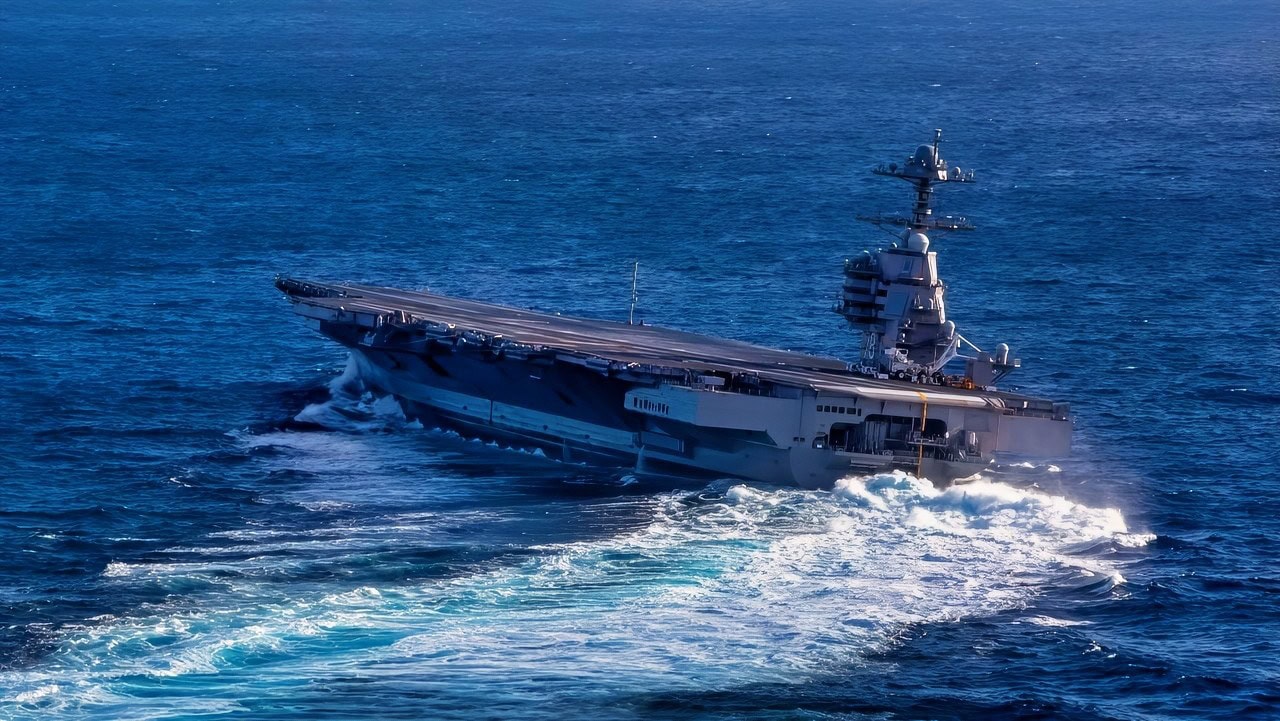
ATLANTIC OCEAN (Oct. 29, 2019) USS Gerald R. Ford (CVN 78) conducts high-speed turns in the Atlantic Ocean. Ford is at sea conducting sea trials following the in port portion of its 15 month post-shakedown availability. (U.S. Navy photo by Mass Communication Specialist 3rd Class Connor Loessin)
-Following a damaging March 2026 onboard fire and persistent infrastructure failures, the ship is slated for a May 2026 return.
-However, experts warn that the “maintenance debt” accrued during this overextension could sideline the $13 billion asset for a recovery period lasting well over six months.
The 11-Month Breaking Point: The Grueling Reality of the USS Ford’s Record Aircraft Carrier Deployment
The modern aircraft carrier USS Gerald R. Ford was designed to represent the cutting edge of American naval power—an engineering marvel capable of sustained global operations.
In many respects, it is living up to this expectation as the massive ship supported U.S. military operations in Venezuela before steaming to the Middle East to support U.S. attacks on Iran.
At the same time, these recent events also suggest a more complicated reality.
The warship has been pushed to its limits, worn down not by a single catastrophic failure but by the cumulative strain of extended deployment, operational tempo, and unexpected incidents.
Originally deployed in June 2025 for what was expected to be a standard rotation, the Ford’s mission quickly expanded. Instead of the typical six- to seven-month deployment, the carrier has remained at sea far longer, with officials indicating it could stretch to roughly 11 months—potentially returning around May 2026.
This would place it among the longest carrier deployments in modern U.S. Navy history, rivaling or exceeding post-Vietnam benchmarks.
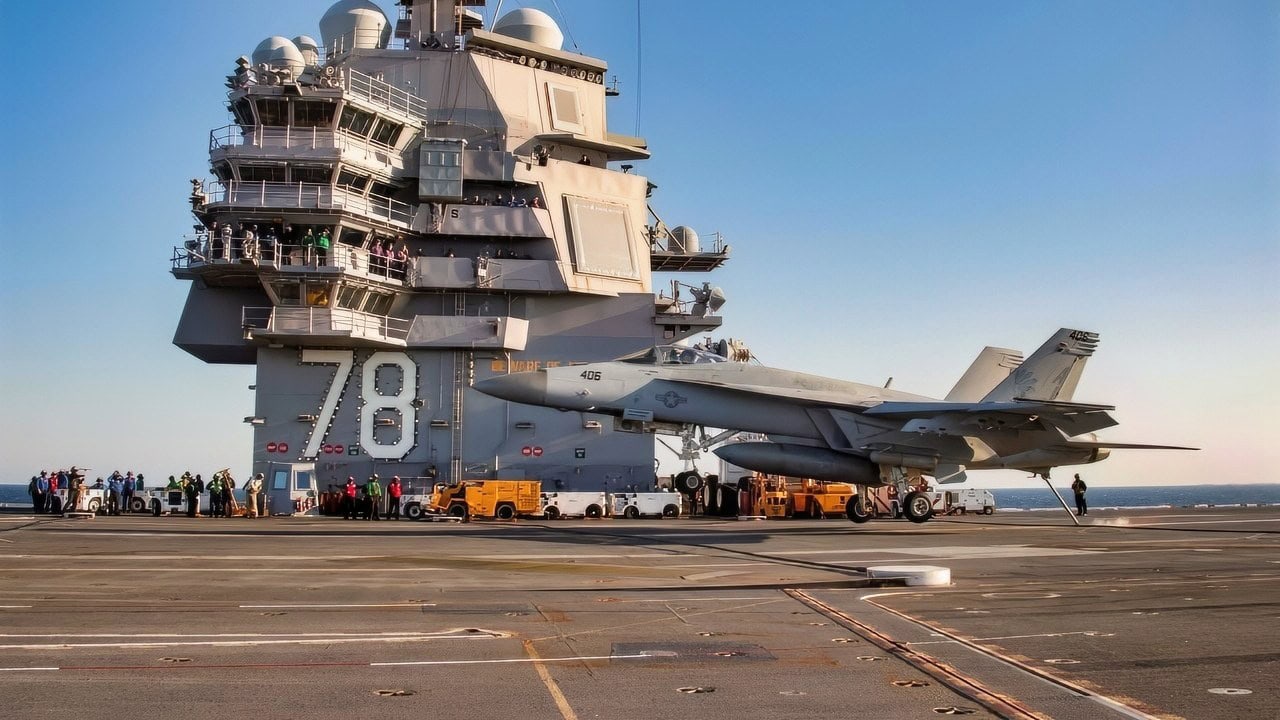
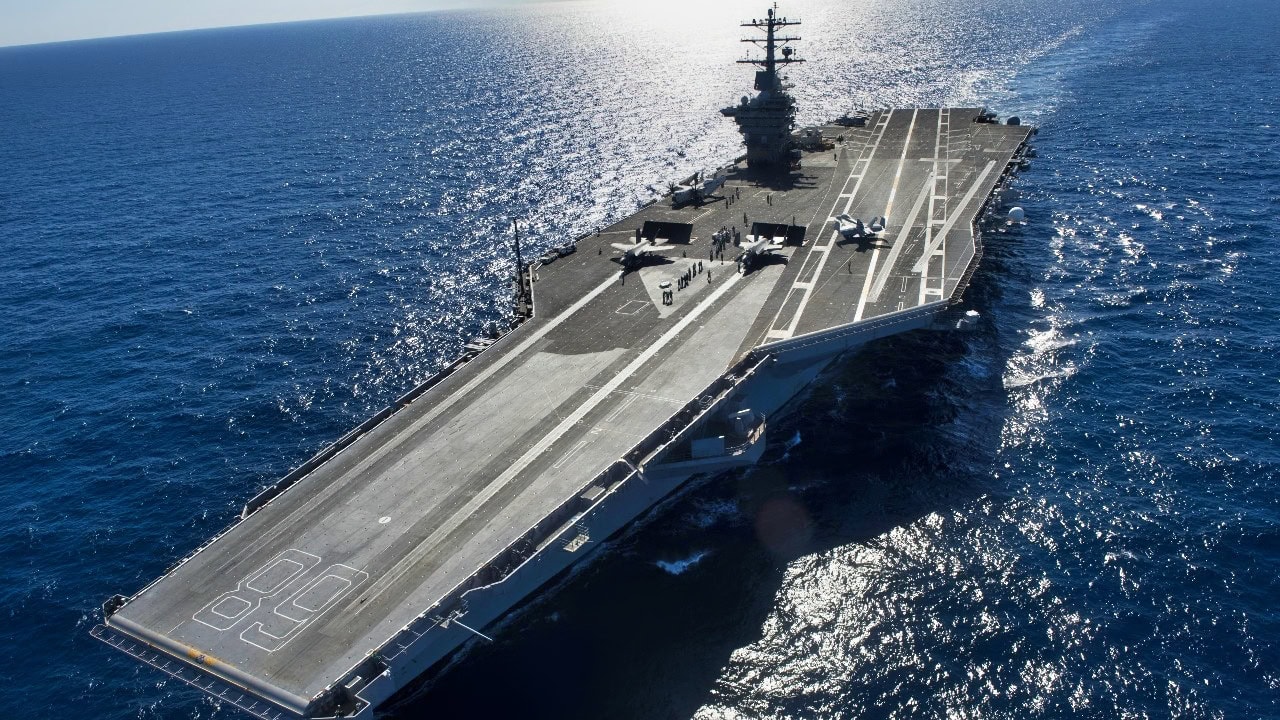
USS Gerald R. Ford Supercarrier Flight Deck. Image Credit: Creative Commons.
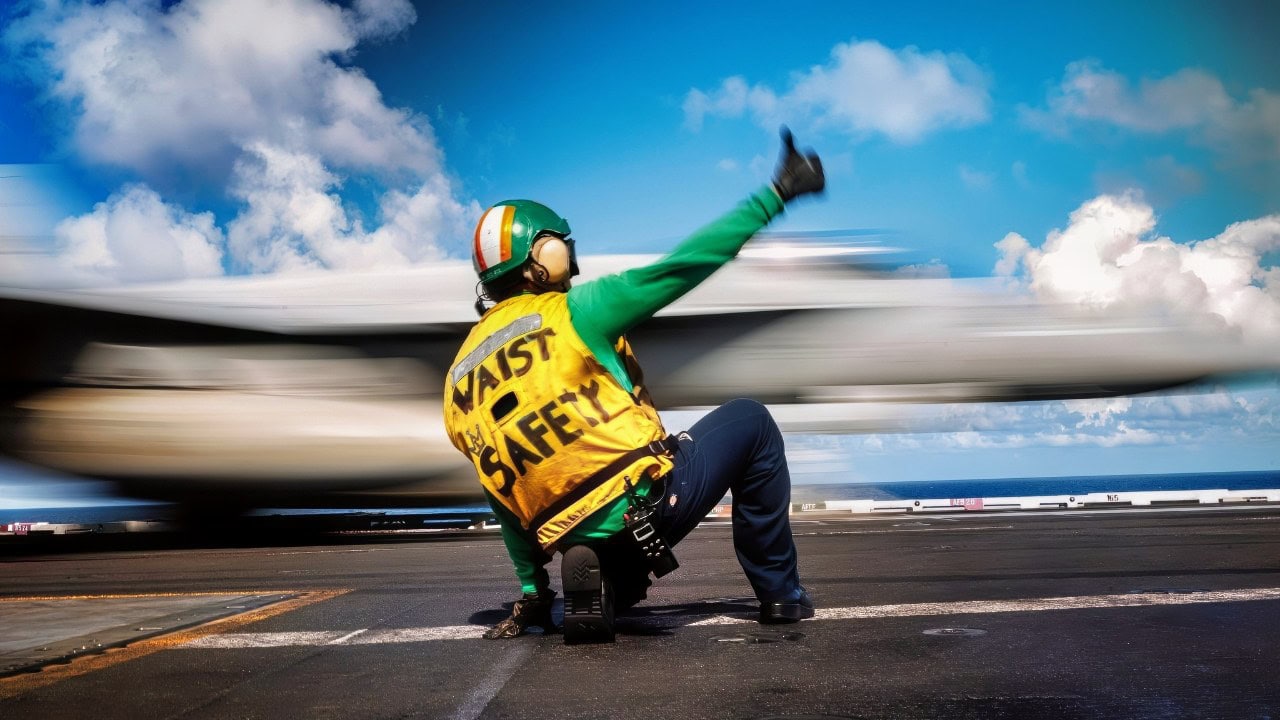
USS Gerald R. Ford Aircraft Carrier or Supercarrier
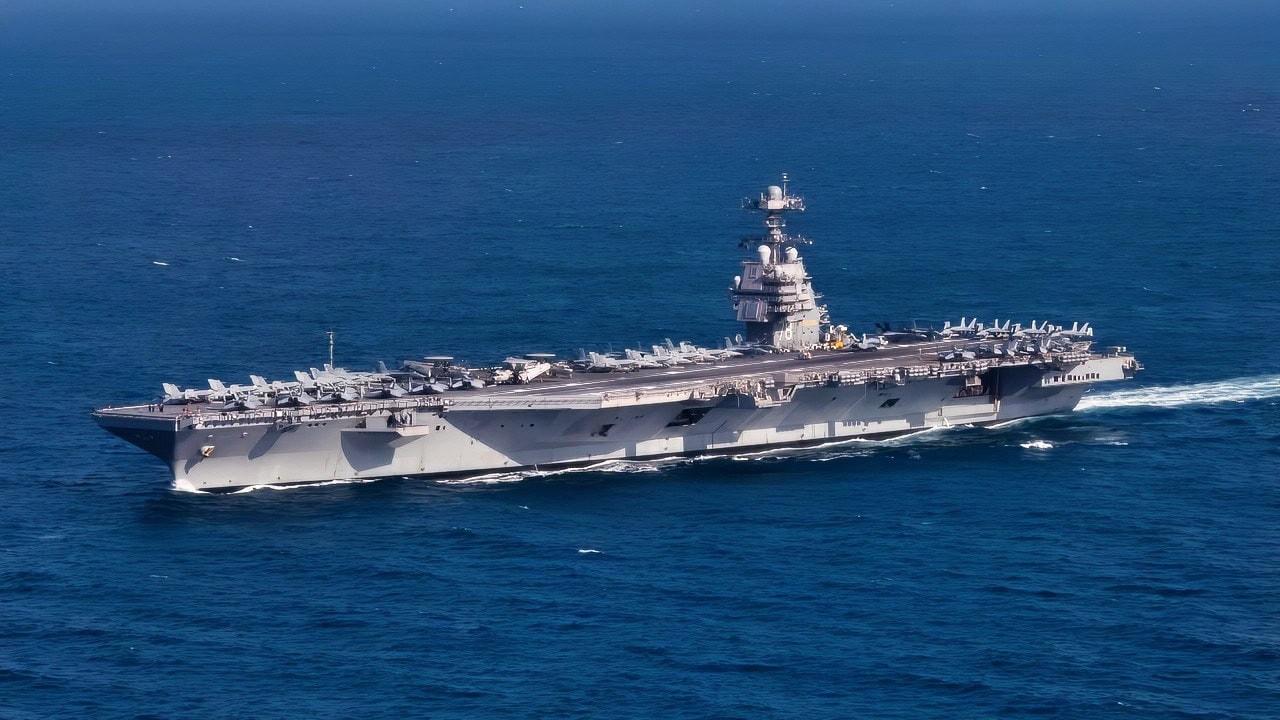
Oct. 9, 2022 – The first-in-class aircraft carrier USS Gerald R. Ford (CVN 78) steams the Atlantic Ocean during a simulated straits transit with the Gerald R. Ford Carrier Strike Group (GRFCSG) in the Atlantic Ocean, Oct. 9, 2022. The Gerald R. Ford Carrier Strike Group is deployed in the Atlantic Ocean, conducting training and operations alongside NATO Allies and partners to enhance integration for future operations and demonstrate the U.S. Navy’s commitment to a peaceful, stable and conflict-free Atlantic region. (U.S. Navy photo by Mass Communication Specialist 2nd Class Jackson Adkins)
Such extensions are not trivial, as every additional week at sea compounds wear on both machinery and personnel.
Wear and Tear
From a mechanical standpoint, prolonged deployment accelerates fatigue across virtually every system onboard. Aircraft launch and recovery equipment, propulsion systems, and even basic infrastructure like plumbing are all subject to constant use without the benefit of full maintenance periods.
Reports have noted recurring issues, including persistent plumbing problems on the ship. While none of these issues alone render the ship inoperable, together they form a picture of a platform under continuous stress.
More dramatic incidents have reinforced this perception. In March 2026, a fire broke out aboard the carrier, injuring sailors and damaging sections of the ship, including living spaces.
Though the Navy emphasized that the ship remained operational and its propulsion systems were unaffected, the event highlighted the risks inherent in keeping a complex vessel at sea for extended periods. Fires at sea are among the most dangerous emergencies a crew can face, and even a contained incident leaves lasting effects—both physical damage and psychological strain.
Psychological Strain on USS Gerald R. Ford Aircraft Carrier
That psychological strain is perhaps the most telling indicator of how “worn down” the Ford has become.
Extended deployments disrupt not just maintenance schedules, but human lives. Sailors miss major life events, endure long stretches without meaningful rest, and operate in a high-tempo environment where mistakes can be deadly.
Ford-Class. Image Credit: Creative Commons.
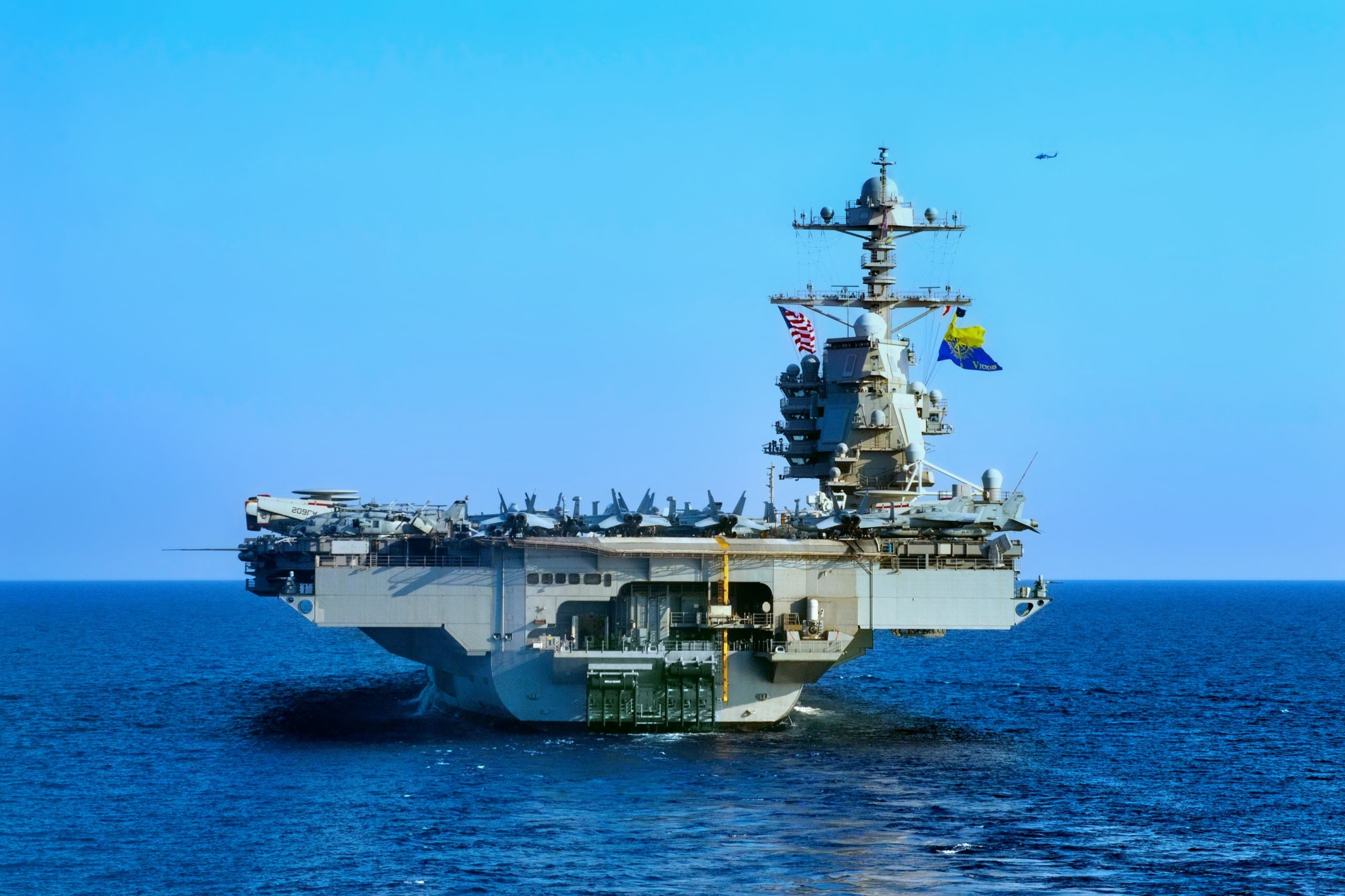
Ford-Class Aircraft Carrier. Image Credit: Creative Commons.
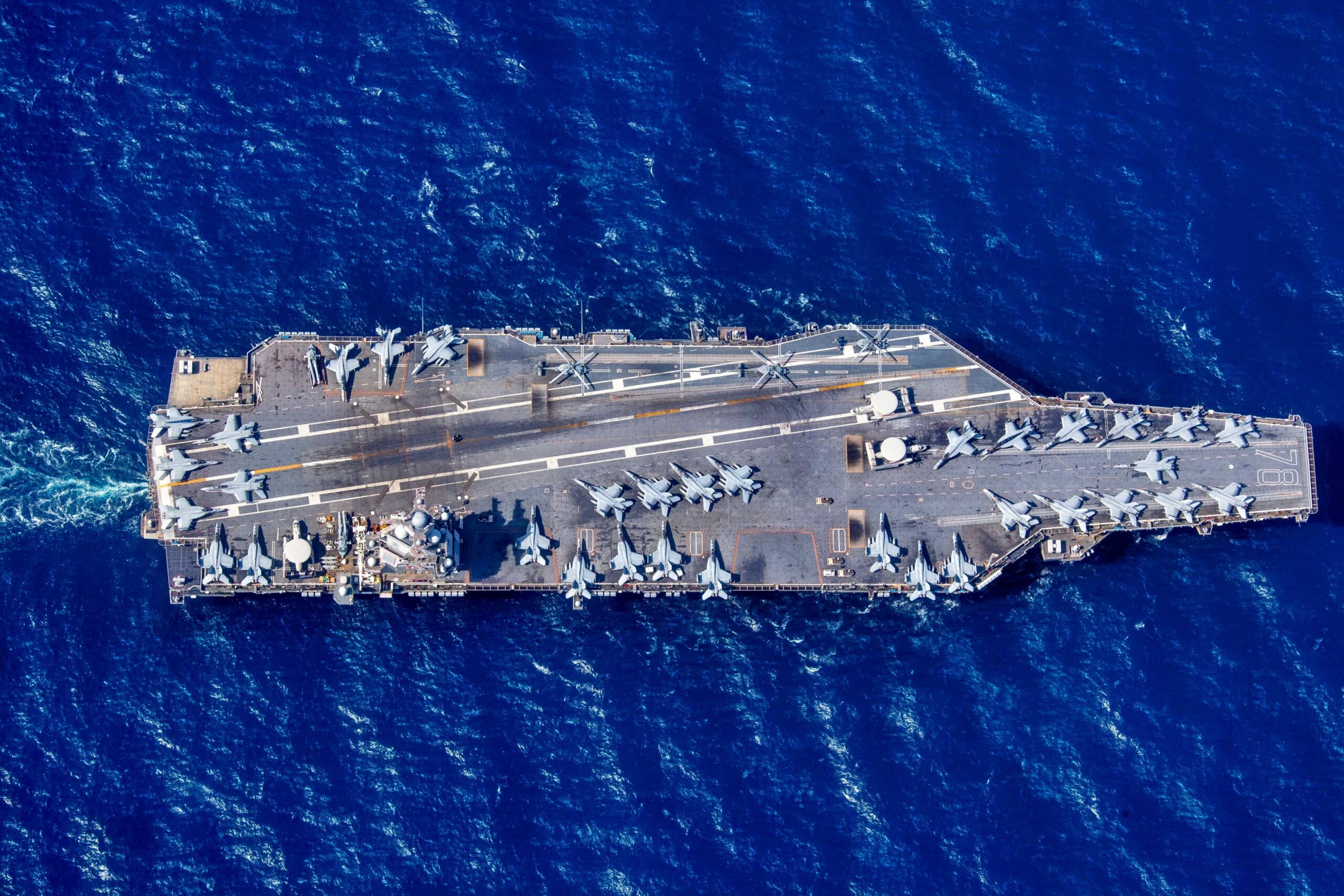
Ford-Class. Image Credit: Creative Commons.
Navy leadership has acknowledged that pushing deployments beyond planned limits “disrupts lives” and complicates long-term readiness.
The Ford’s crew has now spent months operating across multiple theaters—from the Atlantic to the Caribbean to the Middle East—without the reset that a port return provides.
Strategically, this overextension reflects a broader issue within the U.S. Navy: a mismatch between global commitments and available resources.
The Ford has been tasked with supporting multiple missions, including attacks against Iran, all while other carriers remain unavailable due to maintenance or readiness gaps. As a result, the Ford has effectively become a “workhorse” asset, absorbing demands that might otherwise be distributed across a larger, fully available fleet.
This circumstance raises the question of the size of the U.S. Navy’s carrier fleet, suggesting that the Pentagon should add more carriers as quickly as possible.
Aircraft Carrier Maintenance
The consequences of this approach extend beyond the current deployment. Maintenance for aircraft carriers is meticulously scheduled, often years in advance. When a deployment is extended, that schedule is disrupted, delaying critical repairs and increasing the scope of work required once the ship finally enters port.
So how long will the Ford be out of action once it returns? While exact timelines have not been publicly confirmed, historical patterns provide a useful estimate.
After an extended deployment of this magnitude—especially one involving combat operations, system strain, and onboard incidents—the carrier will likely require several months at a minimum for maintenance and recovery.
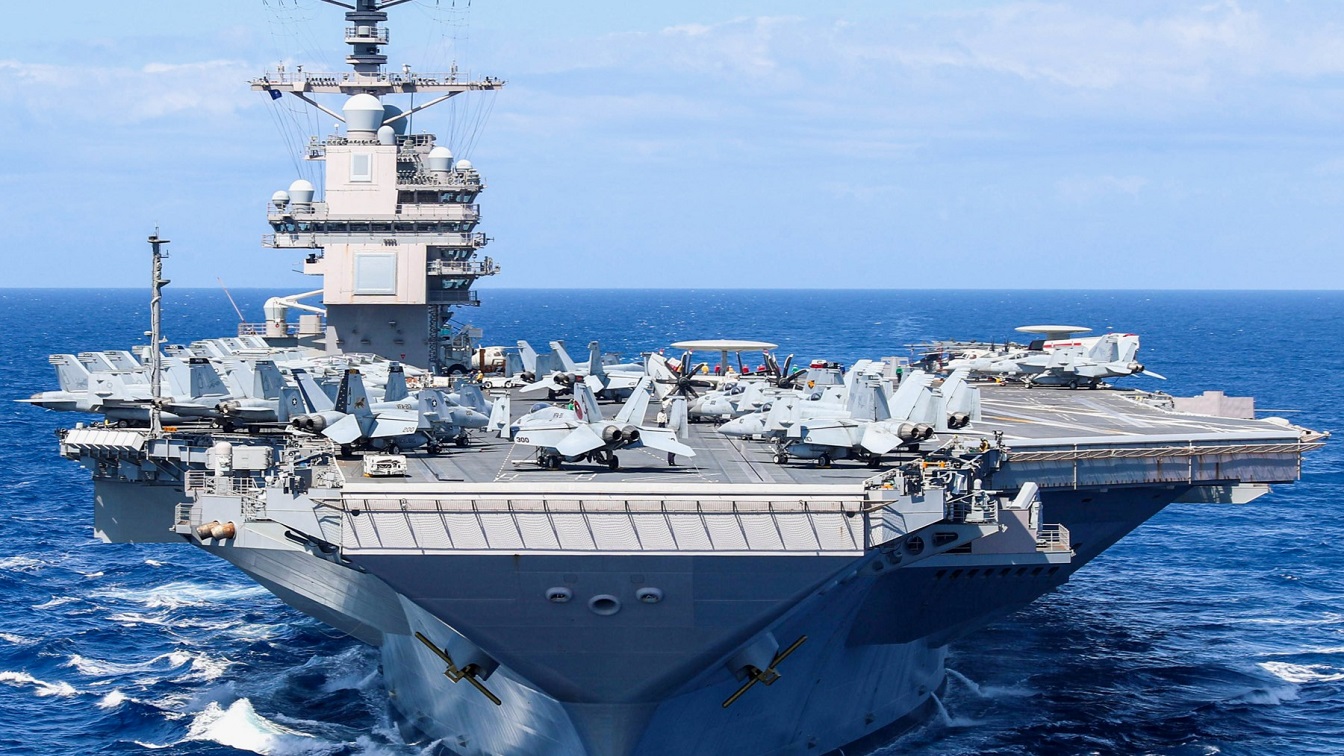
Ford-Class. Ford-Class Aircraft Carrier USS Ford.
In some cases, maintenance periods for heavily used carriers can stretch well beyond six months, particularly if unexpected repairs are needed.
Long Recovery for a Supercarrier
In the Ford’s case, the combination of factors suggests a significant yard period ahead.
The fire damage alone will require inspection and repair, while the accumulated wear from nearly a year at sea will necessitate thorough maintenance across multiple systems.
Additionally, the crew itself will need rest, retraining, and rotation—an often overlooked but essential component of restoring readiness.
About the Author: Kris Osborn, Warrior Maven
Kris Osborn is the President of Warrior Maven – Center for Military Modernization. Osborn previously served at the Pentagon as a highly qualified expert in the Office of the Assistant Secretary of the Army—Acquisition, Logistics & Technology. Osborn has also worked as an anchor and on-air military specialist at national TV networks. He has appeared as a guest military expert on Fox News, MSNBC, The Military Channel, and The History Channel. He also has a Masters Degree in Comparative Literature from Columbia University