
Pétél Kolé in Niger reveals the JNIM–Islamic State war — 35 dead in the Sahel
 Marie Dubois
Pétél Kolé in Niger Reveals the JNIM–Islamic State War — 35 Dead in the Sahel
In Pétél Kolé, on the dusty border between Niger and Burkina Faso, a reported clash in early April has brought an old red line back to the center of the Sahelian theater. Fighters from the Islamic State in the Sahel Province (ISSP) reportedly attacked a base of the Group for Support of Islam and Muslims (JNIM, or GSIM in French) and killed 35 men, according to follow-up reports included in the latest regional analyses. This figure should be treated with caution. In this area, casualty counts often circulate faster than independent confirmations.
However, the information published on May 30 by El País is significant because it gives a clear shape to what many observers have seen in fragments: Al-Qaeda and the Islamic State are no longer content to coexist in the Sahel. They are competing for routes, taxes, villages, and men. The war within the war has become visible.
A Crossroads More Important Than Its Size
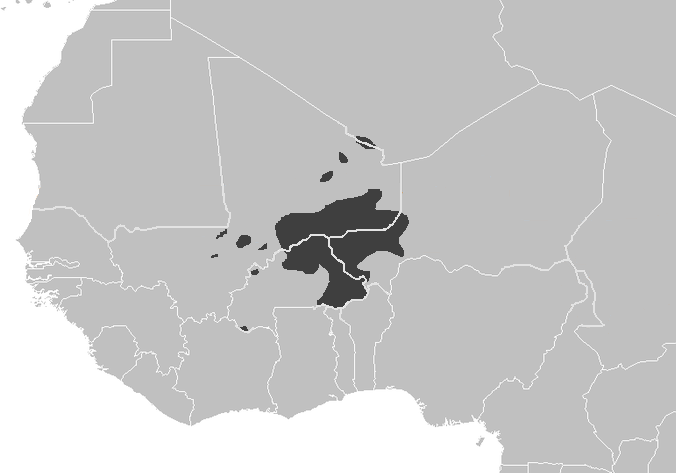
Pétél Kolé is not a strategically significant city in the classical sense. It is a transit point, a bush lock, close to Téra and the Tillabéri region. From Niamey, it is about 180 kilometers west, then on tracks that quickly become poor as soon as the rains begin. For a general staff, this looks like a margin. For an armed group, it is an artery.
Whoever controls these passages can move motorcycles, fuel, light ammunition, satellite phones, and sometimes hostages. They can also tax herds and small businesses. On the ground, control is not a color on a map. It is the ability to extract payment, to punish, to arbitrate a local conflict, and then to disappear before a military column arrives.
For a long time, JNIM understood this grammar better than the Islamic State. It has worked through community networks, accepted tactical arrangements with local authorities, and sometimes left notables in place as long as they did not challenge its authority. The ISSP operates differently: more brutally, more centralized in its doctrine, less patient in its relations with the populations. This difference explains part of the current rivalry.
The ISSP Seeks Breakthrough, Not Just Space
The 2026 report from CSIS estimates that the ISSP remains smaller than JNIM, with only a few thousand fighters, and that it still lacks the means to project its force far outside the tri-border area. However, this relative weakness should not be confused with powerlessness. The same report notes that the ISSP has increased its activity in 2025, while the South African Institute of International Affairs highlights a spectacular increase since the late 2010s, with its numbers rising from about 200 fighters to nearly 3,000 according to available estimates.
The battle of Pétél Kolé, if the details are confirmed, shows something else: the ISSP is not just trying to survive under the pressure of JNIM. It is attacking areas where Al-Qaeda claims to set the rules. This is an offensive logic, but also a recruitment logic. In jihadist movements, killing rival fighters produces prestige. It attracts young men who want to belong to the rising camp.
This is where the situation becomes dangerous for Niger. Tillabéri, Tahoua, and Dosso have already experienced the ISSP's advance, with attacks on patrols, villages, and isolated posts. After the American withdrawal from Agadez and the end of the French presence, Niamey has Russian and Turkish partners, but lacks a permanent network capable of holding every secondary route. A column can retake a village. It cannot sleep on all the tracks.
JNIM Remains the Center of Gravity
The temptation would be to read this rise of the ISSP as a general shift. That would be excessive. JNIM remains the most entrenched structure in central Sahel. Its offensive on April 25 in Mali, conducted with the Azawad Liberation Front (FLA), struck Bamako, Kati, Gao, Kidal, Mopti, and Sévaré. The death of Malian Defense Minister Sadio Camara showed that the group could reach the symbolic heart of the junta.
The Stimson Center noted that, in its communication on April 30, JNIM called for a "united front" against the Malian junta, a vocabulary that is more nationalist than strictly religious. This shift is essential. JNIM is trying to present itself not only as a jihadist organization but as a political force capable of speaking to groups frustrated with Bamako: Fulani communities, Tuareg networks, transporters strangled by taxes, civilians humiliated by search operations.
The ISSP, on the other hand, has less political ground. It compensates with intimidation and the image of ideological purity. On a map, these two methods can produce the same result: the state retreats. In a village, they do not produce the same type of obedience. From experience, it is often in this nuance that the duration of an insurrection is played out.
Bad News for Sahelian Armies
For the forces of Niger, Mali, and Burkina Faso, the JNIM–ISSP rivalry does not automatically offer a tactical window. Yes, two enemies fighting consume men and ammunition. But they also further militarize the villages between them. Civilians are forced to choose, to pay twice, or to flee. Human intelligence becomes more difficult because speaking to the army immediately exposes one to reprisals from either side.
The most immediate operational risk lies on the Téra–Dori axis and around the tracks connecting Tillabéri to eastern Burkina Faso. If the ISSP manages to establish more solid cells there, it will cut off a space that JNIM uses as logistical depth between Niger and Burkina Faso. JNIM will have to respond. Not for honor, but for revenue and routes.
This competition may also push both organizations to more spectacular attacks. An isolated post is no longer always enough to prove strength. A base, a convoy, a local leader, a symbol are needed. This is precisely what exhausts the Sahelian armies: they must protect the capitals, escort fuel, hold garrisons, and reassure populations, with forces that do not allow them to do everything at once.
The Next Signal to Watch
The decisive point will not be the next propaganda statement. It will be more mundane: the price of fuel in Téra, the number of markets closing around Dori, the ability of trucks to move to Niamey without heavy escort. When jihadists dispute a territory, they almost always start with the roads.
If Pétél Kolé becomes a precedent rather than an incident, the tri-border area will enter an even more unstable phase. The Sahelian juntas like to announce aerial victories and sweeps. On this front, the question is simpler and harsher: who can remain after the passage of the pick-ups? For now, neither Niamey, nor Ouagadougou, nor Bamako can answer with certainty.
Sources
ISSP fighters attacked a JNIM base in Petel Kole, Niger, in early April 2026, resulting in 35 deaths. This incident underscores the escalating conflict between ISIS and Al-Qaeda in the Sahel, as both groups vie for control over territory and resources. The attack reflects a shift in dynamics, with ISSP increasing its operational presence despite being smaller than JNIM.
- ISSP attacked a JNIM base in Petel Kole, resulting in 35 deaths.
- The conflict between Al-Qaeda and ISIS in the Sahel is intensifying.
- ISSP is increasing its operational activity despite being smaller than JNIM.
- The attack highlights the competition for control over territory and resources in the region.
- The situation poses a risk to local populations and military forces.