
Qatar's Deal to Purchase 4 KC-46A Aircraft Worth $4.5 Billion Pressures Israel's Long-Term Air Superiority in 2026
 Ahmed Al-Rashid
Qatar's Deal to Purchase 4 KC-46A Aircraft Worth $4.5 Billion Pressures Israel's Long-Range Air Superiority in 2026
On August 20, Washington approved a potential deal to sell Qatar four air refueling aircraft of the KC-46A Pegasus model for up to $4.5 billion. Hours later, Israeli media celebrated the arrival of the second aircraft of the same model to the Israeli Air Force, part of a contract for six aircraft that Tel Aviv had signed. The two news items may seem separate, but militarily they tell one story: the Gulf is entering the long-range operational range club, and Israel notes that its relative monopoly on this capability is no longer secure as it once was.
According to Defense News and Al Arabiya English, the U.S. notification pertains to the tankers themselves and a package of support, training, and maintenance. According to The Times of Israel and The Jerusalem Post, Israel has already received the second Gideon aircraft derived from the KC-46A. The difference between the two cases is significant: Israel possesses the aircraft within an already established long-range strike doctrine, while Qatar is purchasing a tool that will enhance its military and political weight, but it will not automatically transform into a long-range offensive arm simply by signing the contract.
What Doha Wants and What Tel Aviv Already Has
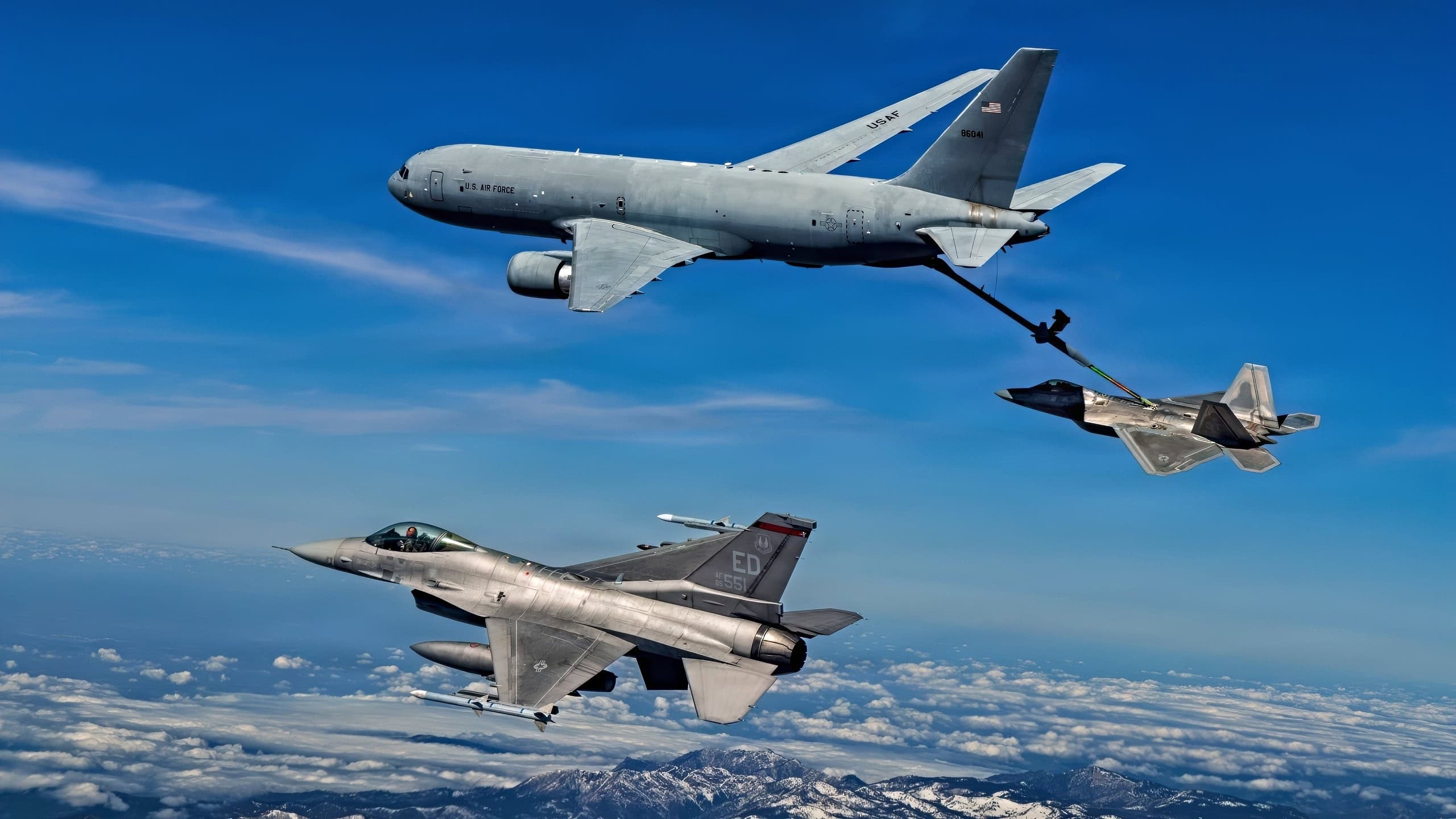
The Qatari deal is not just about purchasing four airframes. This platform gives Doha the ability to keep its fighter jets in the air longer, expand the radius of patrols, and support transport and logistics operations over broader theaters than the immediate Gulf. More importantly, the KC-46A can service different fleets with multiple refueling methods, which suits the composition of the Qatari Air Force that includes F-15QA, Rafale, and Eurofighter Typhoon. This alone sends a message that Qatar does not just want to buy advanced fighter jets, but also wants to integrate them into an operational structure that provides greater range and impact.
- Qatar requested 4 KC-46A aircraft as part of a potential deal worth $4.5 billion.
- Israel received the second of 6 KC-46A aircraft it contracted for.
- The platform serves the Rafale, Typhoon, and F-15QA, making it a force multiplier rather than just a support aircraft.
In my view, this point is the essence of the story. Gulf countries have purchased nearly the best fighters over the past two decades, but they have remained constrained by issues of range and air sustainability. A fighter jet without a refueling tanker is like a good spear with a short arm. Therefore, introducing the tanker into the combat formation is not just a logistical detail, but a step that affects the very shape of regional balance.
The Real Capability Is Not Just the Aircraft
Any military personnel who has served in the region knows that Ahmed Al-Rashed does not measure power by the number of platforms alone, but by what I always call the Capability Triangle, which is equipment × training × organization. From this perspective, caution is warranted against exaggeration. Qatar's possession of the KC-46A does not immediately mean it has acquired a similar Israeli capability for long-range strikes. Aerial refueling is one of the most complex and sensitive missions; it requires crews trained for years, precise route planning, airspace management, escort protection, night maintenance, and a deep connection between pilots and operations command.
Here lies the usual Gulf paradox. Buying weapons is easy when money and political relations with Washington are available, but turning weapons into daily operational habits is the costly and painful part. Practically, the value of the Qatari deal in the near term will be more political and deterrent than offensive. It enhances Doha's image as an advanced security partner for the United States and grants it flexibility in air defense and deployment, but it does not create an overnight culture of complex long-range strikes like that which Israel has built over decades.
Owning a refueling aircraft does not mean possessing a long arm; the long arm begins with doctrine and ends with night maintenance.
Why Israel Views the Deal with Concern Despite the Absence of Direct Hostility with Qatar
The Israeli concern is not that Doha will turn into a direct air adversary tomorrow, but because the advantage of range is beginning to spread in the surrounding environment. Israel has viewed refueling tankers as part of its ability to operate beyond the Mediterranean, the East, and the Gulf when necessary. When a small but wealthy Gulf state that is allied with Washington acquires the same tool, the message extends beyond Qatar to the entire region: the United States is willing to expand this capability beyond Israel if it sees an interest in doing so.
This opens a wider door. If the Qatari deal is accompanied by similar expansions in other countries, the gap between the Israeli Air Force and Gulf fleets will not disappear, but it will narrow in a specific and sensitive aspect: sustainability and flexibility. In modern warfare, it is not enough for an aircraft to take off; it must remain in the air long enough, return a second and third time, and operate in an environment saturated with missiles and drones. Here, the tanker becomes a platform for strategic influence even if not a single bullet is fired.
What the Deal Means for the Gulf Equation After the Iran War
After months of tension and war with Iran, Gulf capitals have understood an old lesson in a new way: American protection may arrive, but it does not always come as quickly or in the form that local capitals desire. Therefore, we see a gradual shift from purchasing separate defensive platforms to acquiring capabilities that enable air power to remain and operate over longer distances. Here, Qatar is not just buying an American aircraft; it is buying a margin of maneuver in a time when the distances between bases and threats are less secure.
However, the structural contradiction remains. The Gulf wants greater operational independence without fully bearing the burdens of the doctrine, human readiness, and institutional frameworks that make this independence real. Israel wants to maintain long-range qualitative superiority, but it is discovering that Washington itself is distributing some of the tools of this superiority to other partners. For this reason, the Qatari deal seems larger than its financial figure. It is not a military revolution today, but a clear signal that the air power market in the Middle East is moving again, and that the monopoly on range is no longer guaranteed as it once was.
Qatar is purchasing 4 KC-46A Pegasus aircraft from the U.S. for $4.5 billion, with the sale approved on August 20, 2023. This acquisition is expected to enhance Qatar's military capabilities and operational range, impacting Israel's air superiority by 2026. Meanwhile, Israel has received its second KC-46A aircraft as part of its own procurement, highlighting a shift in regional military dynamics.
- Qatar is purchasing 4 KC-46A aircraft for $4.5 billion.
- The U.S. approved the sale on August 20, 2023.
- Israel received its second KC-46A aircraft as part of a separate deal.
- The KC-46A enhances Qatar's military capabilities and operational range.
- The deal signals a shift in regional military dynamics, affecting Israel's air superiority.