
RAND's Four Types of War Games on China Expose the U.S. Military's Ship Repair Shortcomings, PLA's Nearshore Maintenance System Becomes a Hidden Strength
 Li Minghui
RAND's Four Types of War Games Expose U.S. Navy's Ship Repair Shortcomings, PLA's Nearshore Repair System Becomes a Hidden Strength
On June 22, Defense News revealed a detail from a RAND study that is more noteworthy than the overarching theme of "U.S.-China Naval Warfare": the war games did not focus on who sinks whom first, but rather on whether an Arleigh Burke-class destroyer, after being damaged, can be repaired in the Western Pacific and return to its station. This question may sound like a niche topic in logistics, but in a high-intensity conflict in the Taiwan Strait or South China Sea, it could directly determine how many rounds a fleet can still fight.
The Four Scenarios Expose More Than Just Individual Ship Vulnerabilities
This RAND tabletop exercise was set in August 2025, centered around a hypothetical war with China, involving four scenarios: a collision in the Strait of Malacca, being struck by Chinese naval and air fire during a South China Sea escort mission, suffering heavy damage from anti-ship missiles in the direction of the Philippines, and multiple destroyers being damaged while intercepting amphibious operations near Taiwan. Defense News cited the study's conclusion that the U.S. military's current battle damage repair system would be overwhelmed, with insufficient spare parts in the theater, and the capabilities and political will of allied ports cannot be simply assumed to be available.
The author believes that the real focus here is not on the Arleigh Burke-class itself. The Burke-class has a full-load displacement of about 9,000 tons, with a wide range of service ages, and its electronics, gas turbines, vertical launch systems, and Aegis combat systems all have specific maintenance environment requirements. The issue is that the U.S. military has long deployed its main surface combatants near the First Island Chain, but heavy maintenance, complex spare parts, and many certification processes still largely depend on the domestic industrial system far from the battlefield. In simple terms, ships can be forward-deployed, but shipyards and supply chains find it difficult to advance in sync.
The PLA Navy's Nearshore Advantage Is More Than Just Missile Range
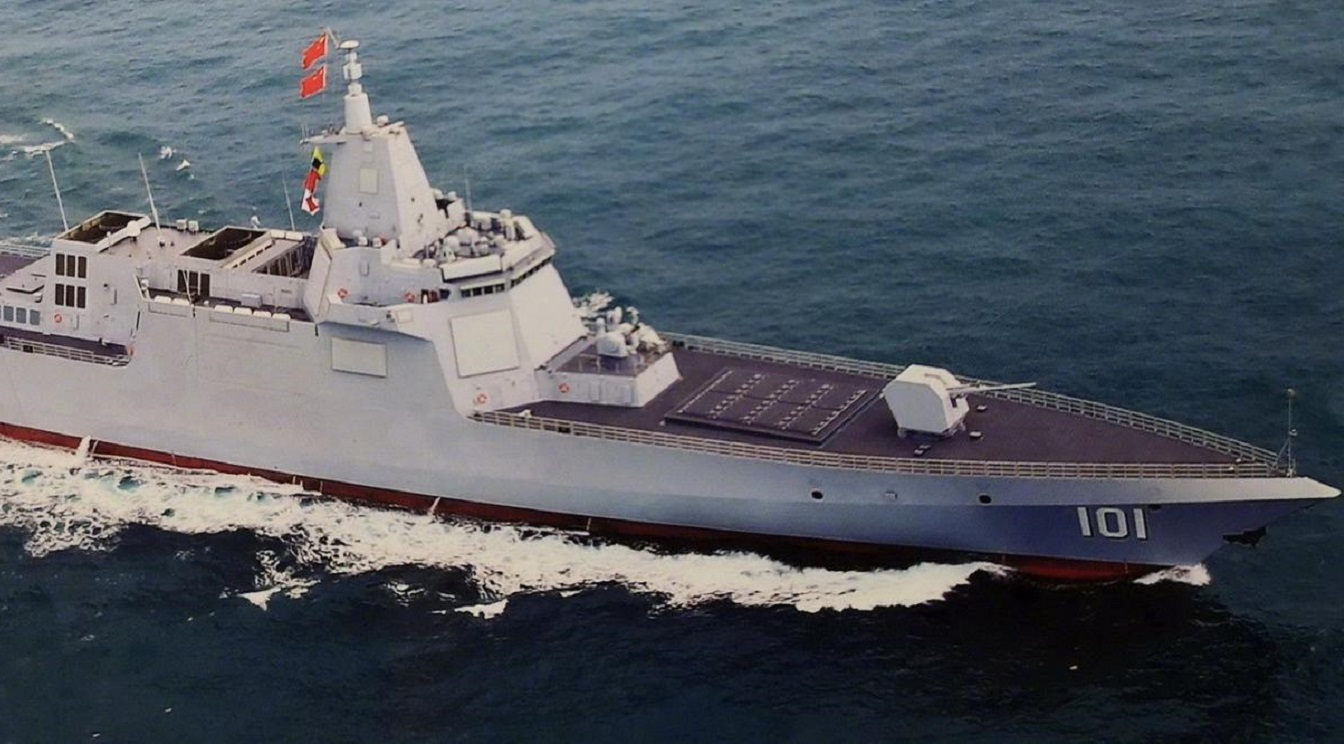
When discussing the PLA's anti-access/area denial capabilities, external observers often focus on the DF-21D, DF-26, and YJ series anti-ship missiles, or the air defense and anti-missile capabilities of the Type 055 and Type 052D destroyers. Missiles are certainly important, but this RAND report reminds us that another layer of advantage in nearshore operations is the maintenance radius. If the Chinese Navy operates in the East China Sea, Taiwan Strait, or northern South China Sea, damaged vessels can theoretically be more quickly redirected to coastal naval ports, commercial shipyards, or military industrial support nodes; the U.S. military, on the other hand, has to make trade-offs between Yokosuka, Sasebo, Busan, Australia, and even Pearl Harbor and the U.S. West Coast.
This does not mean that Chinese vessels can be easily repaired after being damaged. The Type 055 destroyers, Type 075 amphibious assault ships, and aircraft carrier groups have complex electrical systems, radars, gas turbines, and ammunition resupply, all of which are high-threshold engineering challenges. A commonly overlooked shortcoming is that wartime repairs are not the same as routine dry-dock maintenance; they involve ammunition safety, battle damage assessment, electronic system replacements, disassembly and reassembly of classified equipment, and retraining of crew members. While China has a large shipbuilding capacity, it does not automatically equate to strong battle damage repair capabilities; there are still processes, spare parts, and specialized teams that need to be bridged.
The U.S. Military's Areas for Improvement Also Reveal Variables for the PLA to Consider
RAND suggests that the U.S. military simplify its repair command chain, negotiate port and shipyard usage arrangements in advance with Japan, South Korea, and Australia, and expand deployable repair teams, rapid assessment groups, and mobile repair facilities. This recommendation is pragmatic and indicates that the U.S. has recognized that "in-theater regeneration capability" is more urgent than simply increasing the number of vessels.
- First, pre-positioning spare parts will become a new metric in the U.S.-China naval competition, especially for vertical launch units, phased array radar modules, gas turbine hot-end components, and onboard electronic equipment.
- Second, allied shipyards will transform from industrial assets into operational nodes; whether Japan, South Korea, and Australia allow long-term repairs of damaged U.S. ships will no longer be just a technical issue.
- Third, if the PLA wants to truly form a sustained suppression capability, it must also consider the connection between "damaging a ship" and "preventing it from quickly returning to action."
Interestingly, in recent years, the Chinese Navy has publicly showcased new ship launches, far-sea training, and fleet exercises the most, while there is very little public information about battle damage repair, modular spare parts, and wartime conversion of civilian shipyards. This aspect is not easily captured on camera and is not suitable for promotional videos, but it precisely determines whether high-intensity naval warfare can be sustained.
The RAND study warns that the U.S. military has not faced large-scale battle damage repair pressures since World War II; Defense News quotes RAND analysts as saying that Chinese vessels are not only closer to the homeland but also possess stronger industrial repair capabilities.
The Real Competition Begins After Ships Are Launched
If naval strength is understood solely in terms of the number of vessels, China is currently one of the largest navies in the world; if understood only in terms of missile range, it is easy to think of warfare as a one-time volley. However, modern naval warfare resembles a war of attrition: the one who can bring back damaged equipment, repair it, and send it back out has a greater chance of surviving the first round of impact. This figure may not be as striking as "how many warships," but it is closer to the underlying accounting of warfare.
Therefore, the value of this RAND report for Chinese readers is not to prove that the U.S. military is inadequate, but to remind the PLA that it cannot solely rely on new ships and new missiles. The real unanswered question is: if a future high-intensity maritime conflict lasts for 30 days, can the Chinese Navy's publicly visible shipbuilding advantages be transformed into less visible but more critical battle damage repair advantages?
Source
Main references: Defense News report on June 22, 2026, titled "US couldn't repair battle-damaged ships in war with China, study finds"; RAND report "Battle Damage Repair for Arleigh Burke-Class Destroyers"; reports from the U.S. Congressional Research Service on the modernization of the Chinese Navy.
RAND study indicates that the U.S. Navy may struggle to repair battle-damaged ships during a potential conflict with China in August 2025. The analysis highlights vulnerabilities in the U.S. repair logistics, particularly in the Western Pacific, while noting that the Chinese Navy has advantages due to closer industrial support. The report emphasizes the need for improved logistics and pre-positioning of spare parts to maintain operational readiness.
- RAND study highlights U.S. Navy's repair limitations in high-intensity conflicts.
- Chinese Navy has advantages in repair capabilities due to proximity to industrial support.
- U.S. Navy's logistics heavily rely on distant industrial bases for repairs.
- The study emphasizes the importance of pre-positioning spare parts for naval operations.
- Repair capabilities are critical for sustaining naval operations in prolonged conflicts.