
Ratcliffe's Moscow Warning Shows NATO Still Fears a Baltic Probe
 Alexandra Reeves
Ratcliffe's Moscow Warning Shows NATO Still Fears a Baltic Probe
John Ratcliffe did not fly to Moscow for theater. If reports from The Wall Street Journal, CNBC, CBS News and Radio Free Europe/Radio Liberty are broadly accurate, the CIA director went because Washington judged that Russia might be tempted to test NATO's resolve in the Baltic region. That matters less as a diplomatic curiosity than as a strategic confession. The alliance still believes deterrence can fail when Moscow sees distraction, hesitation or political fragmentation on the Western side.
The uncomfortable point is that nobody sends a CIA director to deliver a warning unless the risk is serious enough to justify bypassing normal public signaling. NATO has spent two years talking about readiness, reinforcement corridors and the militarization of its northeastern flank. Yet the reported need for a private American warning suggests the alliance still worries that Russia may read the balance differently from the glossy communiques issued after every summit.
The Trip Was A Warning About Opportunity
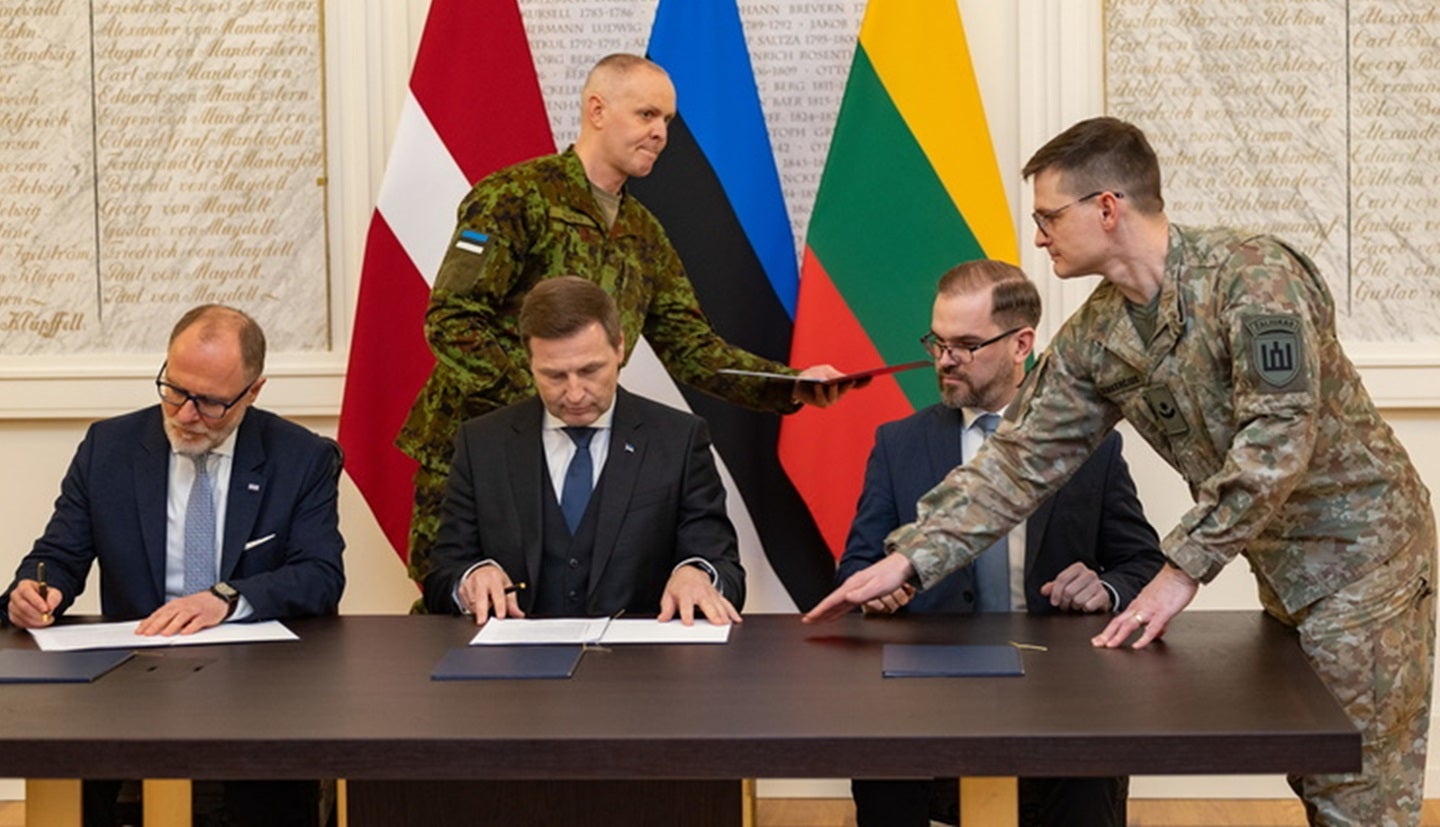
According to the reporting that emerged over the past week, Ratcliffe's message in Moscow was blunt: do not attack NATO. The reported concern centered on a possible Russian move against the Baltic front, where geography compresses warning time and where even a limited provocation could trigger an alliance crisis far faster than in the Black Sea theater. RFE/RL's follow-up coverage, citing former intelligence officers and regional analysis, underscored that the fear was not necessarily a full-scale invasion. It was the possibility of a probe, a coercive military incident or a calibrated test of whether NATO would react with unity or paralysis.
That distinction matters. Russia does not need to launch a dramatic armored offensive to gain strategic advantage. A border incident, a sabotage campaign, a drone strike blamed on ambiguity, electronic disruption against military logistics, or a limited operation under the guise of protecting Kaliningrad access could all serve the same purpose. The objective would be political before it is territorial: prove that Article 5 looks clearer on paper than it does under pressure.
For Moscow, this is exactly the sort of moment worth studying. The United States has been consumed by Middle East contingencies, Western stockpiles have taken visible strain, and European capitals still do not share the same appetite for escalation. The Kremlin has every reason to ask whether NATO's eastern flank is defended by actual combat power or by habit and assumption.
Why The Baltic Region Still Looks Vulnerable
The Baltic states are much better defended than they were in 2014, but they remain exposed by physics. Estonia, Latvia and Lithuania are small, close to Russian military infrastructure, and dependent on rapid allied reinforcement in a crisis. Kaliningrad still gives Russia a platform for layered anti-access pressure with air defense, missiles and electronic warfare. Belarus, even if not a fully autonomous actor, deepens the military geometry against NATO's northeastern edge. Reinforcement routes through Poland remain essential, which means any serious crisis would immediately become a test of speed, command cohesion and political nerve.
NATO has tried to answer this with larger forward deployments, prepositioned equipment, exercises and more explicit regional planning. Those steps are real. But the alliance also knows that presence is not the same thing as dominance. Tripwire forces can signal commitment; they do not automatically deny Russia the ability to create a short, sharp emergency. The Kremlin may not believe it can defeat NATO in a prolonged war, but it may still believe it can manufacture a crisis that exposes hesitation before the alliance can mass combat power.
That is why this reported warning matters more than the secrecy around it. Washington appears to believe that deterrence in the Baltic theater still requires direct, high-level management. In plain English, NATO's flank is stronger than before, but not strong enough to remove doubt.
Russia Does Not Need A Clean Military Win
Western commentary often assumes that because Russia is tied down by the war against Ukraine, it has no capacity for additional risk. That is too neat. Russia does not need spare divisions sitting idle to challenge NATO psychologically. It needs enough missile reach, intelligence coverage, sabotage capacity and coercive imagination to create a moment of confusion. It also needs to believe that some allies would spend the first critical hours debating whether the trigger for a collective response had truly been met.
That calculation is not irrational from Moscow's perspective. The alliance is visibly uneven. Poland and the Baltic states think in terms of immediate threat. Parts of southern and western Europe still think in terms of crisis management. Washington remains indispensable, but American attention is finite. The more global theaters compete for U.S. military bandwidth, the more attractive limited pressure on NATO's edge becomes.
In that sense, Ratcliffe's reported trip was not only a warning to Russia. It was a reminder that the United States still functions as the alliance's ultimate shock absorber. When Washington feels the need to deliver a private deterrent message itself, it suggests European deterrence remains incomplete without American intervention at the highest level.
NATO Needs More Than Messaging Now
The alliance should not overreact to every alarming report, but it would be foolish to dismiss this episode as media drama. If the reporting is even mostly correct, then Western intelligence saw enough smoke to justify extraordinary signaling. NATO's answer cannot be another round of rhetorical firmness. It needs more visible readiness on the Baltic axis, faster air and missile defense integration, harder infrastructure for reinforcement, and clearer public thresholds for how it would answer gray-zone attacks.
The strategic lesson is simple. Russia watches for windows, not perfect conditions. A Kremlin leadership that senses American distraction, European caution and operational ambiguity on the Baltic flank may decide that a probe is worth the gamble. That does not mean an attack is imminent. It means deterrence is still being stress-tested in Europe's most sensitive military corridor.
The key finding from this week's reporting is not that war is around the corner. It is that NATO's leaders still fear a scenario in which Moscow believes it can make the alliance blink. If that fear is strong enough to send the CIA director to Moscow, then the next thing to watch is not rhetoric from Brussels. It is whether NATO quietly moves more real combat credibility to the northeast before Russia decides to measure the gap for itself.
CIA Director John Ratcliffe issued a warning in Moscow about potential Russian military actions against NATO in the Baltic region. NATO remains concerned about the possibility of a Russian probe or coercive incident, despite improvements in the defense of the Baltic states. The warning indicates that NATO's deterrence requires direct U.S. involvement, as Russia may exploit perceived weaknesses in NATO's response capabilities.
- CIA Director John Ratcliffe issued a warning in Moscow regarding potential Russian military actions against NATO.
- NATO is concerned about a possible Russian probe or coercive military incident in the Baltic region.
- The Baltic states are better defended than in 2014 but remain vulnerable due to geographical proximity to Russia.
- The warning suggests that NATO's deterrence in the Baltic region requires high-level management from the U.S.
- Russia may exploit perceived weaknesses in NATO's response capabilities.