
Raytheon wins $8B deal for nuclear command terminals
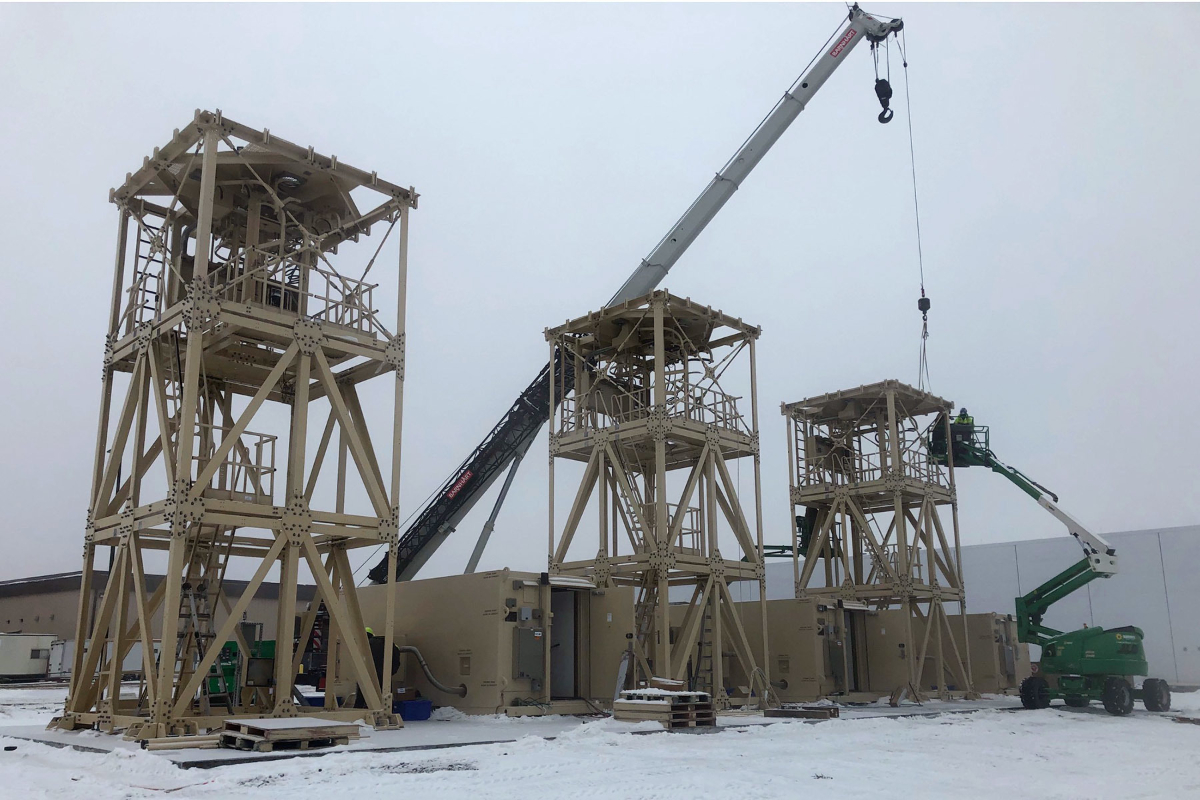
The U.S. Air Force has awarded Raytheon a contract worth up to $8 billion to modernize and restart production of the satellite communications terminals that link the president and military commanders to U.S. nuclear forces, the U.S. Department of War announced on Oct. 13.
The indefinite-delivery, indefinite-quantity contract covers development work to modernize the Air Force Nuclear Weapons Center’s strategic communications terminals, services to restart their production, and technical studies. Raytheon received the contract without competition and will do the work in Marlborough, Massachusetts, and Largo, Florida, through Oct. 12, 2036. The U.S. Air Force put only $800,000 of fiscal 2026 research and development money on the contract at award, with the rest to be ordered over the next decade as needed. The announcement did not say which terminals will be built or how many.
The terminals are part of the U.S. nuclear command, control and communications network, known as NC3, which lets national leaders pass orders to bombers, missile crews and command posts under any conditions, including during a nuclear conflict. The Air Force Nuclear Weapons Center’s Strategic Communications Division at Hanscom Air Force Base, Massachusetts, which awarded the contract, buys and sustains that equipment.
Raytheon’s main work for the division is the Family of Advanced Beyond Line-of-Sight Terminals, or FAB-T, which connects ground command posts and aircraft to the military’s most protected communications satellites, the Advanced Extremely High Frequency constellation and the older Milstar. FAB-T is built to keep working through jamming and nuclear effects, and it carries presidential voice conferences, warnings of incoming attacks and emergency action messages, the coded orders used to launch nuclear weapons. Raytheon took over the program from Boeing in 2014, and the original plan called for 61 ground and 23 airborne terminals.
The company has steadily added to that work. In 2023 the U.S. Air Force awarded Raytheon $625 million for Force Element Terminals, the FAB-T version fitted to B-52 bombers and other aircraft, and in March the service raised the ceiling on a separate Raytheon contract for Advanced Extremely High Frequency terminals by $2 billion, to nearly $3 billion. The new $8 billion ceiling is the largest award yet for the company’s strategic communications terminals, and the reference to restarting production suggests the U.S. Air Force expects to buy more terminals after earlier production runs ended.
The U.S. Air Force is modernizing most parts of the nuclear triad at the same time, including the B-21 Raider bomber, the Sentinel intercontinental ballistic missile and the Long Range Standoff cruise missile, all of which will need communications links that can survive an attack.
Content preview only. Full article available at source. View Full Article
Raytheon was awarded an $8 billion contract by the U.S. Air Force on October 13, 2023, to modernize and restart production of nuclear command terminals. The work will take place in Marlborough, Massachusetts, and Largo, Florida, and is expected to continue through October 12, 2036. These terminals are essential for linking national leaders to U.S. nuclear forces.
- Raytheon awarded an $8 billion contract by the U.S. Air Force.
- The contract is for modernizing nuclear command terminals.
- Work will be conducted in Marlborough, Massachusetts, and Largo, Florida.
- The contract is set to last until October 12, 2036.
- The terminals are part of the U.S. nuclear command, control, and communications network.