
Repeatedly delaying the announcement of the design plan exposes the instability of military aviation foundations, and the U.S. Navy's sixth-generation fighter is facing difficulties in development again.
[Global Times Special Correspondent Chen Yang] As global air power moves towards the sixth-generation fighter era, the actions of the U.S. Navy's carrier-based fighter jets have noticeably slowed down. U.S. Aviation Week reported on August 29 that the Pentagon had previously claimed multiple times that it would announce the contractor and selection plan for the U.S. Navy's sixth-generation carrier-based fighter F/A-XX within August. However, as August is coming to an end, there has been no news. This situation not only indicates that the U.S. Navy's future carrier-based fighters may be delayed in service but also exposes the systemic challenges facing the U.S. military aviation sector.
Repeated Delays
Reports indicate that the Pentagon has once again delayed awarding the contract for the U.S. Navy's sixth-generation fighter, putting increasing pressure on the Navy's current carrier-based aircraft forces and complicating the overall support and operations of the service.
It is reported that the U.S. Navy originally proposed the development of the next-generation fighter in sync with the U.S. Air Force, with rumors as early as early 2025 suggesting that the Navy would determine the specific contractor and development plan that year, but it ultimately turned out to be empty talk. Subsequently, there were reports that the traditional fighter development giant Lockheed Martin was eliminated from the competition because its submitted proposal did not meet U.S. Navy standards, leaving only Boeing and Northrop Grumman to participate in the bidding for the project. In October 2025, there were also reports from the Pentagon that the "contractor for the F/A-XX fighter would soon be determined," but there has been no follow-up since.
Since the beginning of this year, senior U.S. military officials have repeatedly stated that the F/A-XX will determine the specific selection plan within August. For example, U.S. Navy Chief of Naval Operations Admiral Daryl Caudle clearly stated to the media in April: "The U.S. Navy will award the production contract for the F/A-XX sixth-generation stealth fighter in August." At that time, he also emphasized, "The U.S. Navy's need for the F/A-XX is beyond doubt, as peer competitors and even secondary adversaries are enhancing their air defense capabilities." The U.S. Naval Institute website reported that Caudle stated in response to a reporter's question that after multiple communications with Deputy Secretary of Defense Steve VanBeck, "I believe you will see the contractor for this project determined in August. This is the month the Pentagon has committed to making a decision." Additionally, U.S. Secretary of Defense Lloyd Austin and Acting Secretary of the Navy Carlos Del Toro have made similar statements.
However, as August is about to end, the U.S. Navy has yet to disclose any updates on the F/A-XX project. Aviation Week reported that with about a week left in August, Caudle stated on the 22nd that the U.S. Navy still hopes to announce the decision to award the next-generation fighter production contract within the month, but "the authority over this matter is no longer in the control of the U.S. Navy," but belongs to Austin's team.
The U.S. Defense One website reported that the U.S. Air Force awarded Boeing the contract to develop the sixth-generation fighter F-47 project in March 2025, with the related announcement submitted for White House release. It is expected that the U.S. Navy may also adopt a similar procedure, which could affect the specific announcement timeline.
Facing Multiple Challenges
Compared to the delays in the scheduling process, U.S. media are more concerned that the F/A-XX project has not yet announced the selection results, which may have even worse underlying reasons. The anxiety within the U.S. Navy regarding this is evident. The U.S. Business Insider website reported that a senior U.S. Navy official bluntly stated: "If you want to hand a major victory to China and Russia, it's simple: don't fund or build the F/A-XX. So we need it. We need it now."
Currently, both Boeing and Northrop Grumman, which are participating in the F/A-XX project bidding, have released concept renderings of this future U.S. carrier-based fighter, but substantive design details remain highly confidential. Boeing's advantage lies in having won the U.S. Air Force's sixth-generation fighter F-47 project; if it can also secure the Navy's F/A-XX, it will establish its dominance in the U.S. military's sixth-generation fighter domain. However, if Boeing wins the bid, it means it will be developing two types of stealth fighters for both the U.S. Navy and Air Force simultaneously, while the company has not developed a brand-new fighter in many years and lacks modern stealth fighter development experience, which requires decades of accumulation without shortcuts.
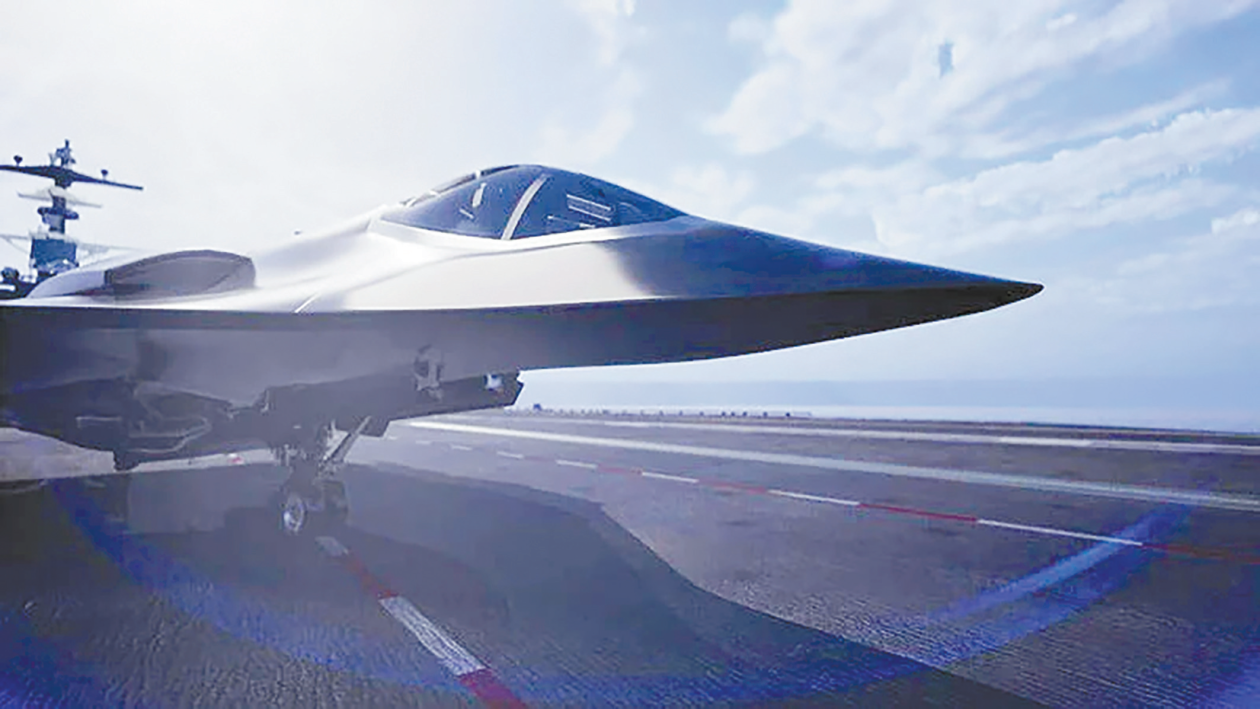
In contrast, Northrop Grumman has experience in developing the next-generation B-21 Raider stealth bomber and is rich in experience in stealth bombers, but also lacks modern stealth fighter development experience.
In addition to the delayed decision on the fighter selection, the most direct challenge facing the F/A-XX project comes from the resource competition with the Air Force's F-47 project. In the fiscal year 2026, the Pentagon initially applied for only $74 million in "minimum sustaining funding" for the F/A-XX, while the U.S. Air Force's F-47 project received a budget of $2.5 billion, ultimately approved for about $3 billion. In the fiscal year 2027 budget request, the F-47 project budget is about $5 billion, while the F/A-XX is only $140 million. The White House and Pentagon leadership have clearly opposed advancing the F/A-XX project simultaneously, citing concerns that "the U.S. industrial base cannot support the development and production of two sixth-generation fighters at the same time." Caudle also admitted that the U.S. Navy is "very carefully avoiding overburdening those contractors who are already managing the F-35 and other major projects," and he even stated that "one of the contractors is actually unable to deliver within the timeframe we need."
Exposing the U.S. Navy's Predicament
According to the Pentagon's original plan, both the F-47 and F/A-XX sixth-generation fighters were supposed to achieve operational capability in the mid-2030s. Now, the U.S. Air Force's preliminary plan envisions the F-47 making its first flight in 2028 and entering service in 2029, while the F/A-XX has not even determined its contractor. The Business Insider website reported that if the selection of the F/A-XX plan is delayed until after August 2026, or if the project continues to be treated as a low-priority modernization project after the F-47, the U.S. Navy will enter the 2030s without a reliable sixth-generation carrier-based fighter. In fact, even if the U.S. Navy ultimately determines the contractor for the F/A-XX at the end of August and enters the engineering and manufacturing development phase, it will still require a long time cycle from the first flight to achieving initial operational capability.
The Defense One website stated that the F/A-XX fighter was supposed to replace the Super Hornet carrier-based fighter and the Growler electronic attack aircraft, which are currently responsible for most of the U.S. Navy's strike missions and all electronic attack missions, in the 2040s. "If the F/A-XX project continues to be delayed or underfunded, the U.S. Navy may find itself in a predicament of lacking modern carrier-based aircraft after the 2030s." The report stated that the delay in the F/A-XX's progress means that the Super Hornet fleet must continue to serve beyond its intended lifespan. The U.S. Navy has about 550 Super Hornets and Growlers, with the first 60 already undergoing upgrades and life extension modifications, but this is only a stopgap measure. Caudle stated that the delay of the U.S. Navy's sixth-generation fighter project affects its overall planning. As this project is delayed, the current operational F-35C stealth carrier-based fighters of the U.S. Navy are facing greater pressure, and more effort will be needed to maintain the overextended Super Hornet fleet, including managing flight hours after deployment and maintaining the supply of fighter spare parts.
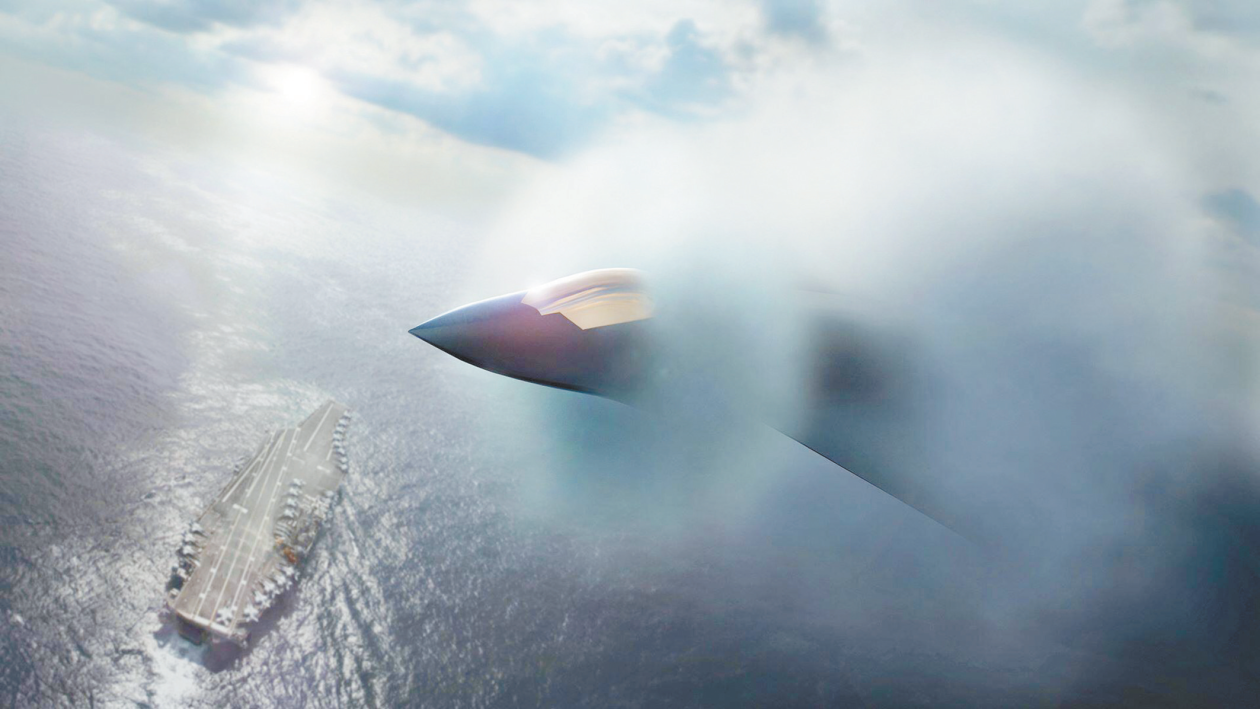
At the same time, the repeated delays in determining the contractor for the F/A-XX project also expose the loosening of the foundation of U.S. military aviation. During the Cold War, the U.S. had more than a dozen defense contractors capable of developing fighters, but now only Lockheed Martin, Boeing, and Northrop Grumman remain in the bidding for the F/A-XX project. Among them, Lockheed Martin is the sole producer of the U.S. F-22 and F-35 fifth-generation fighters, originally seen as the most promising candidate for the U.S. sixth-generation fighter project, but has lost major contracts from both the Navy and Air Force. Boeing, aside from merging with McDonnell Douglas and taking over the production of the F-15 and Super Hornet fighters midway, has not independently developed a fighter for decades and has only designed the unsuccessful X-32 technology demonstrator. It faced significant media skepticism when it won the F-47 project bid. According to U.S. Navy officials, there are significant differences in design requirements for sixth-generation fighters between the Navy and Air Force, and Boeing cannot simply modify the F-47 design for dual-use. Northrop Grumman, after the F-14 Tomcat carrier-based fighter, has only attempted to develop the YF-23 technology demonstrator, which was eliminated midway. Therefore, many U.S. media outlets acknowledge that the contractors currently participating in the U.S. Air Force and Navy sixth-generation fighter projects each have their own "shortcomings."
The U.S. Navy has delayed the announcement of the contractor for the F/A-XX sixth-generation fighter jet, originally expected in August 2023. This delay raises concerns about the Navy's future capabilities and its ability to compete with adversaries like China and Russia. The project faces challenges in funding and resource allocation, particularly in relation to the Air Force's F-47 program, which could impact the Navy's operational readiness in the coming decades.
- The U.S. Navy has delayed the announcement of the F/A-XX contractor and design plan multiple times.
- The F/A-XX project faces significant challenges and pressures due to resource allocation and competition with the Air Force's F-47 project.
- If delays continue, the U.S. Navy may lack a modern carrier-based sixth-generation fighter in the 2030s.