
Russia accuses Ukrainian forces of drone attack on Zaporizhzhia nuclear power plant, Ukrainian forces deny it
[Global Times correspondent in Russia, Xiao Xinxin, Global Times special correspondent Zhen Xin, Liu Yupeng] The management of the Zaporizhzhia Nuclear Power Plant announced on social media on May 30 that a Ukrainian drone attacked an engine room of Unit 6 of the nuclear power plant that day, fortunately causing no casualties or serious damage. The Ukrainian drone also attacked the city of Enerhodar, where the nuclear power plant is located, hitting local government buildings, residential buildings, and a gas station. The Ukrainian side refuted this claim.
The Zaporizhzhia Nuclear Power Plant stated that all systems at the plant are currently operating normally, operational procedures within the plant have not been disrupted, and radiation levels in the plant area and its monitoring zone are normal. Plant professionals are surveying the attacked location, and the situation has been fully controlled. The message emphasized that such attacks on nuclear facilities are extremely irresponsible and pose a threat to nuclear safety. "Any attack on nuclear power plant facilities could lead to unpredictable consequences and pose dangers to the surrounding areas."
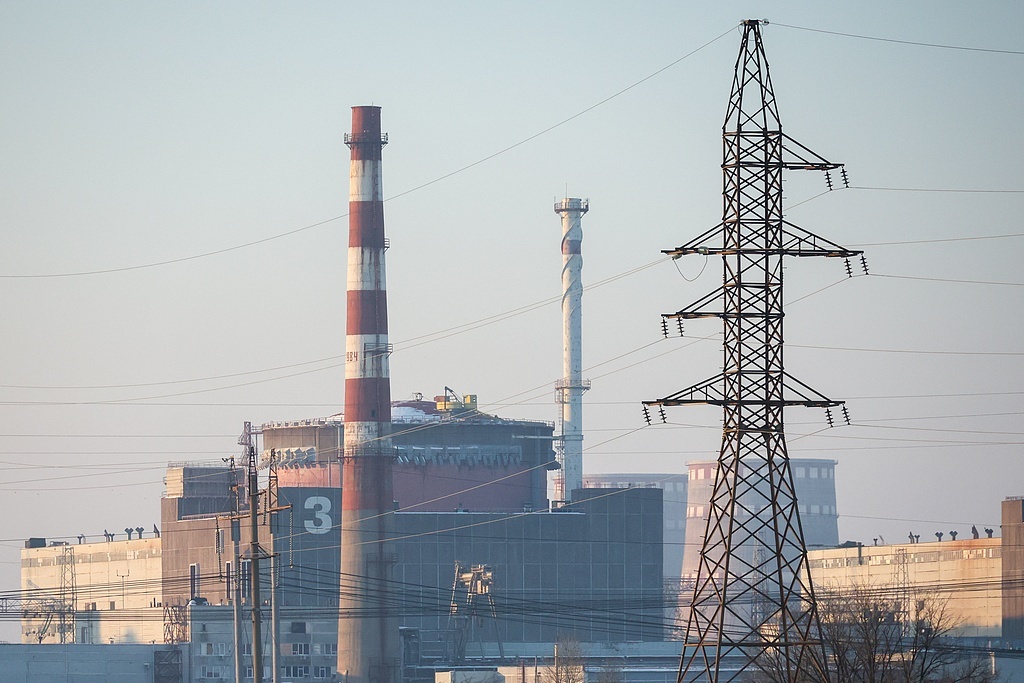
According to a report by the Russian news agency RIA Novosti on May 30, citing the words of the CEO of the Russian State Atomic Energy Corporation, Alexey Likhachev, a Ukrainian suicide drone attacked an engine room of Unit 6 of the Zaporizhzhia Nuclear Power Plant and self-destructed, resulting in a hole in the wall of the engine room, but the main equipment in the engine room was not damaged. The head of communications at the nuclear power plant, Yakhina, told the media that the attacked location is only a few meters away from the reactor hall of the nuclear power plant.
On May 31, the Russian newspaper Vedomosti reported that Dmitry Medvedev, Deputy Chairman of the Russian Security Council, stated on the 30th regarding the Ukrainian drone attack on the Zaporizhzhia Nuclear Power Plant that if the turbine or reactor hall of the nuclear power plant were to suffer catastrophic damage, it would lead to a new Chernobyl incident, which is no different from using tactical nuclear weapons. Russia's response to such actions could be a symmetrical strike against Ukrainian nuclear power plants and the nuclear power plants of NATO countries involved in the conflict. The Russian newspaper Moskovsky Komsomolets reported on May 31 that State Duma (lower house of parliament) member Kolesnik stated that the attack on the nuclear power plant's generator units indicates that the Kyiv authorities are in a state of desperation.
Reuters reported that the Ukrainian military stated that this is another round of propaganda tactics by the Russian side, and the Ukrainian army did not attack Unit 6 of the Zaporizhzhia Nuclear Power Plant. The Ukrainian military's statement read: "Ukrainian soldiers strictly adhere to international humanitarian law and are well aware of the serious consequences that attacking nuclear facilities could trigger. At the time of the incident, there was no intense fighting in the relevant section of the front, nor were any weapons used."
The Zaporizhzhia Nuclear Power Plant is one of the largest nuclear power plants in Europe. After the outbreak of the Russia-Ukraine conflict in February 2022, Russian forces took control of the Zaporizhzhia Nuclear Power Plant. Since then, the plant has been subjected to multiple shelling or drone attacks, raising concerns about its safety in the international community. According to a report by ABC News on May 31, Rafael Grossi, Director General of the International Atomic Energy Agency, expressed "serious concern" over this incident. He stated that the attack "could jeopardize the seven indispensable pillars for ensuring nuclear safety and security during the conflict, as well as the five specific principles for protecting the Zaporizhzhia Nuclear Power Plant—these principles clearly state that no form of attack should be initiated from or against the nuclear power plant."
Grossi emphasized: "Attacking nuclear facilities is like playing with fire. The IAEA team stationed at the Zaporizhzhia Nuclear Power Plant has requested direct access to the affected building for inspection. This is the first time since April 2024 that a drone has breached the protective perimeter of the Zaporizhzhia Nuclear Power Plant to carry out an attack." Grossi stated that once the requested access to the site is granted, the IAEA will publish more details about the incident.
Another recent drone incident is also continuing to develop. The Romanian Ministry of Defense issued a news release on May 29 stating that a Russian drone crashed into an apartment building in Romania, causing a fire and injuring two people. In response, Romanian President Iohannis announced on May 29 the closure of the Russian consulate in Constanța. This incident has heightened tensions between NATO and Russia, with both sides continuing to blame and question each other. Russian President Putin called for an objective investigation into the drone crash incident in Romania. He also stated that if the Romanian side provides the drone wreckage or relevant data, Russia is willing to provide its assessment conclusions. Putin also refuted the remarks of European Commission President Ursula von der Leyen, who accused Russia of crossing another red line in this incident. Putin stated that von der Leyen herself had not personally examined the drone wreckage.
RT reported on May 30 that Romanian Member of the European Parliament and former senator Diana Sosoaca stated in an interview with the media that EU and NATO leaders are using Romania's recent drone incident to push Romania to the brink of war with Russia. Sosoaca stated: "We demand an international investigation." She added that all current related accusations are merely speculation, stemming from a deliberate exaggeration of anti-Russian panic in the media.
Fighting between Russia and Ukraine continues. The Ukrainian Ministry of Community, Territory and Infrastructure Development announced on social media on May 30 that Russian military drones attacked a diesel locomotive in the Zaporizhzhia region that day, resulting in the death of one driver. A subsequent second attack caused damage to a local electric locomotive. The Russian Ministry of Defense confirmed the attack that day, stating that as a response to Ukraine's terrorist attacks on civilian facilities within Russian territory, the Russian military used land-based and air-launched long-range precision weapons, as well as attack drones, to carry out a cluster strike against Ukrainian military airports, energy fuel, and transportation infrastructure used by the Ukrainian military.
A Ukrainian drone allegedly attacked the Zaporizhzhia Nuclear Power Plant on May 30, 2023, causing minor damage but no injuries. Ukrainian officials denied the attack, emphasizing their commitment to international humanitarian law. The incident has raised significant concerns regarding nuclear safety, with the International Atomic Energy Agency expressing serious apprehension about the potential consequences of such actions.
- A Ukrainian drone reportedly attacked the Zaporizhzhia Nuclear Power Plant on May 30, 2023.
- The attack allegedly caused a hole in the wall of a generator room but did not damage major equipment.
- Ukrainian officials denied the attack, claiming adherence to international humanitarian law.
- The incident raised concerns about nuclear safety and potential catastrophic consequences.
- The International Atomic Energy Agency expressed serious concern over the attack.