
Russia begins using new AI-enabled attack drones in Ukraine

Russia has begun using a new autonomous version of its Molniya strike drone in Ukraine, a cheap fixed-wing attack UAV now being adapted to hit targets without the control antenna that made earlier models vulnerable to electronic warfare.
The new variant was identified after a Russian Molniya struck a Ukrainian facility and was found without the normal antenna used for operator control. Ukrainian radio technology specialist Serhii “Flash” Beskrestnov said the drone carried only a camera and onboard computer, a layout that points to a different kind of strike profile: the aircraft no longer needs a live pilot steering it all the way to impact.
“The UAV had only a camera and a computer. This is where everything is heading. Navigation, target acquisition and the attack will become fully autonomous,” Serhii “Flash” Beskrestnov said.
The basic Molniya was already a problem because it was cheap, simple and good enough to be used in numbers. It could fly farther than many short-range FPV quadcopters and carry an explosive payload into Ukrainian positions, vehicles or rear-area targets. Its weakness was the control link. If Ukrainian EW crews broke that link, jammed the video feed or forced the operator to lose situational awareness, the attack could fail.
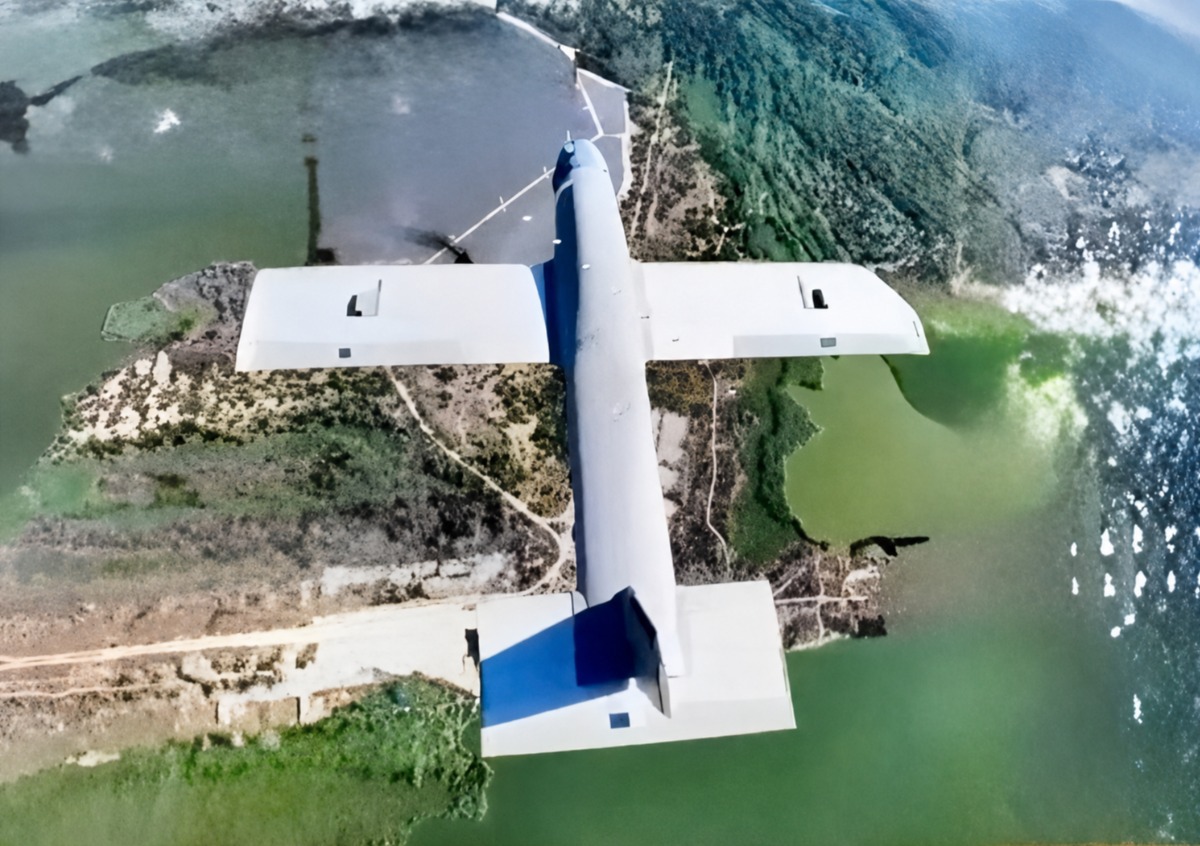
With no control antenna visible and only a camera and computer installed, the drone likely relies on onboard visual processing for navigation, target search or terminal attack. That does not make it a magic weapon, and it does not prove every Molniya now works this way. It does mean Russia is moving toward a model in which the drone can continue the mission after the operator is no longer guiding it in real time.
Ukraine has already introduced autonomous strike drones such as Hornet, the fixed-wing attack UAV associated with Perennial Autonomy, which pushed the same idea from the Ukrainian side: cheap aircraft, AI-assisted guidance and less dependence on a radio link during the final phase of flight. Hornet showed that autonomy is not only for expensive missiles or laboratory projects. It can be built into low-cost disposable drones and used against logistics, vehicles and exposed military targets behind the line.
Hornet has been described in published reporting as carrying about 5 kg (11 lb) of payload over a range of roughly 200 km (124 miles). Molniya belongs to a different Russian ecosystem, built around low-cost airframes and rapid battlefield modification. The important comparison is not the exact payload or shape of the aircraft. The important comparison is the guidance philosophy. Both systems point toward drones that are less dependent on the human operator once the aircraft reaches the most dangerous part of the mission.
 Hornet DE-2 one-way attack drone at the Grafenwoehr Training Area in Germany. Photo by Thomas Dixon
Russian forces are now reported to be using the new Molniya variant with growing intensity in southern Ukraine, especially in Zaporizhzhia Oblast. That region is one of the most logical places for such a system to appear because the terrain, long approaches and dense electronic warfare environment punish drones that rely on stable control channels. Official Ukrainian regional reports confirm heavy Russian drone and missile attacks across Zaporizhzhia in recent days, but they do not identify every UAV type in public summaries. The claim of intensified Molniya use there should therefore be treated as a battlefield observation, not a public official count.
A Molniya with autonomous guidance can be launched toward Ukrainian positions, logistics routes, staging areas or command nodes without requiring continuous control across the full route. If the onboard computer can recognize the target area or lock onto a selected object during the final phase, Ukrainian jammers lose one of their simplest ways to stop the attack.
Content preview only. Full article available at source. View Full Article
Russia has begun using a new autonomous Molniya strike drone in Zaporizhzhia Oblast, Ukraine, which can strike targets without a control antenna, reducing its vulnerability to electronic warfare. This new variant allows for autonomous navigation and target acquisition, enabling attacks without continuous operator guidance. Reports indicate increased usage of this drone in recent days, particularly in areas where electronic warfare is prevalent.
- Russia has deployed a new autonomous Molniya strike drone in Ukraine.
- The new drone variant does not have a control antenna, making it less vulnerable to electronic warfare.
- Ukrainian expert Serhii Beskrestnov confirmed the drone's autonomous capabilities.
- The Molniya drone can be used against various targets without continuous operator control.
- Intensified use of the Molniya drone has been reported in Zaporizhzhia Oblast.