
Russia Fired 729 Weapons and Exposed Europe's 2026 Patriot Problem
 Alexandra Reeves
Russia Fired 729 Weapons and Exposed Europe's 2026 Patriot Problem
Russia did not need to break Ukraine's air defence network on Tuesday to make its point. It only needed to show how expensive survival has become.
On the night of June 1-2, Russian forces launched what Ukraine's Air Force described as a large combined strike of 729 aerial weapons: 73 missiles and 656 drones. Kyiv was the main target, with Dnipro, Kharkiv, Zaporizhzhia, Poltava Oblast and other areas also hit. Ukrainian air defences destroyed or suppressed 642 targets, an impressive tactical result by any normal measure. But the ugly number sits underneath it: Ukrainian officials said 30 ballistic missiles hit their targets.
That is the part Europe should be staring at. Drones can be hunted by mobile teams, electronic warfare, autocannon, older missiles and increasingly by interceptor drones. Cruise missiles are hard but manageable for a layered network. Ballistic missiles are different. Against Iskander-M, Kinzhal and the newer high-speed systems Russia has been mixing into its salvos, Ukraine's choices narrow quickly toward Patriot-class interceptors and a small number of equivalent high-end systems.
The Attack Was Not Just Bigger
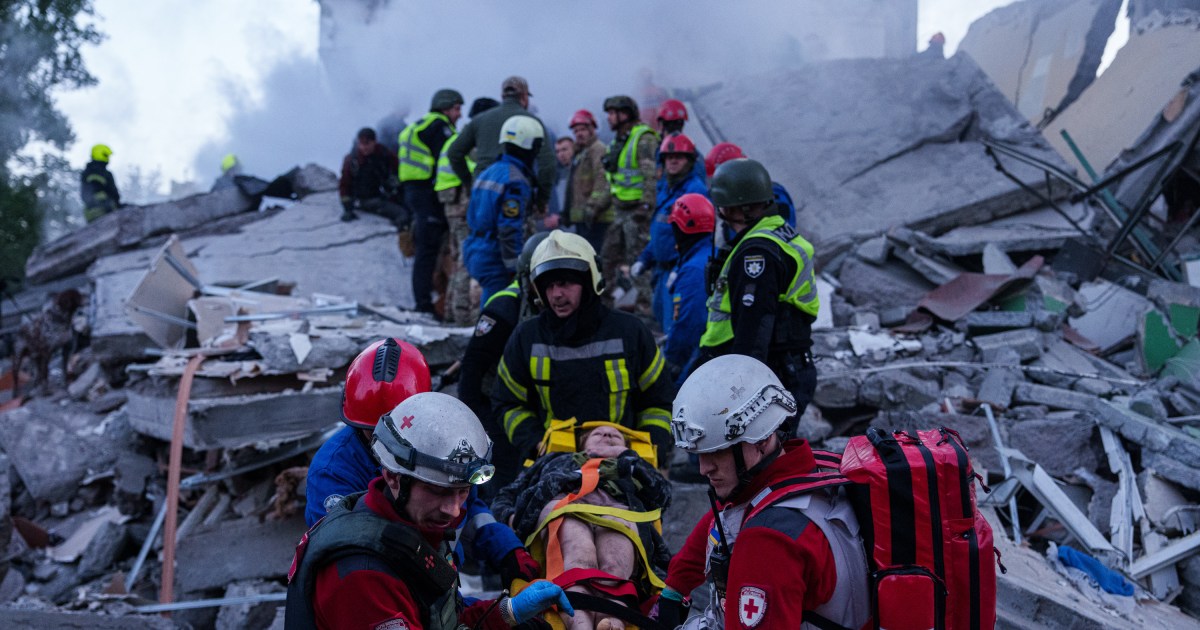
The June 2 strike fits a pattern that has hardened through May rather than a sudden one-off retaliation. The Associated Press reported that at least 16 civilians were killed and more than 100 wounded in the latest attack, with rescue crews pulling victims from damaged apartment buildings in Dnipro. Reuters, citing local officials, reported deaths and dozens of injuries in Kyiv and Dnipro after days of warnings that Moscow was preparing another major assault.
Ukrainska Pravda, citing Ukraine's Air Force, listed the package in more detail: eight 3M22 Zircon missiles, 33 Iskander-M ballistic missiles, 32 other missiles of various types, and hundreds of strike and decoy drones. Hromadske carried the same broad Air Force count and said Ukrainian defences neutralized 642 of the 729 aerial weapons. The interception rate looks reassuring until one remembers that Russia designs these packages precisely to make the denominator misleading.
A Gerbera decoy and an Iskander-M are both counted as aerial targets. They are not the same military problem. One is meant to pull sensors, crews and ammunition in the wrong direction. The other arrives fast, leaves little reaction time, and can smash through a city even after most of the swarm has been defeated.
Russia Is Buying Saturation by the Week
Le Monde's May 25 reporting from Kyiv is useful here because it explains the industrial rhythm behind the terror. Ukrainian and Western intelligence can often see a major Russian strike forming days in advance because the operation requires stockpiling drones, moving aircraft, loading cruise missiles, preparing launchers and coordinating several branches of the Russian military. That visibility does not make the strike easy to stop. It just means Kyiv gets to watch the wave assemble.
According to Le Monde's interviews with Ukrainian air defence officials and defence analysts, Russia is producing roughly 130 long-range attack drones a day at Yelabuga and Izhevsk, plus a similar number of decoys. The same report cited estimates of Russian output at about one Kalibr per day, two to three Kh-101 cruise missiles per day, and two to three Iskander ballistic missiles per day. Those figures explain the tempo: Russia can spend a week building a package large enough to force Ukraine into another night of triage.
The uncomfortable comparison is on the defensive side. Le Monde quoted Defense Express editor Oleh Katkov saying Russia is increasing Iskander production toward 60 per month and Kinzhal output toward 10 per month, while the United States produces about 56 PAC-3 MSE anti-ballistic interceptors per month. If two PAC-3s are needed for a reliable ballistic intercept, the arithmetic gets brutal fast.
That does not mean Patriot is failing. It means Patriot is being asked to solve a production problem with a fire-control solution.
The Wrong Lesson Would Be To Blame Ukraine
There is a lazy argument floating around Western capitals that Ukraine's air defence demand is endless because Kyiv always asks for more. Tuesday's attack should kill that argument. Ukraine is asking for more because Russia has made massed missile-drone warfare a standing campaign, not an occasional escalation.
President Volodymyr Zelenskyy framed the attack in exactly those terms, saying Russia had made a transparent statement that if Ukraine is not protected from ballistic and other missile strikes, the strikes will continue. He again called for US and European help with Patriot missiles. That is not political theatre. It is a procurement warning.
The problem for Europe is that Ukraine is now revealing the defensive consumption rates NATO would face in a real eastern-flank war. Everyone in Brussels likes to talk about integrated air and missile defence. The phrase sounds tidy. The battlefield version is ugly: sensor coverage, launcher density, reload stocks, interceptor production, cross-border rules of engagement, hardened repair capacity and enough cheap systems to avoid wasting million-dollar missiles on cheap drones.
NATO's public language still tends to treat air defence as a capability category. Russia is treating it as a monthly balance sheet.
What Europe Should Watch Next
The immediate question is whether Washington releases additional Patriot interceptors quickly enough to cover the summer strike cycle. The deeper question is whether European governments finally stop treating air defence as a boutique procurement line. Germany's IRIS-T, French-Italian SAMP/T, Norwegian-American NASAMS and older Soviet-derived systems all matter. But none of them remove the Patriot shortage at the top of the threat ladder, and none can compensate for a thin stockpile of anti-ballistic interceptors.
Europe also needs to watch Russian target selection. If Moscow keeps pairing drone saturation with ballistic salvos against Kyiv, Dnipro and other urban centres, the point is coercion: exhaust Ukrainian interceptors, raise civilian casualties, and force Western governments into the familiar debate over whether aid is escalation or maintenance. If Russia shifts the same pattern toward energy infrastructure before winter, the pressure becomes more strategic and the timeline tighter.
The key finding from June 2 is simple. Ukraine can defeat most of a huge Russian strike and still lose the part that matters most. That is not a Ukrainian failure. It is the shape of modern missile defence when the attacker has industrial depth and the defender has rationed interceptors.
Europe's choice is not whether to support Ukraine's air defence. It is whether to learn the lesson while the missiles are falling on Kyiv, or relearn it later when the same arithmetic applies to Warsaw, Vilnius or Constanta.
Russian forces conducted a large-scale strike on June 1-2, 2023, targeting Ukrainian cities including Kyiv and Dnipro with 729 aerial weapons, resulting in significant civilian casualties. Ukrainian air defenses managed to intercept 642 of these targets, but 30 ballistic missiles struck their intended locations. This attack highlights the ongoing challenge Ukraine faces against Russia's missile capabilities and the urgent need for enhanced air defense systems in Europe.
- Russia launched a strike with 729 aerial weapons, including 73 missiles and 656 drones.
- Ukrainian air defenses destroyed or suppressed 642 targets during the attack.
- 30 ballistic missiles successfully hit their targets in Ukraine.
- The attack resulted in at least 16 civilian deaths and over 100 injuries.
- Russia is increasing production of Iskander and Kinzhal missiles, impacting Ukraine's air defense capabilities.