
Russia Just Lost Its Mediterranean Warship Presence After 13 Years
 Alexandra Reeves
Russia Just Lost Its Mediterranean Warship Presence After 13 Years
Zero is an awkward number for a navy that still wants to be treated as a Mediterranean power. On July 18, UNITED24 Media reported that Russia had no warships left in the Mediterranean Sea for the first time since 2013. UA.NEWS and RBC-Ukraine carried the same core finding, while The Insider framed the shift more bluntly: Tartus, long treated as Moscow's permanent naval foothold in Syria, no longer appears to be functioning as the stable base Russia built its regional posture around.
That does not mean the Russian Navy has ceased to exist beyond its home waters. It does mean something narrower, and more useful: Russia's ability to keep a visible, armed, politically useful surface presence in the central Mediterranean has collapsed at least temporarily. For a state that spent the last decade using naval deployments to signal relevance from Syria to Libya, that is not just a scheduling problem.
It is a strategic embarrassment.
The Mediterranean gap is real even if it proves temporary
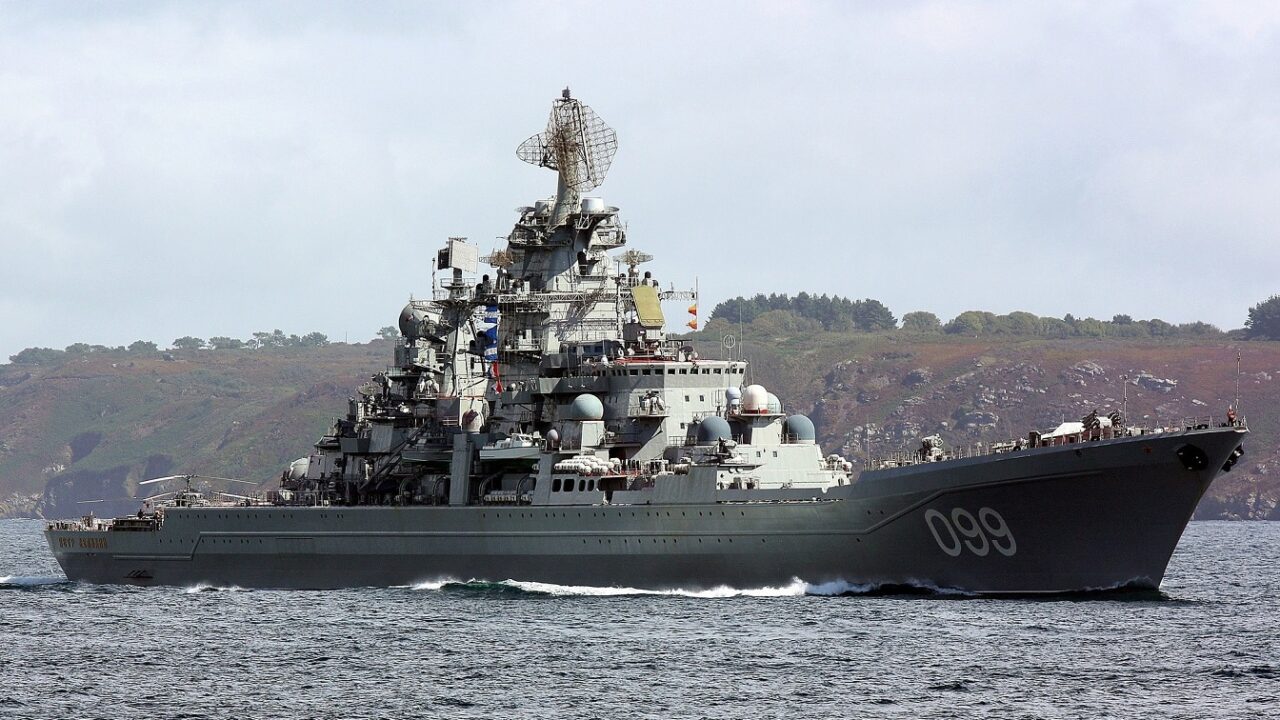
The immediate reporting rests on open-source tracking of Russian naval movements, not on a formal Russian Ministry of Defence admission. That matters. Ship locations can be missed, AIS data can be spoofed, and some naval movements are deliberately opaque. But the fact that several outlets converged on the same conclusion within 48 hours is still meaningful: the normal pattern of a Russian surface combatant, auxiliary, or intelligence ship cycling through the Mediterranean appears to have broken.
Since 2013, Russia has usually tried to sustain a Mediterranean squadron around the Syrian logistics facility at Tartus. The force varied in size and quality, but the point was constant. It gave Moscow a way to support operations in Syria, shadow NATO navies, demonstrate expeditionary reach, and remind everyone from Ankara to Rome that Russia was not merely a Black Sea power.
That posture was always more brittle than it looked. A Mediterranean deployment requires fuel, repair access, crew rotation, ammunition handling, and political permission from states controlling chokepoints and ports. Russia could hide some weaknesses behind symbolism when the tempo was low. The war in Ukraine made that harder.
Tartus was the hinge
The standard Western shorthand for Russia in the Mediterranean has been "Tartus." That shorthand was useful but lazy. Tartus was not Sevastopol in warmer water. It was a logistics and repair node, upgraded after Russia intervened in Syria, and protected by the political survival of the Assad regime. It mattered because it gave Russian ships somewhere to refuel, resupply, and linger without constantly begging for commercial access.
If The Insider's reporting is right that Tartus has lost its role as a permanent naval base, the implication is bigger than one empty pier. It means Moscow's Mediterranean deployments now have to be treated as deployments in the old-fashioned sense: costly, timed, exposed, and dependent on a chain of permissions. That is a very different thing from having a standing regional squadron.
There is also a simple geography problem. Turkey controls the Bosporus and Dardanelles under the Montreux Convention. Since the full-scale invasion of Ukraine, Ankara has restricted belligerent warship transit in ways that have sharply limited Russia's freedom to rotate Black Sea Fleet units. A ship trapped in the Black Sea cannot become a Mediterranean signal. A ship outside the Black Sea cannot casually come home for repair.
Russia therefore faces a nasty naval arithmetic problem: the Baltic Fleet is needed in the north, the Northern Fleet guards strategic nuclear bastions, the Pacific Fleet has its own theatre, and the Black Sea Fleet has been battered by Ukrainian missiles, naval drones, and long-range strikes. The Mediterranean used to be where Moscow projected surplus power. Now it looks like the place where the surplus ran out.
This is not just about ships
The tempting conclusion is that NATO has won a naval chess match without firing a shot. That is too neat. Russia can still send individual vessels through the region later. It can still use submarines, aircraft, commercial cover, intelligence platforms, and partner ports. It can still make trouble in Libya, Syria, the Red Sea approaches, and the eastern Mediterranean without a neat line of grey hulls on a tracking map.
But visible naval presence has political value. A surface combatant in the Mediterranean is a floating press release backed by missiles, sensors, helicopters, and boarding teams. It reassures partners, intimidates weaker actors, complicates NATO planning, and gives diplomats something to gesture at when they say Moscow remains a global player. Losing that presence, even temporarily, changes the conversation.
For NATO, the immediate military benefit is modest but real. Allied commanders in Naples, Souda Bay, Sigonella, and across the eastern Mediterranean have one fewer persistent Russian problem to track. The intelligence burden falls, the escort burden falls, and the risk of close encounters at sea falls. In a theatre already crowded by the Gaza war, Red Sea disruption, Turkish-Greek friction, and instability in Syria and Libya, that matters.
The bigger benefit is diagnostic. Russia is showing us where pressure has consequences. Ukraine did not need a blue-water navy to shrink Russia's blue-water options. It used coastal missiles, uncrewed surface vessels, drones, and repeated strikes on Black Sea infrastructure to make Crimea and Sevastopol less usable. Those effects then rippled outward into the Mediterranean.
The Russian Navy is becoming regional again
For years, analysts treated the Russian Navy as a declining but still global instrument. That was not entirely wrong. Russia retained nuclear submarines, long-range cruise missile platforms, capable air defence ships, and enough auxiliaries to make distant deployments possible. But the navy was also living off Soviet inheritance, deferred maintenance, and a small number of prestige platforms that could not be everywhere at once.
The Mediterranean absence exposes that imbalance. Russia can still launch Kalibr missiles. It can still threaten undersea infrastructure. It can still operate in the Arctic and defend nuclear bastions. What it is struggling to do is maintain routine conventional presence far from protected home bases while fighting a grinding land war and absorbing naval losses in the Black Sea.
That distinction matters. A navy that can surge is dangerous. A navy that can stay is influential. Russia has been losing the second quality faster than many in Washington and Brussels expected.
What to watch next
The next question is not whether a Russian ship eventually reappears in the Mediterranean. It probably will. Moscow understands the optics, and it may push a vessel into the theatre precisely to puncture the narrative of absence. The better questions are how long it stays, where it replenishes, whether it operates with escorts, and whether Tartus can support it without the old assumptions.
Three indicators deserve attention. First, watch whether Russia sends auxiliaries before combatants; that would suggest the logistics chain, not the combat fleet, is the limiting factor. Second, watch Turkey's handling of strait access and Russian messaging around Montreux. Third, watch Syrian port politics. If Tartus is no longer reliable as a semi-permanent Russian naval hub, Moscow's eastern Mediterranean playbook has to be rewritten.
The uncomfortable judgment is this: Russia did not simply misplace a squadron. It lost the habit of being present. In naval power, habits are hard to build, expensive to sustain, and politically painful to lose. The Mediterranean has just shown us that Russia's war in Ukraine is not only consuming tanks and artillery shells. It is consuming reach.
Russia has lost its naval presence in the Mediterranean Sea as of July 18, 2023, marking the first time since 2013 that no Russian warships are deployed in the region. This absence significantly impacts Russia's ability to project power and maintain operations in Syria, as Tartus is no longer a reliable base. The situation reflects broader strategic challenges for Russia, particularly in light of restrictions imposed by Turkey on naval movements.
- Russia has no warships in the Mediterranean for the first time since 2013.
- Tartus is no longer functioning as a stable base for Russian naval operations.
- Russia's ability to maintain a visible naval presence in the Mediterranean has collapsed temporarily.
- Turkey's control over the Bosporus restricts Russian naval movements.
- The loss of naval presence affects Russia's strategic posture in the region.