
Russia keeps building Su-34 fighter-bombers despite Ukraine war
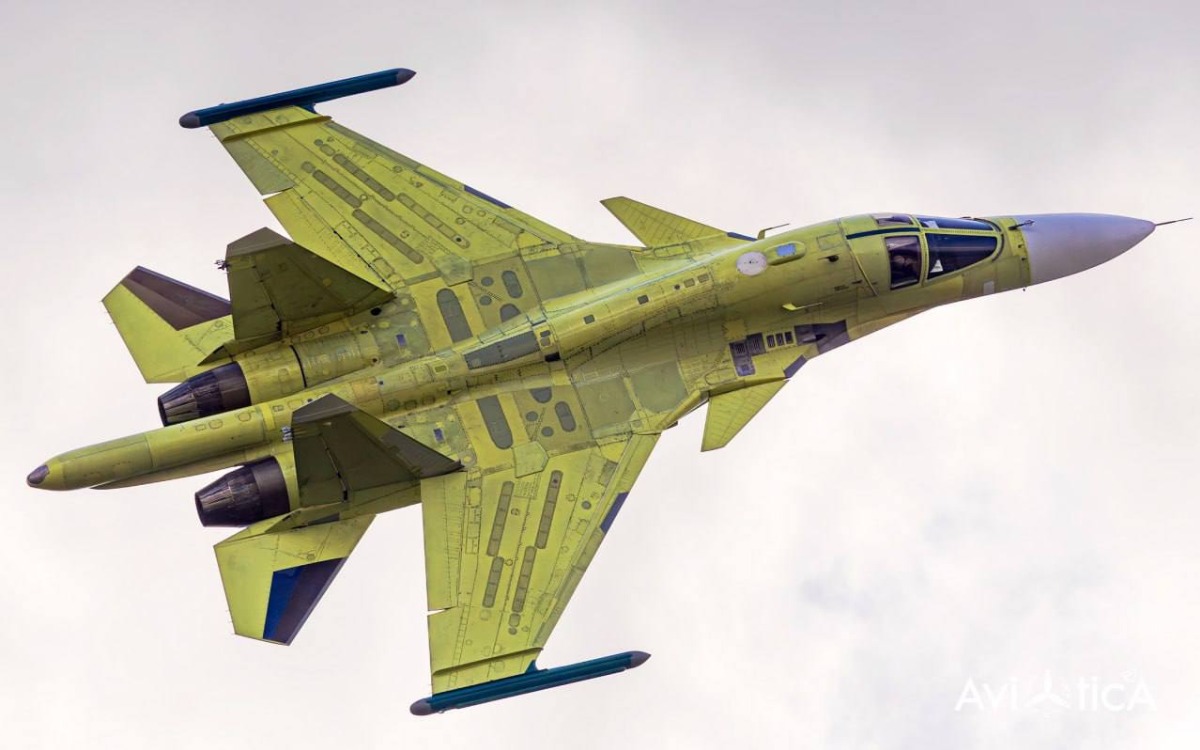
Photos taken at an air show in Novosibirsk captured a newly built Su-34 fighter-bomber still in factory gray primer, adding to a steady stream of the twin-seat jets Russia has produced for its air force even as it continues fighting in Ukraine.
The aircraft was spotted at Mochishche Aerodrome in Novosibirsk during the 15th annual Viva Avia air festival, held August 1 and 2 to mark the 110th anniversary of Russian naval aviation and the 95th anniversary of Russia’s military transport aviation branch. The jet was built at the Novosibirsk Aviation Plant, known as NAZ or NAPO, the sole manufacturer of the Su-34 and part of Russia’s United Aircraft Corporation.
By the start of 2026, Russia’s air force had received a total of 212 Su-34s built at the Novosibirsk plant, including seven prototype and pre-production aircraft, according to available production figures. The plant delivered 16 production aircraft in 2024 and 18 more in 2025, a pace that has held roughly steady over the past several years despite Western sanctions targeting Russia’s defense industry.
Oryx, an open-source group that tracks visually confirmed military equipment losses in the war, has documented 43 Su-34s destroyed since Russia’s full-scale invasion began in February 2022, a figure that covers only losses supported by photographic or video evidence and likely understates the true total. At roughly 18 to 20 new aircraft a year, Russia’s current production pace has been running behind the confirmed combat loss rate for extended stretches of the war, according to open-source trackers.
The Su-34, known to NATO by the reporting name Fullback, is a twin-engine, two-seat fighter-bomber that replaced the older Su-24 in Russian service. It was formally accepted into the Russian military’s inventory in March 2014, following a program that traces back to a Soviet-era design contract signed in 1989. The aircraft carries a Sh141 phased-array radar, an L-150 Pastel radar warning receiver, and 12 hardpoints for weapons, and it can refuel in flight and operate from airfields without ground support equipment thanks to an onboard auxiliary power unit.
Production has continued through a series of contracts rather than one long-running deal. Russia’s defense ministry ordered 32 Su-34s in 2008, all delivered by 2013, followed by a second contract for 92 more aircraft due by 2020. A further order for 20 aircraft with upgraded electronic warfare equipment followed in 2020, and Russian media reported in prior years that at least 76 more Su-34s, upgraded under the Su-34M designation with new electronics and precision weapons carried in underwing pods, were expected to be delivered by 2027.
Russia has used the Su-34 extensively during its full-scale invasion of Ukraine, employing it to drop glide bombs on Ukrainian positions and cities from standoff ranges that keep the aircraft largely outside the reach of Ukrainian air defenses. The aircraft’s continued production, even in wartime, has made it one of the more closely tracked programs in open-source assessments of Russia’s defense industrial output.
Content preview only. Full article available at source. View Full Article
Russia continues to produce Su-34 fighter-bombers at the Novosibirsk Aviation Plant, with 212 units delivered by early 2026. During the Viva Avia air festival on August 1-2, 2024, a newly built Su-34 was spotted, highlighting ongoing production despite the war in Ukraine. The aircraft has been used extensively in combat, with 43 confirmed losses since the invasion began in February 2022.
- Russia has produced a total of 212 Su-34s by early 2026.
- The Novosibirsk Aviation Plant is the sole manufacturer of the Su-34.
- 43 Su-34s have been documented as destroyed since February 2022.
- Production has continued despite Western sanctions targeting Russia's defense industry.
- The Su-34 is extensively used in the conflict in Ukraine.