

Russia’s S-500 Prometey Is a Missile Shield, Not a Simple S-400 Replacement: Russia placed its first S-500 Prometey regiment on combat duty in December 2025. The announcement marked the operational debut of Moscow’s most ambitious mobile air- and missile-defense system.
The S-500 is often described as the successor to the S-400. The label misses its main purpose. Prometey sits above the S-400 inside Russia’s layered defense network and is intended to engage ballistic missiles, high-altitude weapons, and targets near the edge of space.
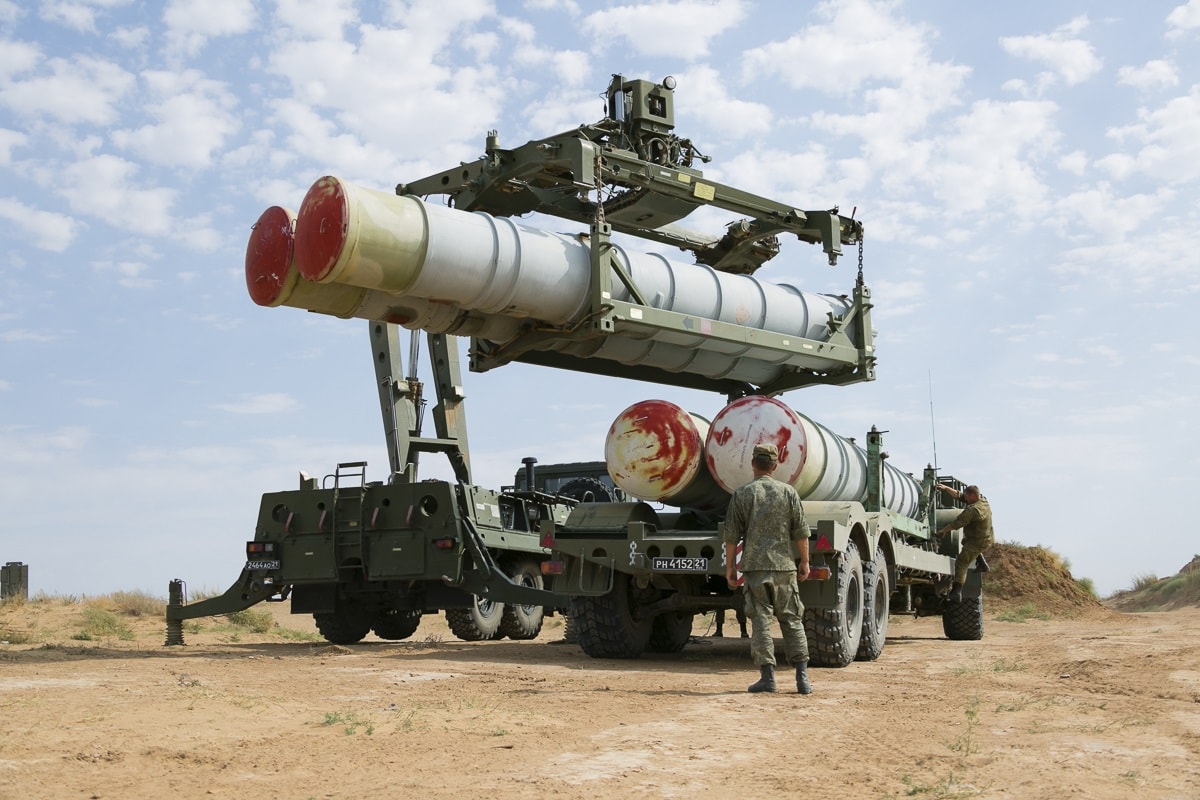
Russia’s S-400 Air Defense System. Image: Russian Military.
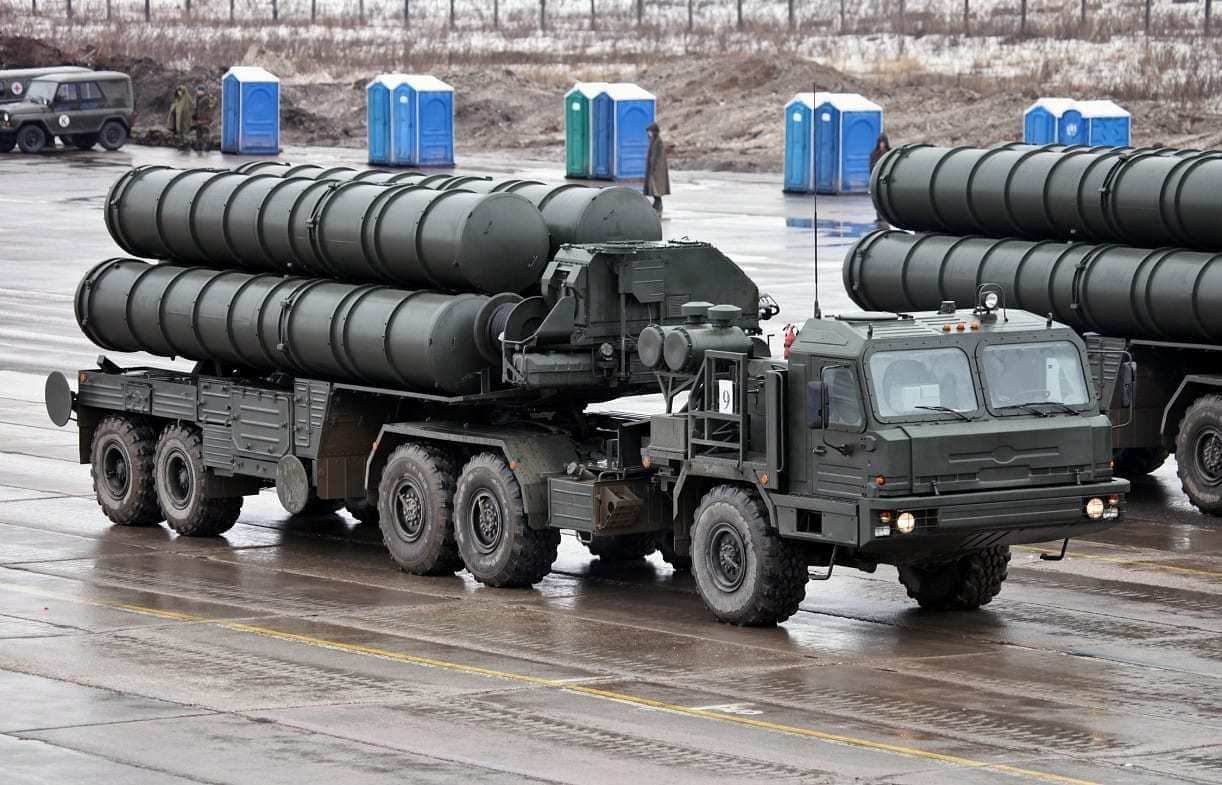
S-400. Image Credit: Creative Commons.
Almaz-Antey built the system around command vehicles, search radars, a dedicated ballistic-missile engagement radar, and heavy launchers carried on BAZ wheeled chassis.
Russia has never published a complete specification. State sources claim an engagement range of roughly 500 to 600 kilometers and enough altitude to threaten some low-orbit satellites. Those figures remain Russian claims rather than independently demonstrated performance.
The S-500 Was Built for Ballistic Missiles First
The central mission is not hunting ordinary fighters. Russian officials say Prometey is designed to intercept medium-range ballistic missiles and warheads approaching at extreme speed. They also claim limited capability against intercontinental ballistic missiles during the terminal phase.
The 77N6 interceptor family is associated with this work. Russia demonstrated an S-500 launch at Kapustin Yar in July 2021. The Defense Ministry said the missile hit a “high-speed ballistic target,” but released no target speed, altitude, range, or engagement geometry. The test proved a functioning interceptor existed. It did not validate every later claim.
The S-500 Depends on Russia’s Wider Air Defense Network
Prometey is not meant to defend a city alone. S-400 batteries cover aircraft, cruise missiles and some ballistic threats at lower altitudes. S-350 and Pantsir units handle shorter-range weapons and drones. Fixed early-warning radars provide tracks before an S-500 battery launches.
Russia’s S-400 force still carries most of the long-range air-defense burden, while the S-500 protects a smaller number of strategic areas. A launcher without reliable radar coverage and communications is nothing more than a truck carrying expensive missiles.
Jamming, decoys, and strikes on command vehicles or radar sites attack the network rather than the interceptor. This dependency matters for a system expected to operate within Russia’s highest tier of air defense.
Russia’s Stealth-Fighter Claims Need Caution
Moscow presents the S-500 as a threat to the F-22 and F-35. Stealth does not make an aircraft invisible. It reduces the range and quality of the track available to hostile radars, making identification and weapons guidance harder.
A radar might register an aircraft without producing a track precise enough for an interceptor. Its advertised ability to defeat American stealth fighters remains unproven.
The more realistic long-range targets are tankers, airborne early-warning aircraft, and intelligence platforms. They have larger radar signatures and often fly predictable orbits. Pushing them farther away would shorten the reach of the fighters they support. This mission matters more than a direct engagement with an F-22 or F-35.
Hypersonic and Satellite Claims Remain Unproven
“Hypersonic” covers different target types. A ballistic warhead follows a relatively predictable arc. A hypersonic glide vehicle travels lower and changes course, giving defenders less time and a less stable intercept point. The U.S. Air Force describes this combination as a major missile-defense challenge.
Russia says the S-500 is designed for such targets, yet the public test record does not show a representative glide-vehicle interception. The system’s advertised high-speed interceptor performance remains difficult to confirm outside Russian test data.
The satellite claim also needs limits. A ground-launched interceptor might reach some low-Earth-orbit objects when timing and geometry align. Reaching one object does not create a broad ability to destroy satellites across space.
The S-500 Has a Numbers and Magazine Problem
Russia announced only one operational regiment by the end of 2025. The likely priority remains Moscow, national command infrastructure, and other strategic sites.
Each visible launcher carries two interceptors. A concentrated raid might exhaust ready rounds quickly. Cheap drones and decoys force radars to activate while more dangerous weapons approach. Lower-tier defenses must absorb easier targets and preserve S-500 missiles for ballistic threats.
The U.S. Army’s equipment guide describes Prometeus as a system aimed at ballistic missiles, cruise missiles, and low-orbit targets, not a universal shield.
Where the S-500 Stands in 2026
Russia has not disclosed the first regiment’s exact location, launcher count, or complete missile inventory. Public reporting places it within the air and missile defense structure guarding Moscow and the central industrial region.
Prometey adds a mobile upper layer between the S-400 and Russia’s fixed strategic defenses. Its specialized radars and large interceptors deserve close attention today. Its boldest claims still rest on classified trials, official statements, and one limited public launch record.
Until the system records a wartime intercept against the target class it was built to stop, the decisive evidence will remain inside Almaz-Antey and Russian Defense Ministry test files.
About the Author: Harry J. Kazianis
Harry J. Kazianis (@Grecianformula) was the former Senior Director of National Security Affairs at the Center for the National Interest, a foreign policy think tank founded by Richard Nixon in Washington, D.C. Harry has more than a decade of experience in think tanks and national security publishing. His ideas have been published in The New York Times, The Washington Post, The Wall Street Journal, CNN and many other outlets worldwide. He has held positions at CSIS, the Heritage Foundation, the University of Nottingham and several other institutions related to national security research and studies. He is the former Executive Editor of The National Interest and The Diplomat. He holds a master’s degree focusing on international affairs from Harvard University.