
Russia transfers 90 missile launchers to Iran and changes military exchange rules

Russia Transfers 90 Missile Launchers to Iran and Changes Military Exchange Rules
Ninety missile launchers are not just another line in the report on Russian-Iranian cooperation. According to the Financial Times on November 5, 2026, this is the number Moscow has agreed to supply to Tehran. The type of the complex and the schedule for delivery have not yet been publicly disclosed, so any confident statements about a specific model should be considered premature. However, the number itself is already significant enough to indicate an attempt to reshape the regional balance of firepower rather than just a symbolic gesture.
Information about the deal has emerged amid a war where missiles and drones have become not auxiliary but foundational tools. The Russian army continues to use Iranian technologies and production chains for strike drones, while Iran, after the air conflict of 2026, is interested in quickly restoring its arsenal and launch infrastructure. In this context, 90 launchers represent a military order, compensation for assistance already provided, and a long-term contract for the compatibility of two missile ecosystems.
What is Known About the Deal and What Cannot Be Asserted Yet
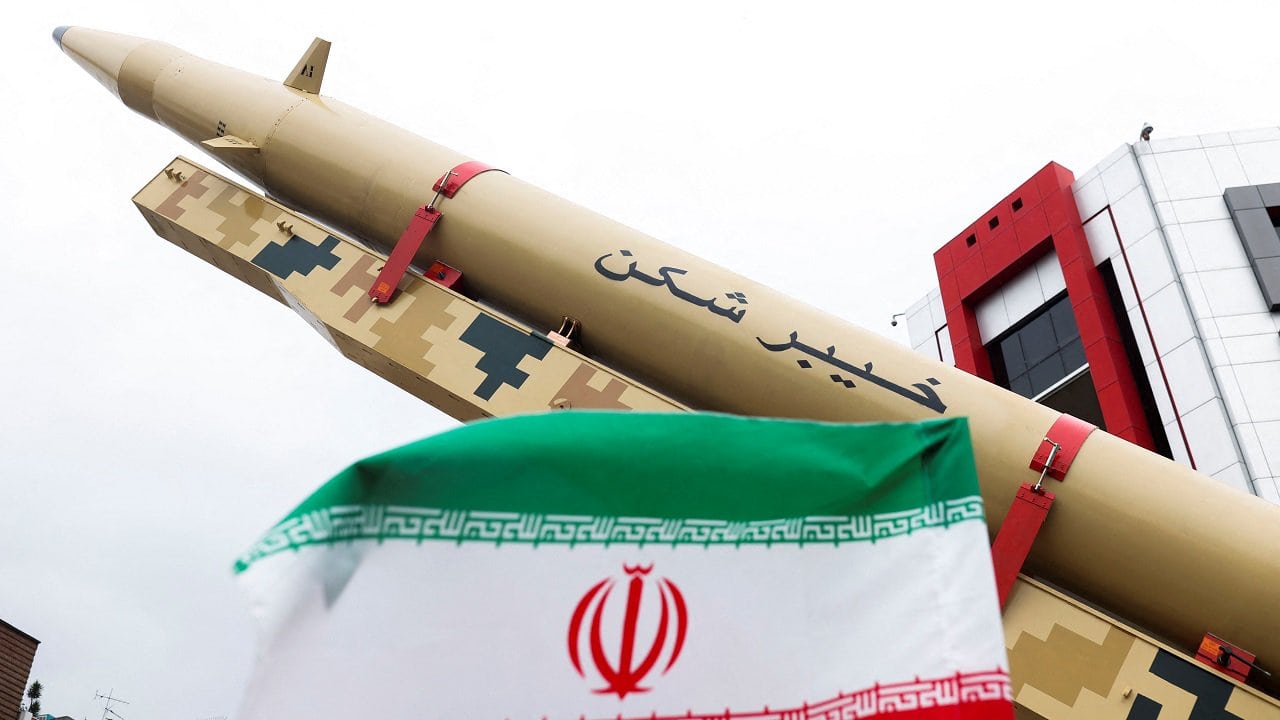
The Financial Times cites informed sources, and publications from the Jerusalem Post, Iran International, Caspian Post, and Ukrainian outlets convey the same main conclusion. However, secondary reports do not answer the key technical question: are these launchers for ballistic missiles, air defense systems, or a mixed nomenclature? There is no confirmation in open messages that Moscow is transferring specifically S-300s, Iskanders, or any other specific complex to Iran. This distinction is crucial. Launchers for operational-tactical missiles change strike potential, while air defense batteries primarily enhance the survivability of infrastructure.
Even without the model name, the scale can be assessed. Ninety launchers could potentially represent several dozen batteries if the systems are supplied along with command vehicles, transport-loading vehicles, and a stock of missiles. However, without data on completeness, one cannot mechanically convert the number of chassis into the number of ready fire units. Russian arms export practices show that the delivery of equipment often stretches out, and training crews and integration into the national command system take months.
Why Moscow is Engaging in Such an Exchange
For the Kremlin, the deal has three levels. The first is industrial. Russia gains access to Iranian supply channels, components, and experience in mass production of inexpensive strike systems. The second is operational. The more Iran depends on Russian means of destruction and control, the easier it is for Moscow to link Middle Eastern security with its own decisions in Europe. The third is diplomatic. The supply demonstrates that sanctions have not destroyed Russian military-technical diplomacy but have merely transformed it into closed and politically motivated forms.
However, there is an unpleasant arithmetic for the Russian side. Transferring 90 launchers to an ally means that these systems cannot simultaneously be directed to Russian troops or kept in reserve for the Ukrainian front. If these are modern systems, the export creates a burden on production, repair, and missile stockpiles. If Moscow is transferring outdated complexes, it will be financially beneficial but will limit the real effect for Iran. The Kremlin is trying to achieve a political result now without publicly addressing the question of the cost for its own army.
Military Significance for Iran
After the strikes of 2026, Tehran particularly needs not only missiles but also a dispersed architecture for their use. A launcher alone does not solve the task: protected command posts, reconnaissance targeting, mobile communication, camouflage, and the ability to quickly change positions are needed. Russian complexes can provide Iran with standardized mobility and a more resilient command system, but they will not eliminate vulnerability to satellite reconnaissance and precision strikes.
If the supply is accompanied by training and software transfer, the effect will be broader than just an increase in the number of missiles. Iran will be able to restore launch areas more quickly, create false positions, and distribute forces across multiple theaters. For Israel and the U.S., this means an increase in the cost of intelligence and the need to expend more expensive means of destruction to locate mobile targets. However, to assert that 90 launchers automatically change the regional balance would be a promotional rather than an analytical assessment.
Connection to the War in Ukraine and New Limits of Partnership
Ukrainian sources emphasize that the supply concerns systems related to missiles used against Ukraine. This is an important political signal: Russia is turning the experience of the Ukrainian war into an export product. Iran is receiving not abstract weapons from a showcase but potentially adapted solutions for modern missile defense. In return, Moscow strengthens the supply channel that has already helped it compensate for the shortage of drone platforms and individual components.
The deal shows not a return of Russian military power to Soviet levels but its transition to an economy of mutual deficits. Moscow sells what it can produce or redistribute, while Tehran provides what Russia does not want to buy openly.
It is also telling that confirmation of the deal is currently based on leaks and retellings rather than an official contract. Such opacity allows the parties to maintain space for denial while simultaneously testing the reactions of Washington, Israel, and Arab monarchies. If the reaction is limited, deeper agreements on servicing, component production, and data exchange on combat applications may follow.
Forecast
In the coming months, the main indicator will not be the appearance of the first photographs of the launchers but the change in the structure of Russian-Iranian interaction. The supply of complete batteries and instructors would signify a qualitative step. The transfer of individual chassis without missiles and control systems would be more of a political credit than an immediate military revolution. Therefore, the figure of 90 should be taken seriously but not literally.
Russia is indeed expanding military cooperation with Iran; however, it is doing so from a position of a country that itself lacks time, components, and reserves. Such an exchange can strengthen Tehran and extend the Russian military-technical network, but it simultaneously exposes its dependence on deals where each export contract is part of internal crisis management. Moscow will gain strategically if the supply becomes the beginning of a joint production chain; if this is merely a one-time transfer of equipment, the effect will be noticeable in headlines but much more modest on the battlefield.
Sources: Financial Times, November 5, 2026; The Jerusalem Post, November 5, 2026; Iran International, November 5, 2026; Caspian Post, November 5, 2026; Institute for the Study of War, Russian Offensive Campaign Assessment, November 4, 2026.
Russia is transferring 90 missile launchers to Iran as part of a military cooperation agreement, announced on November 5, 2026. The specifics of the missile systems and the delivery timeline remain undisclosed. This transfer is viewed as a strategic move to enhance Iran's military capabilities amid ongoing regional conflicts.
- Russia is transferring 90 missile launchers to Iran.
- The type of missile systems and delivery schedule are not publicly disclosed.
- This transfer is part of a broader military cooperation between Russia and Iran.
- The deal is seen as a response to the ongoing conflict and military needs of Iran.
- The transfer may affect regional military balances.