
Russian Diversions Against Danish Defense Industry in 2026 Expand the War on NATO's Rear
 Dmitri Volkov
Russian Sabotage Against Danish Defense Industry in 2026 Expands the War to NATO's Rear
There are news stories that are important not because of the scale of destruction, but because of the type of war they signify. The warning from the Danish Security and Intelligence Service (PET) that Russian intelligence agencies are already recruiting "ordinary Danes" in Denmark to prepare for sabotage against defense companies linked to aid for Ukraine is one such case. There are no burning factories or dozens of casualties yet. But there is something that may be even more indicative: Moscow is increasingly shifting pressure on Europe from the front line to the rear, where the targets become logistics, industry, and the public vulnerability of Kyiv's allies.
Why Denmark Became an Important Signal
The head of PET's counterintelligence, Emil Gresholm, stated that the Danish side sees "concrete examples" of Russian sabotage planning against the country's defense industry and that Russian services are actively preparing such actions against companies involved in supporting Ukraine (according to Reuters, September 3, 2026; The Insider, September 3, 2026; Anadolu, September 3, 2026). It is important not only to note the warning itself but also its form. This is no longer an abstract discussion about a "hybrid threat," which European capitals have become accustomed to in recent years. Denmark is effectively saying: the observation phase is over, and the operational preparation phase has begun.
For Russian military thinking, this is a completely rational transition. When direct military escalation against a NATO country is too risky, and the cessation of Western aid to Ukraine remains a strategic goal, pressure is shifted to where the entry cost is low, and the political effect can be disproportionately large. In Soviet and post-Soviet practice, this is a well-known principle of indirect influence: it is not necessary to strike at the enemy's army if one can increase the cost of its supply, complicate production, and make elites argue about internal security instead of long-term support for the war.
A New Logic of Recruitment Indicates Scarcity and Adaptability
It is particularly telling that, according to the Danish side, the recruitment involves not professional agents but "ordinary Danes" through social networks and gaming platforms. They may be tasked with photographing sites, gathering basic information about routes, infrastructure, and vulnerable points of enterprises. At first glance, this seems almost primitive. In reality, it is a very modern scheme. It does not require deeply concealed residency, expensive agent training, and long chains of communication. It is cheaper, more flexible, and significantly less noticeable at the early stage in the European digital space.
This also indirectly speaks to the personnel and operational adaptation of the Russian services themselves. After a series of exposures, expulsions of diplomats, and restrictions on movement, the traditional cover network in Europe has become weaker than it was before 2022. Therefore, there is a need to seek a looser, decentralized model of execution. In other words, if Moscow has fewer classical opportunities to act through official structures, it compensates for this by mass recruitment at the grassroots level. This approach resembles not an elite intelligence operation from the Cold War era but rather a platform model of sabotage.
The Connection to Leipzig Shows This Is No Longer a Theory
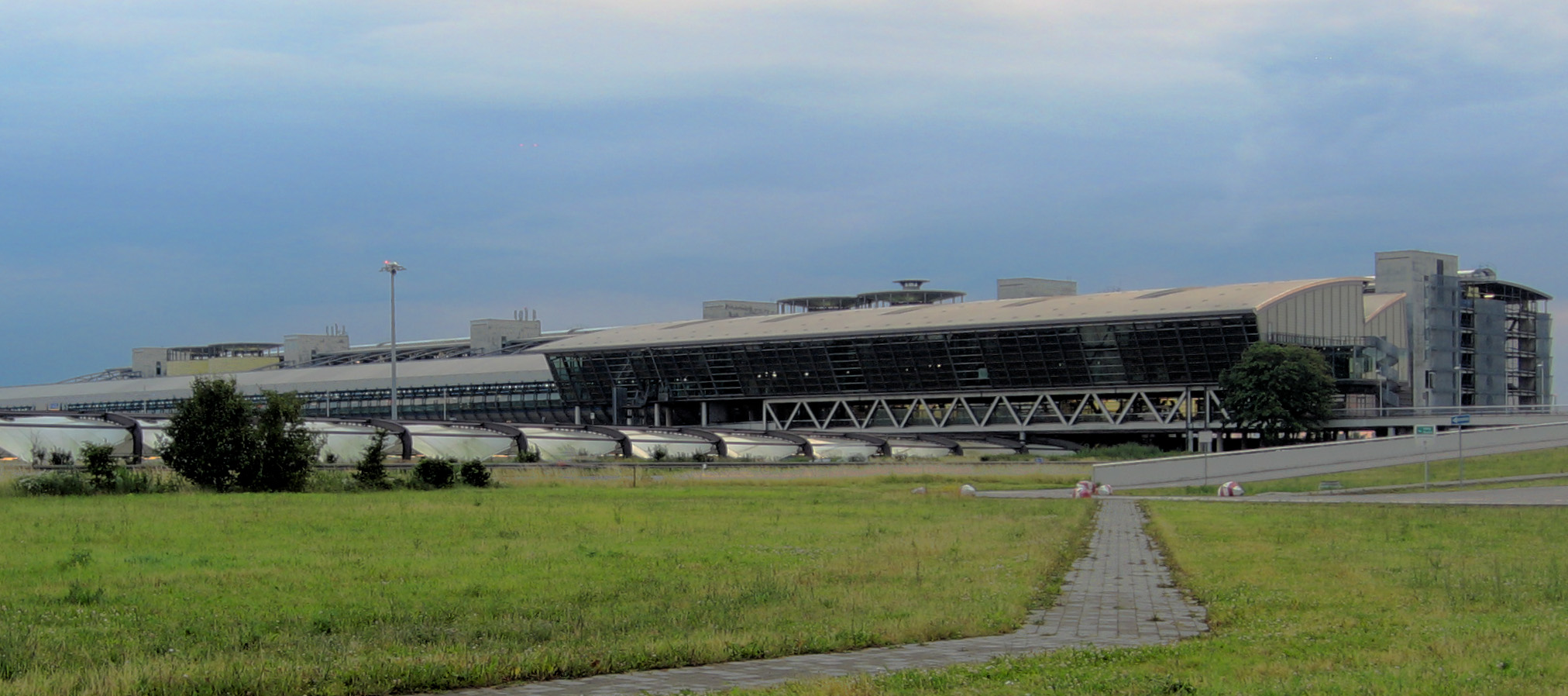
The Danish warning cannot be viewed in isolation. It came almost immediately after Germany officially placed the blame for a hybrid attack attempt in the Leipzig/Halle airport area on Russia in early August. According to reports from Reuters and The Insider, a drone with a detonator was found near a Ukrainian transport aircraft. This episode is seen in Danish logic as an example of how such schemes can work in practice. That is, we are no longer talking about "possible intentions," but about a prototype operation where intelligence preparation, technical means, and symbolic targets were brought together in one framework.
This is where the unpleasant novelty of the moment lies. Russia is essentially testing an expanded battlefield, where European nodes of military aid to Ukraine become not just political centers of support but physical targets of pressure. Hence Berlin's reaction: the closure of the "Russian House" in Berlin, the closure of the consulate in Bonn, and the tightening of visa policies. Moscow's response with the closure of Goethe-Institut branches appears symmetrical only at the diplomatic level. In reality, the asymmetry remains with Russia: cultural exchange here serves as a smokescreen for discussions about the security of industrial and transport facilities.
Strategic Meaning for Moscow and the Limits of This Strategy
From a military perspective, the Kremlin's calculation is quite transparent. Even a single act of sabotage at a defense industry site or transport hub can yield several advantages at once. First, it disrupts the rhythm of supplies, repairs, or logistics. Second, it forces European governments to spend additional resources on security, personnel checks, and counterintelligence support for the private sector. Third, it creates a psychological effect: the war ceases to appear as a "distant Ukrainian problem" and enters everyday European life. For Moscow, this is a way to turn industrial aid to Ukraine into a politically more costly project.
However, this model also has its limits. Sabotage is effective as a tool of intimidation and attrition, but it poorly substitutes for systemic military success on the battlefield. Moreover, each uncovered operation facilitates NATO and the EU's institutional response: data sharing, tightening control over critical infrastructure, standards for protecting defense contractors, and closer cooperation between intelligence services and the private sector. If Europe draws conclusions quickly, then the current Russian adaptation may turn out to be a short-term window of opportunity rather than a sustainable advantage.
That is why the story with Denmark is much more important than it may seem at first glance. It shows that in 2026, Russia's strategy against Ukraine is increasingly less confined to the front line and more inclusive of the struggle for the European rear as a separate theater of pressure. This is bad news for Europeans who hoped to separate their own internal security from the war in the east. It will not be possible. The war has already entered factories, terminals, messengers, and gaming rooms. The question now is not whether Russia is ready for such a model. The question is whether Europe is ready for it.
Russian intelligence services are actively recruiting ordinary Danes for sabotage operations against defense companies in Denmark that are aiding Ukraine. This development, highlighted by the Danish security service PET, indicates a strategic shift in Russian tactics, moving pressure from the front lines to the European rear. The operations aim to disrupt logistics and create a psychological impact on European nations involved in supporting Ukraine.
- Russian intelligence is recruiting ordinary Danes for sabotage operations against defense companies.
- The Danish security service PET has issued warnings about these activities.
- This marks a shift in Russian strategy to target European logistics and industries supporting Ukraine.