
Russian firm claims first drone kill with barrage balloon
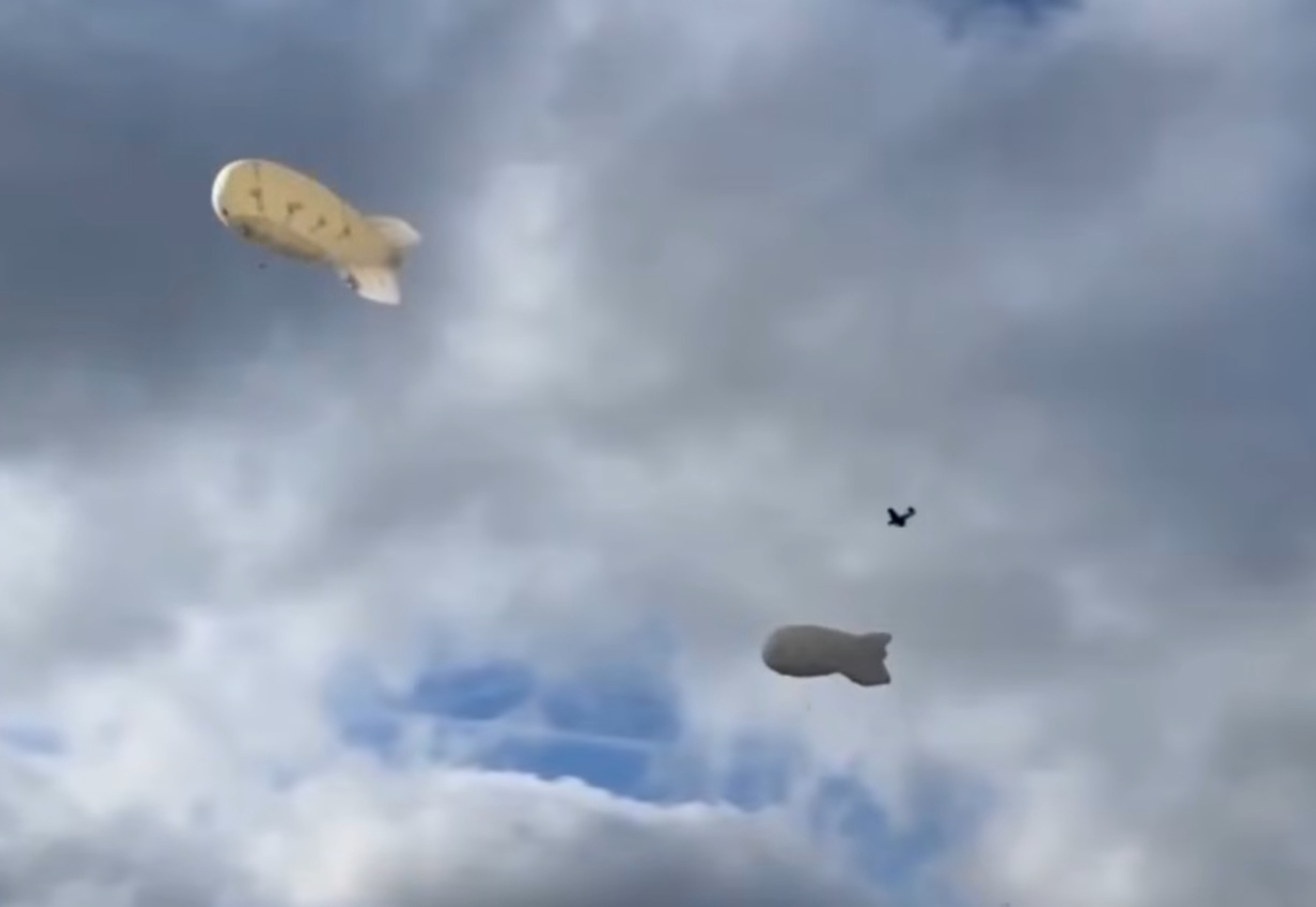
A Russian barrage balloon fitted with protective cables has brought down a fixed-wing drone weighing about 100 kg (220 pounds) for the first time, the head of the company that developed it said.
Polina Albek, founder of the aviation design bureau Pervyi Dirizhabl (“First Airship”), made the claim in comments carried by Russian media.
“Yes, there are successful examples of using aerostats to protect against drones. A fixed-wing UAV, weighing around 100 kg and with a wingspan of about four meters,” Albek said.
She did not say where or when the interception took place or whose drone it was. The claim has not been independently verified.
Footage released earlier showed tests of barrage balloons strung with tensioned cables and Kevlar cords, designed to stop Ukrainian kamikaze drones.
Barrage balloons were widely used in both world wars to protect cities, ports and factories from low-flying aircraft, which risked tearing their wings on the steel tethers. Pervyi Dirizhabl’s version replaces the single tether with a net or web of cables lifted by small aerostats, aimed at slow, low-flying drones that follow preset routes and cannot see the obstacle in their path.
The company first presented its system, called Barrier PAK, in July 2024. Albek told the Russian daily Izvestia at the time that the small balloons can lift a net to about 1,000 meters (3,300 feet), with each aerostat carrying up to 20 kg (44 pounds) and placed 250 to 300 meters apart, so the size of the protected area grows with the number of units. She said the company started with nets hung from masts, but switched to balloons because the masts could not reach the necessary height. Three experimental systems were then installed at civilian sites, Izvestia reported.
Russian military commentator Yuri Lyamin told the paper that the system would work best against drones flying preset coordinates without a camera feed, and that slow, propeller-driven strike drones could easily become tangled.
Russia has looked to passive defenses as Ukrainian long-range drones keep hitting oil refineries, airfields and factories deep inside the country. Moscow was reported in 2024 to be considering barrage balloons to protect the capital. Russian refineries and other facilities have also been fitted with anti-drone nets and metal cages.
Ukraine uses aerostats too, though in a different role. Its developers have tested them as high-altitude platforms for launching drones, as when Ukraine tested the Hornet strike drone launched from an aerostat.
Balloon barriers have clear limits and they are fixed in place, can be damaged by wind and weather, and only protect the airspace they cover. A drone that flies higher than the net or approaches from an unguarded direction can avoid it.
Content preview only. Full article available at source. View Full Article
A Russian barrage balloon successfully brought down a fixed-wing drone weighing about 100 kg for the first time. The system, developed by Pervyi Dirizhabl, aims to protect against low-flying drones. Details regarding the location and timing of the interception remain undisclosed, and the claim has not been independently verified.
- A Russian barrage balloon successfully brought down a fixed-wing drone weighing about 100 kg.
- The system was developed by the aviation design bureau Pervyi Dirizhabl.
- The interception details, including location and time, were not disclosed.
- The barrage balloon system is designed to protect against low-flying drones.
- The company first presented its system in July 2024.