
Russian "Geranium-4/5" reaches 3,000 per month, while drone debris is already falling in Moldova
 Dmitri Volkov
Russian "Geran-4/5" reaches 3,000 per month, and drone debris is already falling in Moldova
The paradox of Russian drone manufacturing in 2026 can be summed up in one figure: according to the Main Intelligence Directorate of the Ministry of Defense of Ukraine, the Russian industry produces about three thousand strike drones "Geran-4/5" per month, yet Moscow still cannot maintain a high launch intensity continuously and is forced to accumulate ammunition for mass strikes (Militarnyi, August 16–17, 2026). Approximately 6,200 "Gerans" of various versions have been accumulated — and simultaneously with the increase in production, the drone war is systematically crossing the borders of Ukraine for the first time: on August 17, debris from a Russian drone fell in Moldova, causing an explosion and fire near the village of Talmaza in the Stefan Vodă district.
Three thousand per month — what does it mean
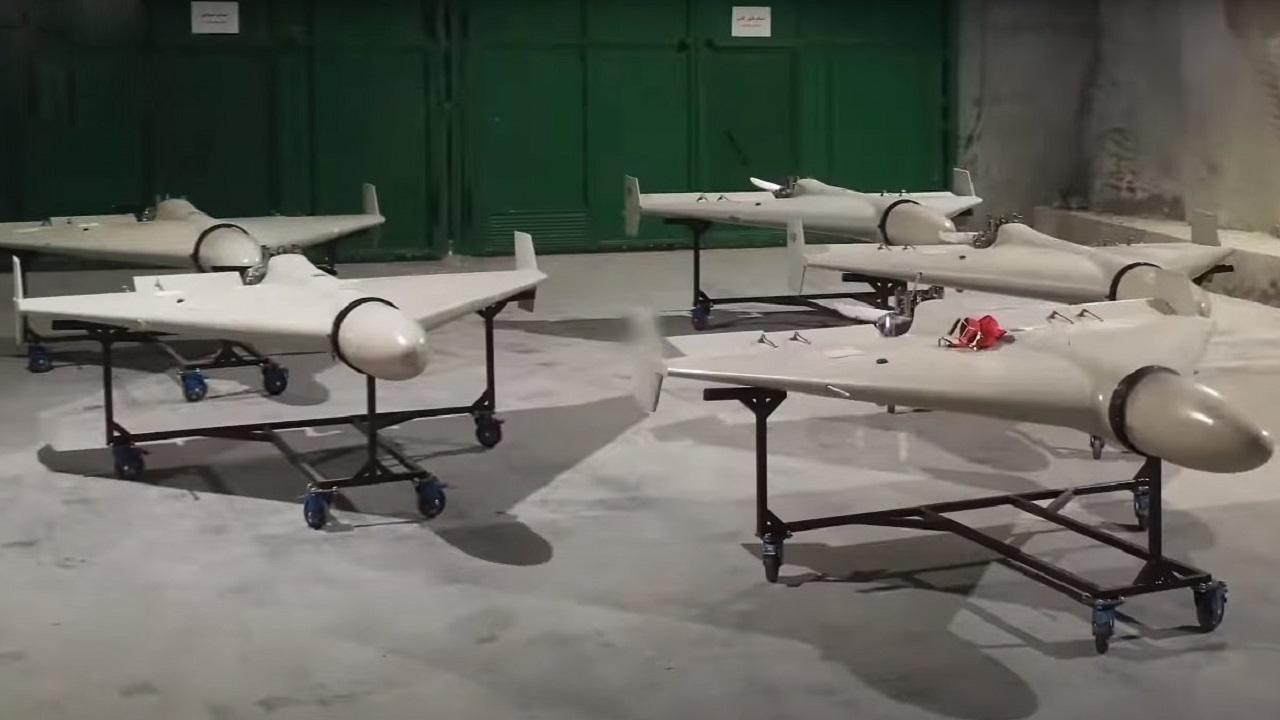
The "Geran-4/5" series is assembled at a factory in Yelabuga, in the special economic zone "Alabuga" in Tatarstan, with the involvement of subcontractors from across the country. The volume of three thousand units per month — not counting the outdated "Geran-2" — is no longer an experiment, but a conveyor. Moreover, this seems insufficient to Moscow: in May 2026, construction of new production buildings began in the southern section of the zone, which occupies about 340 hectares — satellite images recorded work in early July (Militarnyi, July 8–9, 2026). The factory is located about 1,200 kilometers from the Ukrainian border — beyond the reach of most Ukrainian strike capabilities, which in itself indicates a strategic calculation for a prolonged war.
However, the accumulation of 6,200 units reveals a downside: with a monthly output of three thousand "Geran-4/5," high-intensity strikes (600–1,000 drones per night) are not possible every day. During accumulation periods, Russian forces launch 150–200 units, a maximum of about 300 (according to GUR, August 2026). This creates pauses that the Ukrainian air defense learns to exploit in preparation for large raids. In other words, Russian industry produces a lot — but strategically, Moscow still thinks in "waves," rather than constant pressure.
Jet turn: why "Geran-3" was stopped
A key signal in recent weeks is not only the increase in volumes but also the generational shift. According to GUR, Russia has halted the production of jet drones "Geran-3" and switched to "Geran-4" and "Geran-5," which are structurally quite different from each other. "Geran-4" continues the logic of the jet "Geran-3": a turbojet engine with a thrust of 160 kgf — twice as powerful as the Chinese Telefly JT80 — accelerates the unit to 350–500 km/h (compared to 280–330 of its predecessor), the range has increased from 600 to 850 kilometers, the takeoff weight — from 350 to 450 kilograms, and the warhead from 50 kilograms (Militarnyi). "Geran-5" is a fundamentally different machine: in terms of body shape, it resembles a cruise missile more than a Shahed delta-wing drone, with a warhead of 90 kilograms, a claimed range of about one thousand kilometers, and the ability to carry air-to-air missiles R-73; the unit can be launched from carriers, including Su-25 attack aircraft. The "rocket-drone" class — the same one that Ukrainian manufacturers are developing in parallel — is now formalized in the Russian nomenclature.
The logic of this turn is transparent and strictly pragmatic. According to Colonel Artem Skuratovsky, head of the air defense department of the 7th rapid response corps of the Airborne Forces, the comprehensive use of mobile fire groups, aviation, electronic warfare, and interceptor drones has brought the interception level of "Geran-2" and Shahed-136 to 80–93% depending on the scale of the strike (ArmyInform, August 17, 2026). Further increasing purchases of subsonic piston "Shaheds" at such a loss rate is economically nonsensical. Moscow's response is a bet on speed: the jet "Geran-3" flies from the Belarusian border to Kyiv in 35 minutes, four times faster than its predecessor, and the share of jet units in the overall flow of "Gerans" already reaches 20% and, according to Syrskiy, may rise to 50%.
Vulnerability of the new generation
However, the jet turn has a downside that Ukrainian military personnel are already noting. "Geran-4" has a fuselage length of 3.5 meters and a wingspan of about three meters — a large radar target that detection systems can easily see. The powerful thermal radiation from the turbojet engine makes the unit vulnerable to MANPADS, and mobile fire groups, which worked well against "Shaheds," are less effective against fast jet targets — MANPADS and anti-aircraft missile systems work better here. Ukrainian interceptor manufacturers are still searching for a solution: isolated cases of intercepting jet "Gerans" by interceptor drones have already been recorded, particularly by fighters of the 81st Separate Air Assault Slobozhansk Brigade, but there is still no systemic response (ArmyInform). In other words, Russia has changed its generation of technology faster than Ukraine has managed to change its means of counteraction — and this race will become one of the main narratives of the autumn-winter campaign.
Debris in Moldova — the incident of August 17
On August 17 at 17:37, the airspace monitoring systems of the National Army of Moldova detected the entry of an aerial object from the direction of Kuchurgan—Tiraspol — that is, from the side of the unrecognized Transnistria. The airspace of the "Center" sector was closed for 15 minutes, the object disappeared from radar near the village of Talmaza, where an explosion occurred and vegetation caught fire about three kilometers from the settlement (Ministry of Defense of Moldova). There are no casualties, but the Ministry of Foreign Affairs of the Republic called the incident a serious violation of sovereignty: "The aggressive war of the Russian Federation against Ukraine continues to have direct consequences for the security of the Republic of Moldova" (Moldpres, August 17). President Maia Sandu was even more candid: protest notes and diplomatic measures are insufficient, the only way to reduce the risk of drones falling on Moldovan territory is to support Ukraine so that Russia can no longer continue the war.
This incident is not an accident, but a regularity. The routes of Russian strike drones, especially those launched from Belarus and along the eastern borders of Ukraine, pass in close proximity to Moldovan airspace, and the approach from the direction of Tiraspol indicates that the corridors run over or near Transnistria. Each major raid increases the likelihood that a downed or technically malfunctioning unit will fall outside Ukraine. In August 2026, as Moscow ramps up the production of "Gerans" to three thousand per month, such incidents will become more frequent — it is a matter of arithmetic, not intentions.
New geography of drone warfare
For the post-Soviet space, this is a troubling signal in two respects. First, drone warfare has definitively ceased to be a "Ukrainian problem": debris, and in the worst-case scenario — combat parts, will fall in Moldova, Romania, and possibly in other countries bordering the raid routes. Second, the very logic of Russian drone manufacturing — the expansion of "Alabuga," the transition to long-range jet units, the ability to launch "Geran-5" from carriers like Su-25 — indicates that Moscow is building not just a tactical tool, but a strategic deterrent potential designed for years. Against the backdrop of reports about the creation of secret drone bases within NATO's reach (Telegraph, August 16, as reported by ISW), the Moldovan incident appears to be just the first public manifestation of a broader picture.
Moldova is not a participant in the conflict, but its airspace has already become part of its geography. The question is not whether the next drone will fall, but what will happen when debris falls on a populated area.
Conclusion
Russian drone manufacturing in 2026 demonstrates a rare ability for the military economy of the Russian Federation to rapidly change generations: the halt of "Geran-3," the launch of the "Geran-4/5" series, three thousand units per month, and the expansion of "Alabuga" — this is a coordinated line, not a series of random decisions. But the same statistics also show limits: the accumulation of 6,200 units means that Russia does not have a sustainable, daily high intensity, and the pauses between large waves become a structural feature of the campaign. The jet turn reduces the effectiveness of Ukrainian air defense — but at the same time creates new vulnerabilities: a large radar signature and thermal trace, which MANPADS can exploit. The final assessment will depend on which is faster — the Russian conveyor in "Alabuga" or the Ukrainian interceptor industry — and how European neighbors, including Moldova, respond to the new reality, where the war arrives not with missiles, but with debris from drones.
On August 17, 2026, debris from a Russian Geran drone fell in Moldova, causing an explosion near the village of Talmadge. Russia is producing around 3000 Geran-4 and Geran-5 drones monthly, indicating a significant increase in drone warfare capabilities. The production facility in Tatarstan is strategically located far from Ukraine, allowing for sustained drone operations. This incident underscores the growing impact of the drone war beyond Ukraine's borders.
- Russia produces approximately 3000 Geran-4/5 drones per month.
- Debris from a Russian drone fell in Moldova on August 17, 2026.
- The Geran-4 and Geran-5 drones have significantly increased capabilities compared to previous models.
- The production facility is located in Alabuga, Tatarstan, approximately 1200 km from Ukraine's border.
- The incident in Moldova highlights the expanding operational range of Russian drones.