
Russian jet drones are changing the nature of strikes on Ukraine in 2026
 S.W
S.WRussian Jet Drones Change the Nature of Strikes on Ukraine in 2026
From Frontline Tool to Weapon of Economic Pressure
The most important figure in recent days is not the flight range or the claimed accuracy of the new munition. It is nearly 500 drones that, according to Volodymyr Zelensky, Russia directed at Ukrainian targets from early morning on September 13 (The Guardian, September 13, 2026). Against this backdrop, reports of strikes on gas stations in Kyiv by jet drones signify a change not only in scale but also in the logic of employing unmanned aerial vehicles. The Russian command is attempting to turn a relatively inexpensive device into a means of constant pressure on the urban economy, transportation, and the psychological resilience of the population.
On Friday, according to The Guardian, two strikes on Kyiv gas stations resulted in the deaths of at least two people and injuries to another twelve. This was already the second day of attacks on stations belonging to the company "Ukrnafta," with one of them located in a densely populated area. Ukrainian authorities also reported a tactic of repeated strikes on a single target. Independent confirmation of the exact model of the drone is lacking, so it would be premature to label each such device as a specific modification of "Geran." However, the very transition to jet propulsion is confirmed by the description of the crash site and the nature of the raids.
What a Jet Engine Provides
A classic strike drone of the "Geran-2" type relies on a piston engine, relatively low speed, and long flight duration. This combination is convenient for overloading air defense: the device can be mass-produced, launched in waves, and force the enemy to expend expensive interceptor missiles. The jet modification addresses a different task. The turbojet engine increases speed in the final segment, reduces the reaction time of air defense calculations, and complicates the work of mobile groups with machine guns and large-caliber anti-aircraft installations.
The exact specifications of the currently used devices—speed, warhead mass, range, and guidance system—are not confirmed in open sources. Early reports about the jet "Shahed-238" contained Russian claims of speeds of up to approximately 500 kilometers per hour, but these data cannot be automatically applied to all current devices. In a real conflict, something else is more important: Russia can combine slow carrier drones, decoys, cruise missiles, and faster jet drones in a single raid. Air defense has to distribute limited munitions not against one type of threat but against a changing profile of targets.
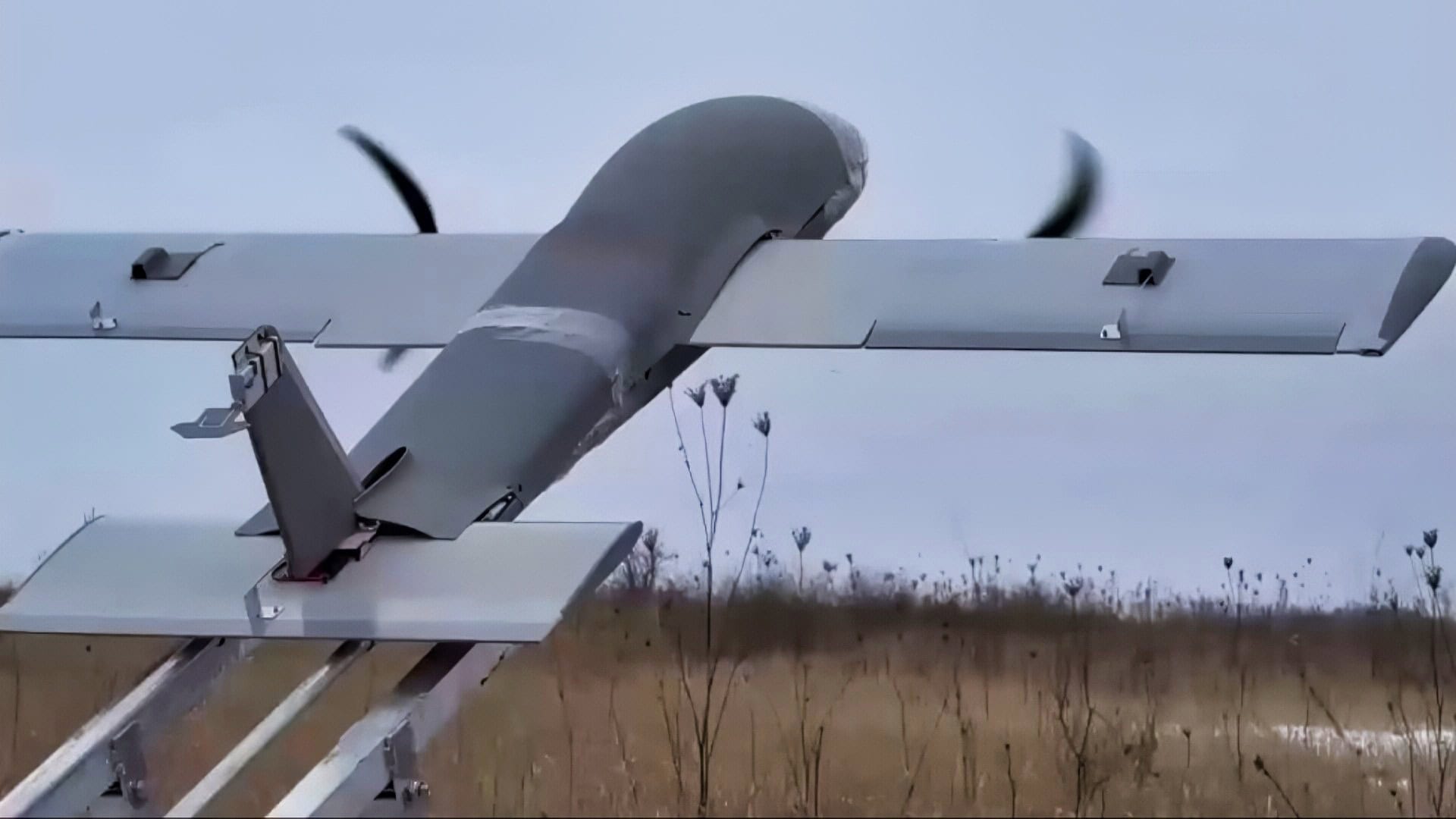
It is here that it is useful to view the "Molniya" not as an identical jet device but as an indicator of the direction of Russian evolution. The design shown in the illustration represents a simple unmanned platform with a pusher propeller and modular architecture. Its military value lies not in elegance but in production speed and the ability to quickly change payload, communication, and navigation. Jet variants are the next step in the same industrial logic: a slightly more expensive platform but with a shorter interception window.
Mass Production is More Important than Individual Accuracy
The Russian Ministry of Defense reported on September 14 the destruction of 399 Ukrainian drones overnight from 20:00 on September 13 to 08:00 on September 14 (RIA Novosti, September 14, 2026). This is the official Russian statistic, and it has not been independently verified; the Ukrainian side also publishes its own figures, which require careful comparison. However, even the difference between "launched" and "destroyed" already reveals the operational mechanics of the drone war. For Moscow, not every individual device is important, but the ability to maintain a continuous flow of targets while Ukrainian defense is forced to choose what to protect first.
The strikes on gas stations demonstrate how this mechanism is transferred from military objects to the infrastructure of everyday consumption. A strike on an oil depot or railway hub has a clear military effect, while an attack on the urban network of gas stations adds economic and social effects: queues, delivery disruptions, rising fuel costs, and strain on emergency services. The Guardian reported that in Kyiv, a list of 18 presumed targets was circulated on Telegram even before the first strikes. The authenticity of this list has not been confirmed separately, but its dissemination in itself creates an additional effect of uncertainty.
The Ukrainian side responds with strikes on Russian oil infrastructure. A report from The Guardian on September 14 noted that Kyiv attacked facilities related to fuel processing and export, while Washington urged to cease strikes on Russian oil refineries due to their impact on the global diesel market. This turns the drone campaign into a debate over the acceptable limits of economic warfare. Russia seeks to present strikes on Ukrainian infrastructure as a military necessity while simultaneously using them to pressure the civilian population. Ukraine is trying to raise the cost of war for the Russian rear but faces the risk of diplomatic pressure from partners.
Why the Front Remains the Main Limiting Factor
It should not be concluded that jet drones have replaced artillery, aviation, or armored vehicles. RIA Novosti reported on September 14 about battles involving Russian units in the northern and southern parts of Dobropillya in the Donetsk People's Republic and linked the advance to the capture of Novohryshyne. This report reflects the Russian version of the situation and is not sufficient evidence of control over the entire city. But it shows that Moscow is simultaneously addressing two tasks: trying to push through land logistics nodes in Donbas and delivering long-range strikes on the Ukrainian economy.
According to The Guardian, the front line has changed more slowly in recent weeks than the air campaign. In such conditions, long-range drones become a way to compensate for limited operational maneuverability. They allow maintaining the appearance of initiative without requiring an immediate breakthrough of defenses. In Soviet military culture, there was a temptation to measure success by the number of munitions fired. Today, this temptation has returned in digital form: large launch statistics may look like a victory, although the real result is determined by which supply nodes have been incapacitated and for how long.
Strategic Forecast
In the coming months, one should expect not a single "wonder weapon," but mixed raids where jet UAVs will be used to reduce reaction time, cheap devices will saturate detection channels, and missiles will target the most protected objects. Ukraine's response will be further dispersal of energy and fuel infrastructure, development of inexpensive interception means, and strengthening the protection of critical nodes with electronic warfare capabilities.
The jet engine makes the drone more dangerous, but it does not eliminate its vulnerabilities: the device remains dependent on intelligence, route, communication, and the quality of target designation. Therefore, the main question of 2026 is not whether Russia can build a faster drone, but whether its industry and budget can sustain the prolonged production of hundreds of devices daily. The Russian system will likely retain the ability to deliver mass strikes if imported electronics and fuel remain available. But the cost of this capability will rise, and its strategic effect will remain limited as long as the air campaign does not turn into a sustained disruption of Ukrainian military supply.
Russia launched drone strikes targeting fuel stations in Kyiv on September 13, 2026, resulting in at least two fatalities and twelve injuries. This marks a shift in the use of drones from military to economic pressure tactics. The Russian Ministry of Defense reported the destruction of 399 Ukrainian drones overnight, indicating a sustained aerial campaign against Ukrainian infrastructure.
- Russia launched approximately 500 drones against Ukrainian targets on September 13, 2026.
- Two strikes on fuel stations in Kyiv resulted in at least two deaths and twelve injuries.
- The Russian Ministry of Defense claimed to have destroyed 399 Ukrainian drones in one night.
- The strikes are part of a strategy to exert economic pressure on Ukraine's urban infrastructure.
- Ukrainian authorities reported a tactic of repeated strikes on the same target.