
Russian Kh-101 in Poland Exposes NATO's Air Defence Gap
 Alexandra Reeves
Russian Kh-101 in Poland Exposes NATO's Air Defence Gap
A Russian cruise missile does not need to be aimed at Warsaw to create a NATO problem. It only needs to cross the border, stay in the air long enough to force a decision, and land in a field where everyone can see the crater.
That is what happened early Thursday when a missile linked to Russia's overnight strike package against Ukraine entered Polish airspace and came down near Tarnawa-Kolonia in Lublin province. Polish officials said there were no injuries and no major damage. That is the good news. The bad news is that the incident showed, again, how Russia's war against Ukraine is already testing NATO's air-defence posture without Moscow having to announce a wider war.
The Missile Was Not Just Debris
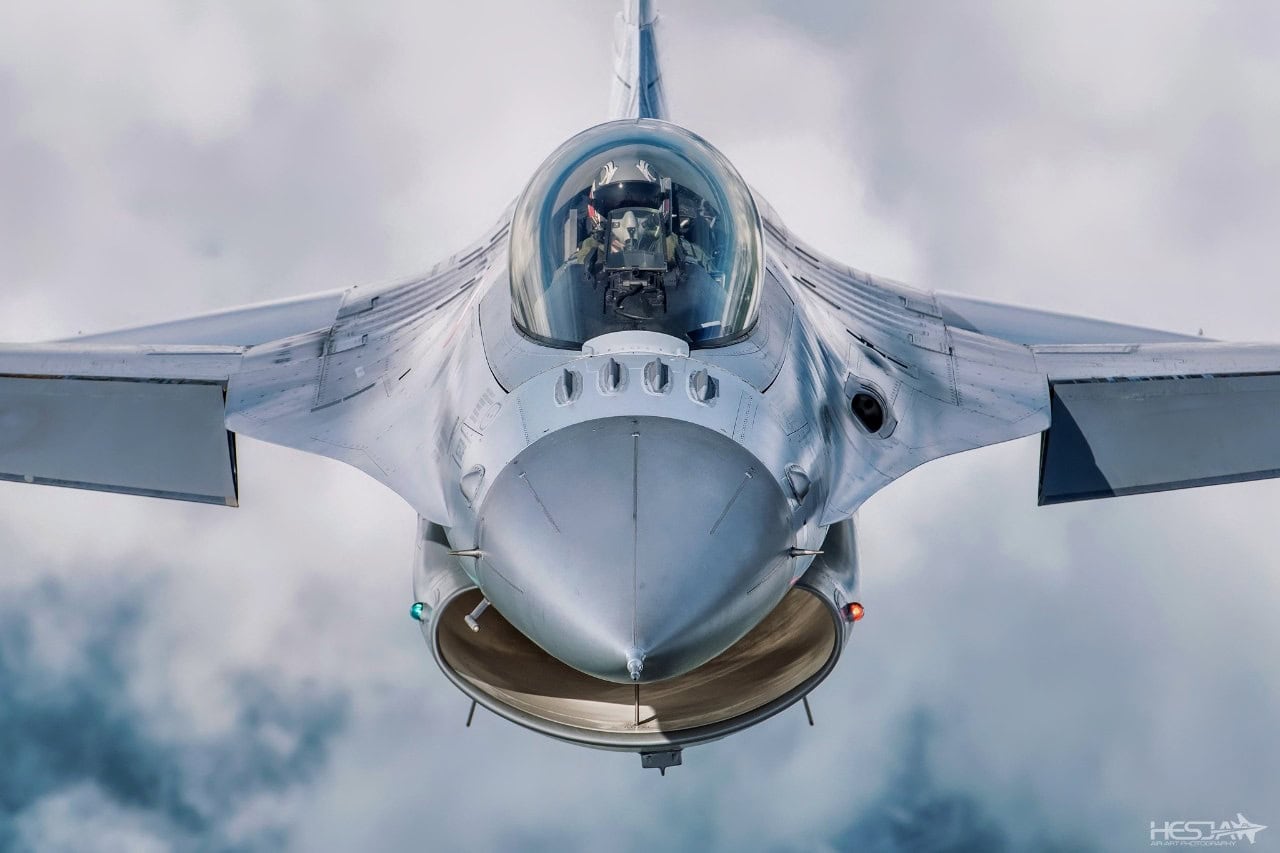
According to Al Jazeera, NATO aircraft were scrambled after the missile entered Polish airspace during a Russian barrage against Ukraine that killed at least eight civilians and wounded more than 50. NATO Secretary-General Mark Rutte said Poland and the alliance activated air and ground defences, calling the incident another reckless act by Russia and a dangerous consequence of its war.
The UK Defence Journal, citing Polish and NATO statements, reported a more revealing sequence. Polish Operational Command detected an object near the border at 3:29am local time. At 3:40am, a separate unidentified object was tracked moving westward inside Polish airspace. A Polish F-16 on standby was scrambled, but the object disappeared from radar six minutes later before the pilot could positively identify it. A Polish Mi-24 helicopter later located the probable impact site.
The reported response package matters. It included two Polish F-16s, a NATO Multinational Multi-Role Tanker Transport Unit Airbus A330 refuelling aircraft, a Polish Saab 340 airborne early warning aircraft, and the Mi-24. That is not a symbolic reaction. It is an expensive, layered air-policing response to one missile that, by Polish assessment, was not deliberately aimed at Poland.
Kh-101 Is Built To Complicate Defences
Ukrainian Foreign Minister Andrii Sybiha publicly identified the weapon as a Russian Kh-101 cruise missile. Polish Prime Minister Donald Tusk said recovered fragments pointed in the same direction, while stressing that there was no reason to think Poland was the intended target.
The Kh-101 is an air-launched cruise missile used by Russian long-range aviation, typically from Tu-95MS and Tu-160 bombers. Western and Ukrainian reporting usually describe it as a long-range, low-observable weapon with terrain-following flight profiles, satellite-aided navigation, and a conventional warhead often assessed at roughly 400 to 450 kilograms. Exact performance varies by variant and source, but the strategic point is simple: it is designed to fly far, low, and awkwardly enough to force defenders into hard choices.
That is why the Polish case is uncomfortable. A missile can be detected and still not be intercepted. A fighter can be scrambled and still arrive too late for visual identification. Ground-based air defence can be activated and still face a political question: do you fire over populated territory, near a border, against a missile that may crash on its own?
CNN, as cited by the UK Defence Journal, reported that NATO forces were seconds from shooting the missile down before judging it would crash without an intercept. If that account holds, the system did not fail in the cartoon sense. It saw the threat, evaluated it, and made a decision. The problem is that the decision was forced on NATO by a Russian strike aimed at Ukraine.
Ukraine's Air Defence Is NATO's Buffer
Kyiv's argument writes itself, but that does not make it wrong. Sybiha said the incident demonstrated that strengthening Ukraine's air defence is urgent and protects the entire Euro-Atlantic community. Zelenskyy has been making the same case around Patriot interceptors, arguing that delayed deliveries translate directly into civilian deaths and higher risk for neighbouring states.
Everyone in Brussels knows this. The awkward part is that the alliance still talks about Ukrainian air defence as aid to a partner, when operationally it has become part of NATO's own border-management system. Every Russian missile intercepted over western Ukraine is one less object Poland, Romania, Slovakia, or Moldova has to track in a compressed decision cycle. Every interceptor shortage in Ukraine increases the chance that NATO aircraft are launched for a missile that was never meant for NATO but is now NATO's problem anyway.
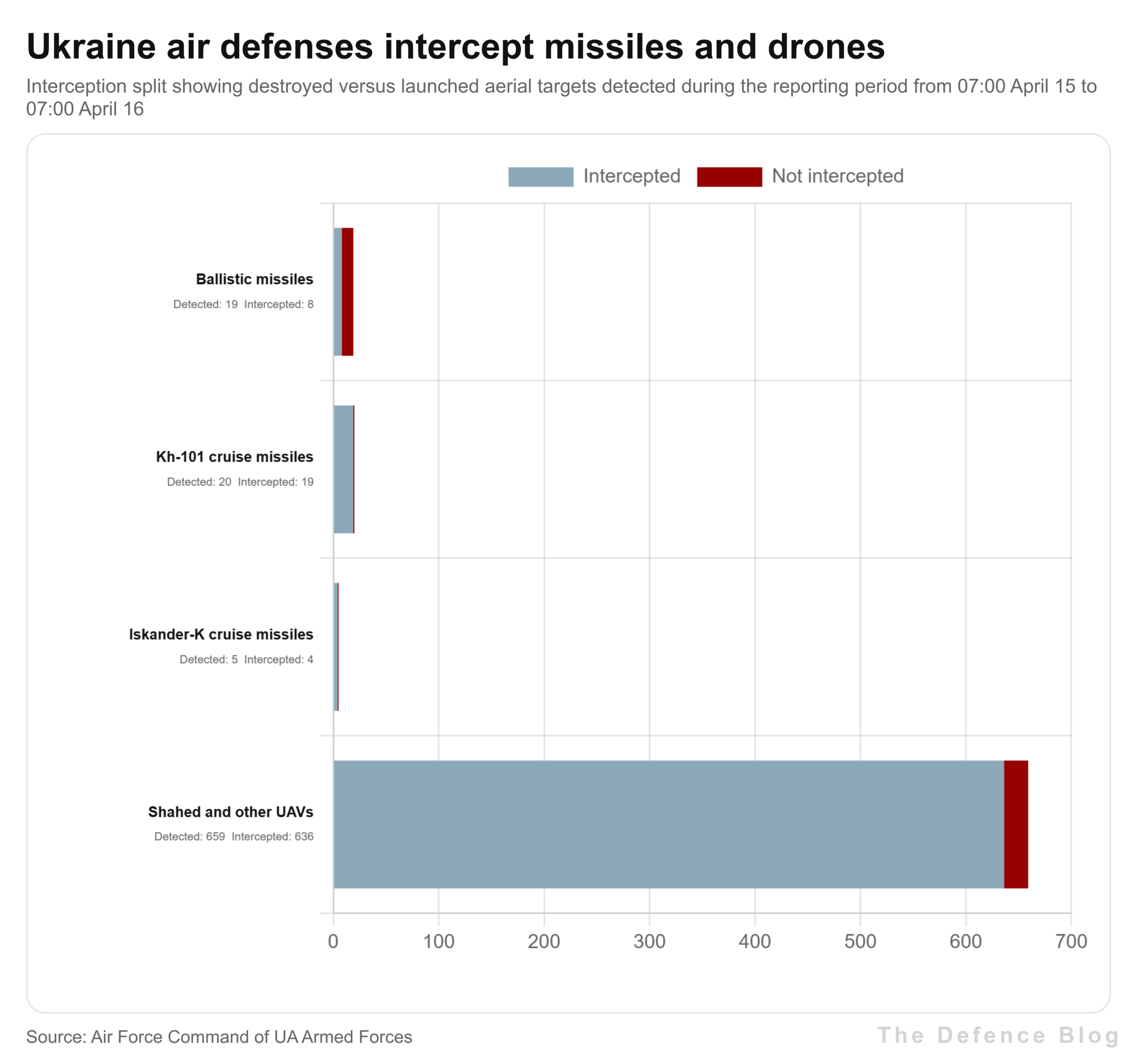
The image above shows earlier Ukrainian Air Force interception data, not Thursday's strike. Its relevance is the category, not the date. Kh-101s, ballistic missiles, Iskander-K cruise missiles, and Shahed-type drones all impose different burdens on an air-defence network. The cheap targets arrive in volume. The expensive targets demand scarce interceptors. The mixed salvo is the real weapon.
Article 5 Is Not The Main Question
The predictable headline question is whether this kind of incident could trigger NATO's Article 5. The short answer is: probably not in a case like this. Poland has every incentive to avoid treating an apparent spillover incident as a deliberate attack. NATO has every incentive to show readiness without making escalation automatic.
But Article 5 is the wrong lens. The more immediate question is whether NATO can build a border air-defence architecture that handles repeated spillover without burning readiness, political attention, and interceptor stocks every time Russia launches a large package at Ukraine.
Poland has faced repeated incursions during the war. Romania has reported drones crossing from the conflict zone. Baltic states have had their own airspace scares. The pattern is no longer a collection of freak incidents. It is a pressure environment, created by Russia's strike campaign and made worse by the geography of Ukraine's western approaches.
There is also a credibility problem. If NATO shoots down a missile inside alliance airspace, Moscow can accuse it of direct involvement. If NATO does not shoot, eastern flank publics ask why alliance airspace is being entered by Russian weapons at all. Neither answer is clean. That is precisely why these incidents matter.
The Real Test Comes Next
The immediate facts are limited but serious: a Russian Kh-101-type missile appears to have crossed into Poland during a mass attack on Ukraine; NATO and Poland activated a layered air response; the missile crashed without casualties; and allied leaders condemned Russia while stopping short of formal escalation.
The strategic conclusion is less tidy. NATO's eastern flank is not waiting for some future spillover risk. It is already living inside one. The alliance can manage that risk for now because most incidents end in fields, rivers, or wreckage. That is luck plus professionalism, not a durable plan.
What to watch next is not another angry statement from Brussels. Watch whether Patriot, NASAMS, IRIS-T, and fighter-based air-policing plans are treated as one regional air-defence problem rather than separate national shopping lists. Watch whether Poland moves from emergency scrambles to a more permanent layered posture. And watch whether Ukraine receives enough interceptors to keep the first line of defence east of the NATO border.
The missile that landed in Lublin did not start a NATO-Russia war. That should reassure no one. It showed how little distance remains between Russia's war against Ukraine and the alliance's own airspace problem.
A Russian Kh-101 cruise missile crossed into Polish airspace early Thursday, landing near Tarnawa-Kolonia without causing injuries. In response, NATO and Polish forces activated air and ground defenses, scrambling two F-16s and a Mi-24 helicopter. The incident underscores the challenges NATO faces in air defense as Russia's conflict with Ukraine continues to impact neighboring countries.
- A Russian Kh-101 cruise missile crossed into Polish airspace.
- NATO scrambled aircraft in response to the missile.
- The missile landed near Tarnawa-Kolonia without causing injuries or major damage.
- Poland activated air and ground defenses during the incident.
- The incident highlights NATO's air defense challenges amid ongoing conflict in Ukraine.