
Russian Mi-8 Violated Polish Airspace for 42 Seconds — Checking NATO's Eastern Flank in 2026
 S.W
S.WRussian Mi-8 Violated Polish Airspace for 42 Seconds — NATO's Eastern Flank Check in 2026
42 seconds is too little to start a war and enough to test the opponent's reaction. On the morning of September 23, a Russian military helicopter Mi-8, which took off from the Kaliningrad region, crossed the Polish border north of Braniewo. According to the Operational Command of the Polish Armed Forces, the aircraft penetrated approximately 300 meters and was in Polish airspace for 42 seconds. Polish fighter jets were scrambled, and ground forces were put on heightened alert.
Warsaw described this as a brief violation, but the Polish command formulated a politically more significant conclusion — the nature of the incident indicates yet another check of the readiness of Polish air defense. As of the preparation of this material, Moscow had not provided a public explanation. Sources — Notes from Poland, The Kyiv Independent, and a statement from the Operational Command of Poland dated September 23, 2026.
Why the Mi-8 Matters
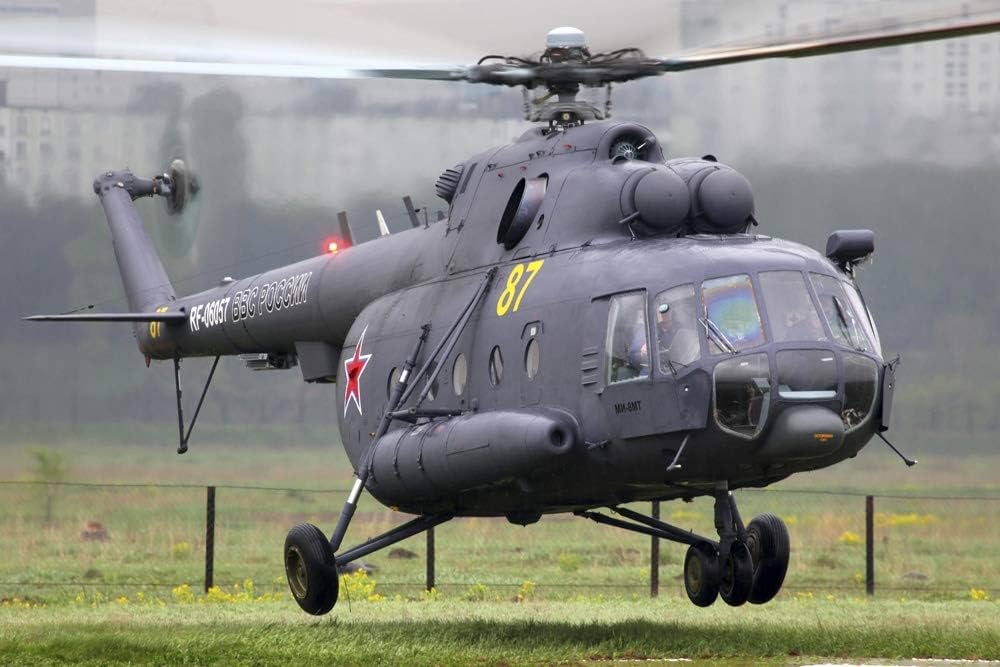
The Mi-8 is not a low-profile strike aircraft or an experimental machine. It is a mass-produced Soviet transport helicopter capable of carrying troops, cargo, and performing communication, reconnaissance, and support tasks. Depending on the modification, its cruising speed is approximately in the range of 220–240 kilometers per hour, with a practical range of about 450 kilometers, and the crew usually consists of three people. For flying along the border, such an aircraft is convenient precisely because of its ordinariness: it can be imagined as a regular training or transport machine, but at the same time, it creates a full-fledged episode for testing radars, alert fighters, and the decision-making chain.
Most importantly, here is not the technical value of the helicopter, but the geometry of the incident. The aircraft came from the Kaliningrad region — a Russian exclave squeezed between Poland and Lithuania. Any navigation error in this area occurs near NATO territory; however, crossing the border by 300 meters and returning after 42 seconds leaves too little room for accidental explanation. This does not prove a pre-planned provocation, but makes the hypothesis of intentional testing almost inevitable.
Testing the Reaction, Not a Breakthrough Attempt
Russian military logic often operates below the threshold that requires an immediate strategic response. An aircraft approaches the border, a drone crosses it for a short time, a missile deviates from its course, and then Moscow has the opportunity to claim an error, weather, or malfunction. The military effect is secondary. The main goal is to measure the reaction speed, determine the order of reports, and see how ready allies are to act without prolonged political coordination.
The Polish reaction showed that this part of the experiment provided little cause for optimism for Moscow. Radar tracking was established, fighters were scrambled, and ground units were put on alert. In other words, Russia saw not a paralyzed bureaucracy, but a functioning procedure. But there is also a downside. Each such episode forces Poland and its neighbors to expend resources on constant readiness, restrict civilian aviation, and keep political leadership in a state of crisis readiness. A small-scale operation gradually creates a large expenditure.
The Context of Drone Warfare
The incident with the Mi-8 cannot be viewed in isolation from a series of airspace violations around the eastern flank. Poland had previously reported Russian drones, missiles, and military aviation flights near its borders. In recent weeks, Russian strikes on western Ukraine have repeatedly occurred near routes connecting Ukraine and Poland. In July, a Russian X-101 cruise missile, according to Polish data, entered the country's airspace approximately 90 kilometers before falling in the Lublin Voivodeship.
The difference between the X-101 and the Mi-8 is fundamental. The missile can be presented as a guidance error or a collateral risk of a massive strike. A crewed helicopter flies slower, is under operator control, and can change course almost instantly. Therefore, today's event resembles not an accidental "fragment" of war, but a controlled signal. Russia demonstrates that it can create nervousness at the border without launching an expensive missile and without immediately transitioning to open confrontation.
What This Means for NATO
For NATO's eastern flank, the main question now is not whether there will be another violation, but how allies classify the series of violations. A single Mi-8 is an episode for national command. Repeated incidents involving helicopters, drones, and missiles become a problem of collective deterrence. If each case is considered separately, Moscow gains the opportunity to calibrate pressure. However, if allies agree in advance on the boundaries of what is acceptable and the rules of response, the space for such maneuvers narrows.
This also explains the nervousness of Polish authorities. Warsaw is not interested in war with Russia, but even less so in allowing Russian military forces to become accustomed to Polish airspace as a zone for free experimentation. Scrambling fighters after 42 seconds is not an emotional reaction, but an investment in the reputation of the system. The reputation of air defense is built not on beautiful statements, but on the fact that every operator knows — crossing the border will be detected and recorded.
Forecast
Most likely, Moscow will continue actions of this type — short, ambiguous, and designed to provoke political irritation. Not because Russia is preparing an immediate attack on Poland, but because the war in Ukraine has already become a school of risk management for the Kremlin — pressure needs to be maintained without crossing the threshold that would automatically unite opponents. But such a strategy has its limits. The more frequently NATO airspace is tested, the faster allies turn disparate procedures into a unified detection and response system.
The Mi-8, which penetrated 300 meters and disappeared after 42 seconds, did not change the military balance. It changed the list of questions that Polish headquarters are now asking. If similar flights recur, it will no longer be reconnaissance of reaction, but evidence that Russian command mistakenly interprets NATO's caution as indecisiveness.
Sources — Operational Command of the Polish Armed Forces, Notes from Poland, The Kyiv Independent, The Moscow Times.
A Russian Mi-8 helicopter crossed into Polish airspace for 42 seconds on September 23, 2026, approximately 300 meters north of Braniewo. In response, Polish fighter jets were scrambled, and ground forces were put on heightened alert. This incident is interpreted as a test of Poland's air defense capabilities amid ongoing tensions in the region.
- A Russian Mi-8 helicopter violated Polish airspace for 42 seconds.
- The helicopter crossed approximately 300 meters into Poland from Kaliningrad.
- Polish fighters were scrambled in response to the incursion.
- The incident is viewed as a test of Poland's air defense readiness.
- This event is part of a series of airspace violations by Russian military assets.