
Russian missiles and drone strikes are changing nighttime attacks on Ukraine in November 2026
 Dmitri Volkov
Russian Missiles and Rocket Drones Change Night Strikes on Ukraine in November 2026
The Number of Devices is No Longer the Main Thing
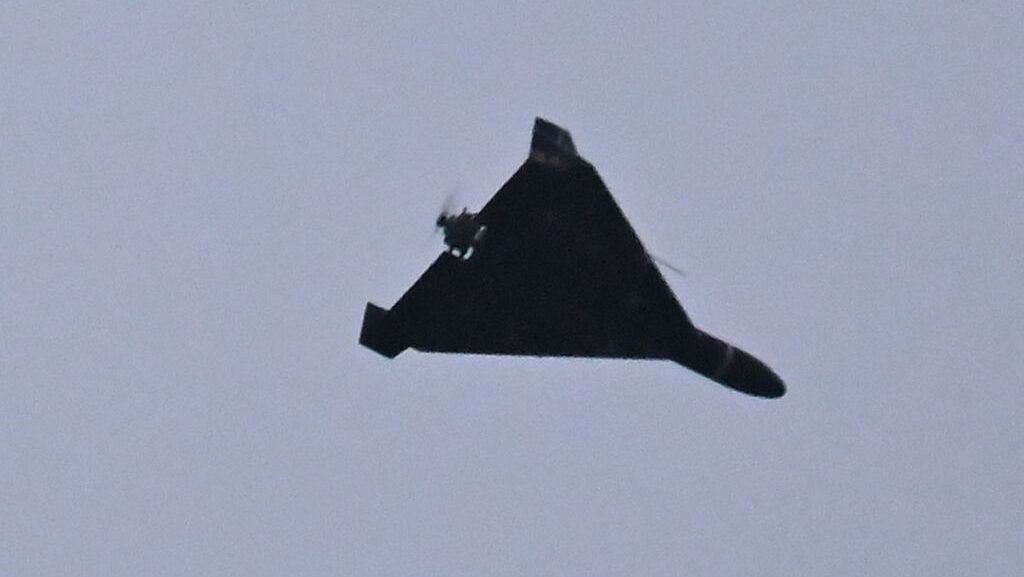
On the night of November 20, the Russian side once again attempted to turn Ukrainian air defense into an arithmetic problem without a correct answer. According to the Ukrainian Air Force, the strike involved about 404 strike drones, 84 cruise missiles, and ballistic systems; Ukrainian sources reported the interception of 82 missiles and 380 UAVs. These figures should still be considered military statements from the sides, rather than an independent audit. However, even with this caveat, a trend is visible that cannot be reduced to yet another "massive attack."
Russia is building a more complex combination in terms of speed and cost. Cheap loitering munitions are meant to overload calculations and deplete ammunition, cruise missiles create separate windows for breakthroughs, while ballistic systems minimize reaction time. This is no longer just an attempt to hit more targets. It is an experiment with the architecture of Ukrainian defense.
From "Geran" to Layered Strikes
The classic "Geran-2," based on the Iranian Shahed-136, remains a convenient tool for attrition. Its relatively low cost, range of about a thousand kilometers, and a warhead weighing around 40–50 kilograms allow it to be launched in series, forcing Ukraine to choose between an expensive interceptor missile and the risk of letting a device reach an energy or industrial facility. For Moscow, this is an advantageous economy even when a significant portion of the drones are shot down.
However, recent reports show a qualitative addition to this scheme. According to Critical Threats and ISW estimates for November 18–19, Russia launched 98 drones, of which 61 were described as rocket-powered. Independent confirmation of each machine is lacking, and designations in open sources are still unstable. Nevertheless, the ratio itself is more important than the model name: Russian industry is trying to close the vulnerability of slow devices by increasing speed and reducing the time available for detection.
A rocket-powered UAV does not render Ukrainian air defense helpless. It merely changes the cost and sequence of interception. If a slow target can be detected by acoustic posts and destroyed by a mobile fire group, then a faster machine requires better radar coverage, automated target distribution, and more expensive means of destruction. As a result, one wave may not destroy the target directly but force the defense to reveal its positions and expend resources.
Russian Industry Chooses Mass Production
At the same time, Moscow is expanding the range of missiles, including upgraded products and cheaper options. An analysis by Forbes on November 18 indicates Russia's desire to maintain a stock of ballistic and cruise missiles not by returning to pre-war production models, but through a combination of new assembly, repair of old airframes, and simplification of individual components. This is an important caveat. "Expanding the arsenal" does not necessarily mean a technological breakthrough; it may be a sign of a transition to a war economy, where reliability and accuracy give way to an acceptable price for the series.
Ukrainian data on losses also illustrate the scale of material expenditure. As of November 20, the General Staff of the Armed Forces of Ukraine reported over 614,000 destroyed Russian operational-tactical UAVs since the beginning of the full-scale war, including 738 in the previous day. This is an estimate from one of the warring sides, so it cannot be mechanically taken as an accurate balance. But even a possible overestimation does not negate the main conclusion: drones have become expendable munitions for the Russian army on an industrial, rather than episodic, scale.
In Soviet logic, mass production was considered an independent quality of weapons. Today, Moscow is returning to this logic, adding digital control and commercial electronics. History, as usual, returns not in form, but in accounting.
What This Means for Ukraine and Russia
For Ukraine, the primary task becomes not achieving a record percentage of interceptions on a single night, but maintaining the resilience of the entire system. Cheap means against slow UAVs, mobile groups, distributed radars, electronic warfare, and a sufficient number of complexes against ballistic targets are needed. If each "Geran" is answered with an expensive anti-air missile, Moscow will win through the depletion of stocks even with unsatisfactory results in hitting targets.
For Russia, the combination of drones and missiles provides an operational effect but does not solve structural problems. Production can be ramped up; however, engines, electronics, optics, and skilled personnel limit the pace. Rocket-powered devices increase the requirements for assembly quality and testing, while ballistic missiles remain expensive and cannot endlessly replace cheap decoys. Therefore, the current wave appears not as evidence of limitless Russian superiority, but as an attempt to buy time through industrial mobilization.
My forecast is cautious. In the winter of 2026–2027, Russia will likely continue to mix slow strike UAVs, rocket-powered devices, and missiles, aiming not for the absolute destruction of Ukrainian air defense, but for its gradual wear. The success of this strategy will depend not on one record night, but on who can replenish expendable interceptors, radars, and production capacities faster. The Russian arsenal is growing, but along with it, the cost of sustaining the war is also increasing. The limit will manifest when mass production no longer compensates for the decline in quality.
Sources
- Ukrainian Air Forces and Ukrainian reports on the attack on November 20, 2026.
- Critical Threats and ISW, Russian Offensive Campaign Assessment, November 19, 2026.
- Forbes, Russia Expands Missile Arsenal To Sustain Strikes Against Ukraine, November 18, 2026.
- Ministry of Defense of Ukraine, statistics on Russian losses as of November 20, 2026.
On November 20, 2026, Russian Armed Forces launched a complex night strike against Ukraine, deploying approximately 404 drones and 84 missiles. Ukrainian forces intercepted 82 missiles and 380 drones during the attack. This operation reflects Russia's strategy to exhaust Ukrainian air defenses by using a mix of slow and fast-moving targets, while also expanding its missile arsenal.
- Russia launched approximately 404 drones and 84 missiles in a night strike on November 20, 2026.
- Ukrainian forces intercepted 82 missiles and 380 drones during the attack.
- The strike is part of a strategy to exhaust Ukrainian air defenses with a combination of slow and fast-moving targets.
- Russia is expanding its missile arsenal through new assembly and repair of older systems.
- Over 614,000 Russian drones have been destroyed since the start of the full-scale war.